Sir John Evans was a pioneering figure in the fields of prehistoric archaeology, numismatics and geology. He was also a successful businessman with an extraordinary variety of interests, holding high offices in many learned societies. He was born at Britwell Court, Buckinghamshire, on 17 November 1823, son of the Revd. Arthur Benoni Evans, headmaster of Market Bosworth grammar school. At the age of 17, he was apprenticed to his uncle John Dickinson's paper mill at Nash Mills, Hemel Hempstead, where he worked until retirement. Evans was one of the small group of British scholars involved with the development of the field and profession of archaeology in Britain in the nineteenth century. Through the meticulous observation and recording of information gained from his comprehensive collection, he published the first comprehensive and systematic volumes on British prehistoric artefacts. |
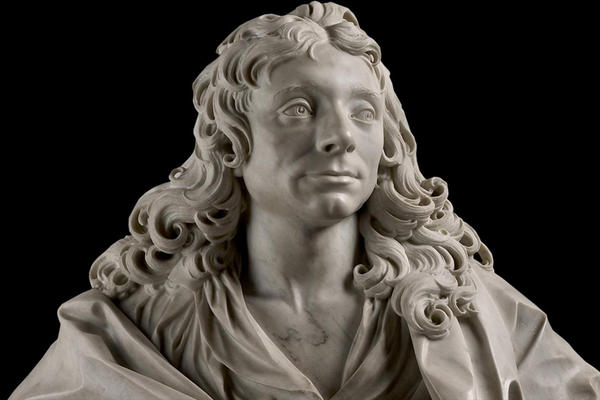
![]() Portrait of Sir John Evans |
||
Evans was a highly respected numismatist. He was the first person to devise a systematic classification of British Iron Age coinage and set out a simplified classification of English Short Cross coinage in 1865. He was a member of the Royal Numismatic Society from 1849 to 1908, serving as president for over 25 years. His interest in hydrology and geology led Evans to help to bridge the gap between the natural sciences and archaeology. In 1880 the Geological Society presented him with the Lyell Medal "in recognition of his distinguished services to geological science, especially in the department of Post-Tertiary Geology". |
|||
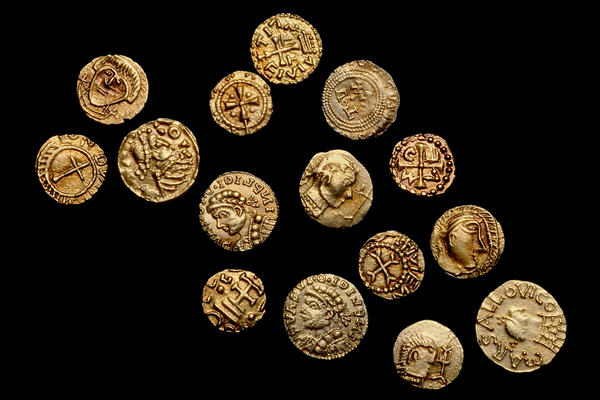
The John Evans collection comprises more than 12,000 objects ranging from Palaeolithic hand-axes through Merovingian ornaments, and includes material from most parts of the world. A large proportion of this material is from Britain. Objects from the John Evans collection are easy to recognize by their blue-bordered labels neatly inscribed with details of their collecting history. Sir Arthur Evans, John Evans's son, eventually became Keeper of the Ashmolean Museum and donated much of his father's collection to the museum at his death. John Evans died at Berkhamstead on the 31st May 1908. |
![]() Bronze Age brown mottled flint chipped dagger found at Fiskerton in Lincolnshire (AN1927.3503) |
||
John Evans's many publications include:
|
|||
Further information about Evans's work and publications can be found at: |
|||
| Examples of objects in the John Evans collection include: | |||
|
|||
|
|||