| Visiting | Features | The Collections |
Services | Online Resources |
More Resources |
SiteMap |
|
Ashmolean Museum of Art and Archaeology Previous Exhibitions (1995) |
| Current Exhibitions | Future Exhibitions | Previous Exhibitions: 1996; 1997; 1998; 1999; 2000; 2001; 2002; 2003; 2004; 2005; 2006 | |
| Antiquities | Eastern Art | Heberden Coin Room | Western Art |
|
|
|||
| The Department of Antiquities | |
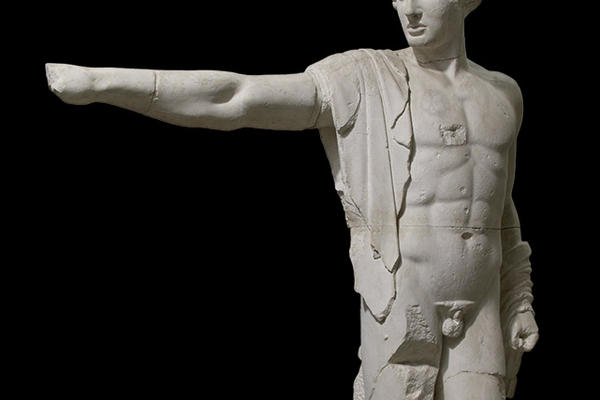
Exhibition at the Museum of Oxford, St Aldates: 16 September - 28 October 1995From the Gardens of the Hesperides - the Excavations of an Ancient Greek City in North AfricaThis exhibition included finds from the Greek town of Euesperides excavated in the 1950's. The existence of the town, which flourished between the 6th and 3rd centuries BC near present day Benghazi, where the legendary Gardens of Hesperides, one of the entrances to the Underworld, were reputed to lie, was revealed by military aerial reconnaissance in the 1940's. |
|
|
Top of Page
|
|
| The Department of Eastern Art | |
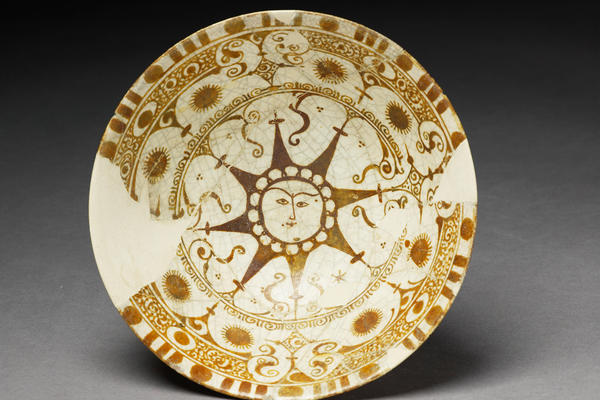
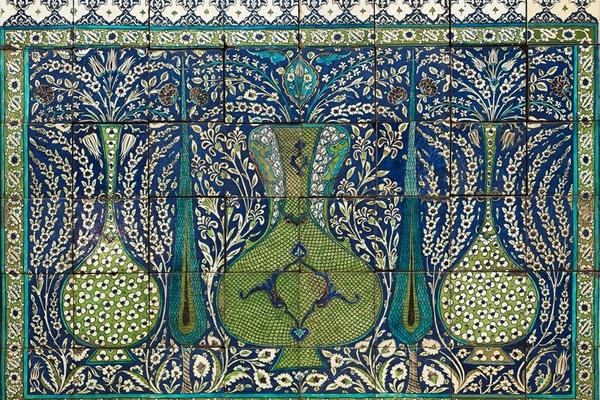
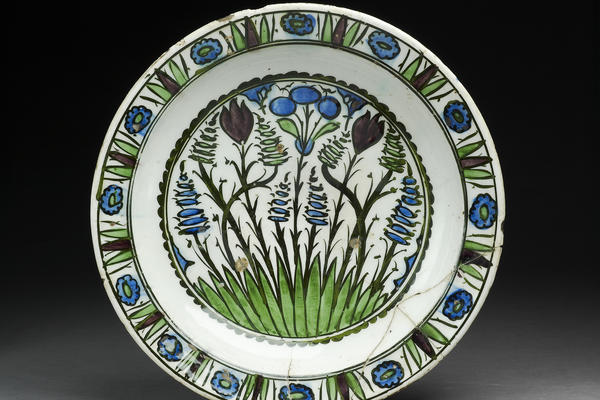
Eric North Room: 1 March - 30 AprilCentral Asian ikat coats: dressing for the Great Game - the Robert Shaw collection. A selection from department's collection of silk Ikat coats from central Asia. These spectacular dyed garments, patterned by the complex Ikat resist technique, were charactistic of Bukhara, Tashkent and Samarkand. It has only recently been possible to identify the coats as part of the collection of the merchant and explorer Robert Shaw, the first Englishman to visit Yarkand and Kashgar in Chinese Turkestan. He travelled in the region in 1868/9 at the time when High Asia was the setting for the "Great Game" - the espionage and power wrangle between England and Russia over the international control of the areaEric North Room: 3 May - 2 July 1995Bridging East and West: Japanese ceramincs from the Kazan studio. Miyagawa (Makuzu) Kozan (1842-1916) and his nephew and heir Hanzan (Makuzu Kozan II) (1859-1940) produced some of the most innovative and beautiful ceramics of the Meiji (1868-1912) and Taisho (1912-1926) eras. This exhibition of a selection from the Perry Foundation collection covered most of the wide range of their products, demonstrating their inventive shapes and the brilliant decoration in the new colours now possible, that are so radically different from that of the work of previous generations of potters.Eric North Room: 5 July - 3 September 1995Patterns in Oriental Art. This exhibition explored the use of patterns in Islam, the Indian sub-continent and the Far East. All objects were taken from the collections of the department.Eric North Room: 7 September - 5 November 1995Liu Haiming: Modern Chinese Prints. Liu Haiming was born in 1954 in Shanxi province, North China, where he now teaches printmaking. This loan exhibition included examples of his early woodcuts, mostly depicting aspects of daily life in rural China, and of his more recent work. He first came to Europe in 1986 at the invitation of the Scottish Arts Council and has since exhibited in Italy, Belgium and London, as well as in Hong Kong and Japan.Eric North Room: 7 November - 29 December 1995Legacy of the Mongols: Ceramics and Tilework of the 14th century. In the second quarter of the 13th century, historical texts maintain, the Mongols destroyed the civilisation and culture of Islamic Iran. By 1300, however, the normadic rulers had settled into the ways of imperial power, and as this exhibition shows, the first half of the 14th century was a period of new cultural and artistic achievements. Almost all the objects exhibited were drawn from the Department's rich holdings of glazed and decorated ceramics and tilework. |
|
|
Top of Page
|
|
| Heberden Coin Room | |
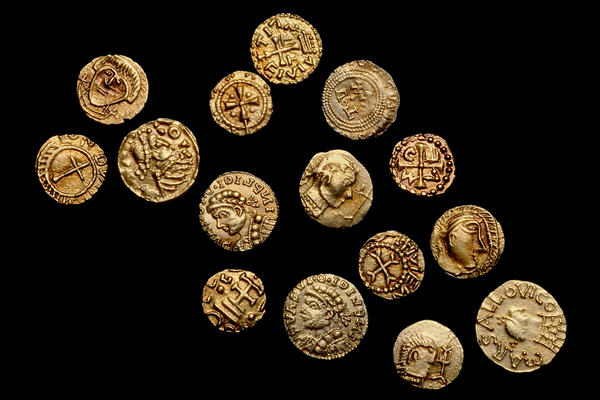
| Displays of Islamic, Indian and far-Eastern coins which demonstrate the growth of the collection between 1958-1994 continue, along with displays of Greek and Roman coins. There are also displays of Celtic coinage in Britain and Tudor and Stewart portrait coins. The coinage of the Crusader States is illustrated by examples from Rhodes and Cyprus and from mainland cities such as Antioch and Jerusalem. | |
|
Top of Page
|
|
| The Department of Western Art | |
McAlpine Gallery: 28 February - 14 MayPaintings from the reserve collection Italian, French, Dutch, and British pictures, ranging from the fifteenth to twentieth centuries, which are normally kept in the reserve collection for lack of gallery space. They include works by well-known artists as well as less familiar figures.
Eldon Gallery: 28 February - 14 MayEdward Lear: drawings and watercolours Although Edward Lear (1812-88) is best known for his humorous drawings and nonsense verses, he made his living as a serious artist and is now widely appreciated as one of the finest draughtsmen of the nineteenth century. He began his career drawing birds and animals and in 1837 left England on the first of his many travels abroad. This exhibition concentrated on Lear's landscapes, but includes drawings of birds and mammals and a number of items of "nonsense". The sketches and finished watercolours were drawn largely from the Ashmolean's own collections, with the addition of important loans from private collections, and demonstrated the extraordinary range and variety of the artist's achievement.Eldon Gallery: 23 May to 6 AugustWood engraving here and now - Seventy-Fifth Anniversary Exhibition of the Society of Wood Engravers. In the ten years since its revival the Society has raised the profile of wood engraving nationally and in Oxford. This exhibition consisted of the printmaking of fifteen individual artists' work: as innovative, various and diverse in its use of the medium as was that of the founders of the Society seventy-five years ago.Demonstrations and gallery talks were held in conjuction with the Wood Engravers' exhibition on Thursday 25th May and Tuesday 6th June.
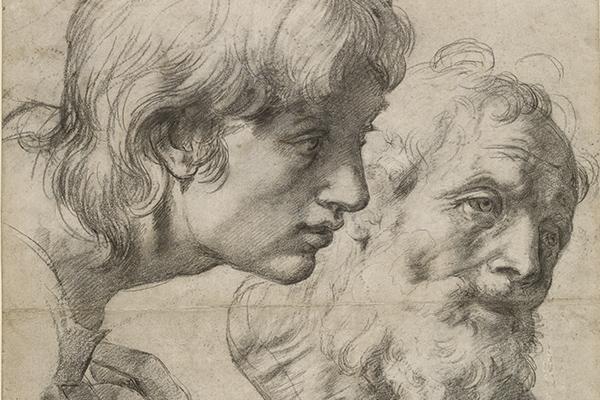
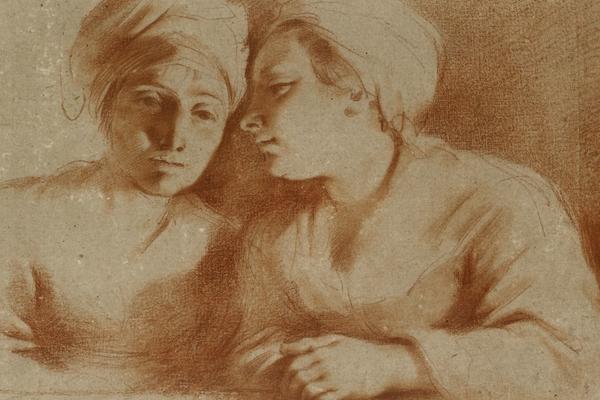
Eldon Gallery: 16 May - 24 SeptemberSir Karl Parker (1895-1992): a centenary celebration One of the most significant figures in the history of the Ashmolean Museum is that of Sir Karl Parker, who was Keeper of the Department of Fine (later Western) Art from 1934 until 1962, and Keeper of the whole Museum from 1945. His principal achievement was to develop the collection of drawings in the Print Room into one of the finest and most important in the world, both by purchase and by attracting numerous gifts. The drawings on show, acquired during Sir Karl's keepership, ranged from a small drawing of a man's head by Roger van der Weyden (d.1464) to the beginning of the 20th century and included an allegorical figure by Raphael, a study of a Spaniel by Watteau, three works by Samuel Palmer from his 'Shoreham' period and several studies for well-known paintings, including one by Tissot and one by Sicket for Ennui.McAlpine Gallery: 15 August - 15 OctoberDutch and Flemish Drawings from the Royal Library, Windsor Castle For the first time a large group of Dutch and Flemish drawings from the Royal Collection went on view in a touring exhibition to the USA, with just one showing in Britain, at the Ashmolean. The Ashmolean was an ideal venue for this exhibition, both because of its own rich holdings of Netherlandish drawings, and because the Director, Professor Christopher White, has selected the drawings and written the exhibition catalogue. Professor White completed, with Charlotte Crawley, a catalogue raisonne of the collections of Dutch and Flemish drawings at Windsor Castle, published by Cambridge University Press.Eldon Gallery: 10 October 1995 - 11 February 1996Underwood's Children - The Wood Engravings of Gertrude Hermes and Blair Hughes-Stanton. Hughes-Stanton and Hermes were both pupils at the Brook Green School of Art, in Hammersmith, run for ten years from 1921 by Leon Underwood - a forcing house for new ideas in the visual arts, generated jointly by the teacher and his enthusiastic but unconventional students. The exhibition was drawn from the Museum's recently acquired works by these two stylistically allied but highly distinctive artists. It demonstrated their joint collaboration on T.E.Lawrence's The Seven Pillars of Wisdom (1926) and Bunyan's The Pilgrim's Progress (1928), and went on to show how, while their styles diverged, they together took the art of wood engraving into the realms of the avant-garde.McAlpine Gallery: 24 October - 17 December 1995French Drawings - from Poussin to Seurat: A loan exhibition from the collection of Louis-Antoine Prat. The collection of French drawings belonging to Louis-Antoine and Veronique Prat is generally agreed to be the finest formed in recent years. This selection of 100 drawings has been exhibited in the Louvre and at the Edinburgh Festival and the Ashmolean exhibition was the sole English venue. The collection extended chronologically from early 17th century Mannerism to post-impressionism and includes sheets by many of the greatest French artists, among them Watteau, Boucher, David, Gericault, Delacroix, Dore, Degas and Puvis de Chavannes. The exhibition was sponsored jointly by Fondation Elf and Eurotunnel. |
|
|
Top of Page
|
| Current Exhibitions | Future Exhibitions | Previous Exhibitions: 1996; 1997; 1998; 1999; 2000; 2001; 2002; 2003; 2004; 2005; 2006 | |
| © Copyright University of Oxford, Ashmolean Museum, 2002 The Ashmolean Museum retains the copyright of all materials used here and in its Museum Web pages. Last updated: jcm/19-feb-2002 |
|
HomePage | Visiting
| Features
| The Collections Services | Online Resources | More Resources | SiteMap | Top of Page |