Go to Museum's Home Page Visiting Features The
Collections
Services Online
Resources
More
Resources
SiteMap
  Ashmolean Museum of Art and Archaeology
Exhibitions — more details
  Treasures of the Ashmolean Museum 24 May 2006 - 31 Dec 2008
 

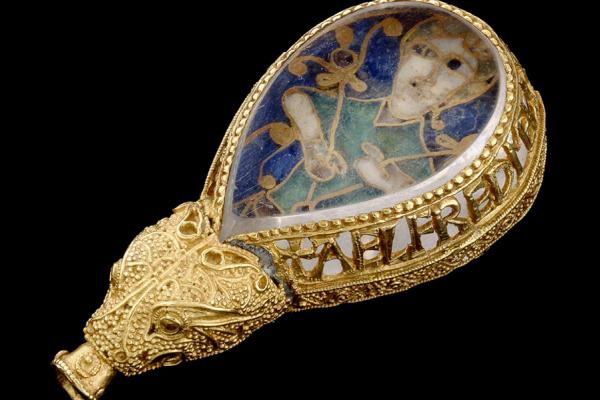
The Alfred Jewell, c.871-899For the first time, over two hundred of the most significant objects in the Ashmolean's world-renowned collections of Archaeology, Eastern Art , Coins and Casts will be displayed side by side in an exhibition lasting throughout the Museum's major redevelopment.

Domitianus Coin, c. 270 ADTreasures of the Ashmolean provides visitors with a rare opportunity to discover the historic crossing of time and culture in this portrayal of artistic achievement and the development of civilisation in Europe, the Near and Far East. Originating from four continents, the treasures represent more than thirty cultures dating from Palaeolithic times to the present day. Selected for their extraordinary merit as rare, exquisitely crafted and outstanding objects, they are presented in nine sections reflecting basic aspects of human activity and interest throughout history.

The Jericho Skull is one of the earliest representations of the human image. Dating back to c. 8000 BC, the skull came from a Neolithic settlement. Originally plastered and painted to accentuate the shape of the face, the eyes are represented by decorative bivalve shells. The Alfred Jewel, dating from the period 871-899, is the most precious Anglo-Saxon antiquity in the collection. Set in gold, enamel and rock crystal, a figure personifying the Sense of Sight is depicted carrying the inscription "Alfred ordered me to be made". This, together with the exceptional quality of the gold craftsmanship, points to its origination from the court of Alfred the Great. Powhatan's Mantle comes from the Museum's founding collection. Made from deerskins and shells, it is associated with the seventeenth-century native Indian ruler Powhatan, father of Pocahontas. The infamous Guy Fawkes's Lantern was given to the University in 1641 by Robert Heywood. He was the son of a Justice of the Peace who had been present at the arrest of Guy Fawkes in the cellars of Parliament House, when the Gunpowder Plot was foiled on 5 November 1605.

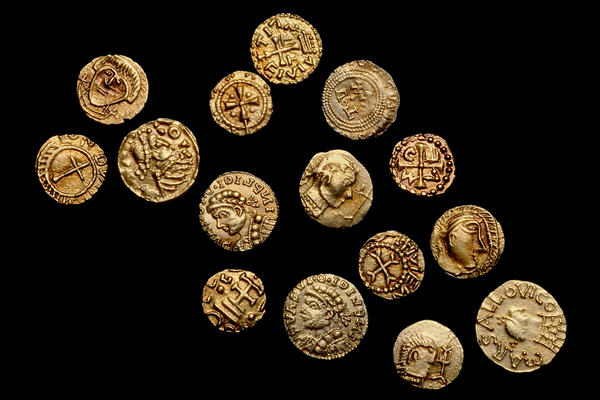
Powhatan's MantleOn display amongst the coins and medals is the recently discovered Chalgrove Hoard, a pot of coins unearthed ten miles from Oxford. During an examination of the hoard in 2003 a coin with a rare portrait was found, providing definitive evidence of the existence of the Roman emperor Domitianus AD 271. Textiles, ceramics and sculpture represent the collections from the Far East. The four-armed god Vishnu is one of the earliest recorded Indian sculptures to have entered a western museum. In 1690 the Ashmolean Book of Benefactors records the gift of this statue from Sir William Hedges, formerly governor of the East India Company in Bengal, to the newly founded Museum. This item exemplifies the early influx of Indian art into the West. Other oriental objects include the ninth century Chinese Horse, a perfect example of one of the tomb horses from the T'ang dynasty, and Jômi Eisuke's Japanese masterpiece Hawk on a Perch c.1890. Dating from the Meiji period, the gold and silver sculpture is thought to have been made for one of the International Exhibitions, a medium through which Japan sought to compete with the industrial nations of the west by demonstrating the skill of Japanese craftsmen.

The Ashmolean's collections range over ten millennia and span civilisations from east to west. Visitors to Britain's oldest Museum can explore some of the finest expressions of the human spirit from Nineveh and Ancient Egypt to the Renaissance and the twentieth century.


Top right: Alfred Jewel, c.871-899
Left: Domitianus Coin, c. 270 AD
Bottom right: Powhatan's Mantle

  Current Exhibitions
 
© Copyright University of Oxford, Ashmolean Museum, 2005
The Ashmolean Museum retains the copyright of all materials
used here and in its Museum Web pages.
Last updated: jcm/28-mar-2006
  E-mail Webmaster HomePage | Visiting | Features | The Collections
Services | Online Resources | More Resources | SiteMap | Top of Page