Parlour game

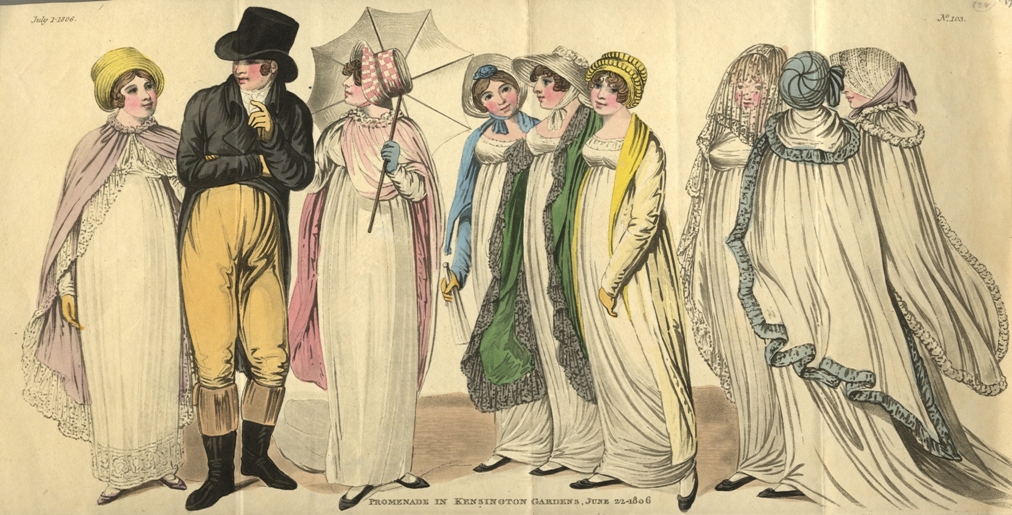
Bonnets are everywhere due to the bicentenary of Pride and Prejudice*. This blog could not resist the temptation to join in, especially when the said article of apparel features so prominently in Douce’s folders of costumes, where the fashion plate below can be found:

Anonymous, Promenade in Kensington Gardens June 22-1806, hand-coloured etching and stipple (Ashmolean Museum, Oxford)

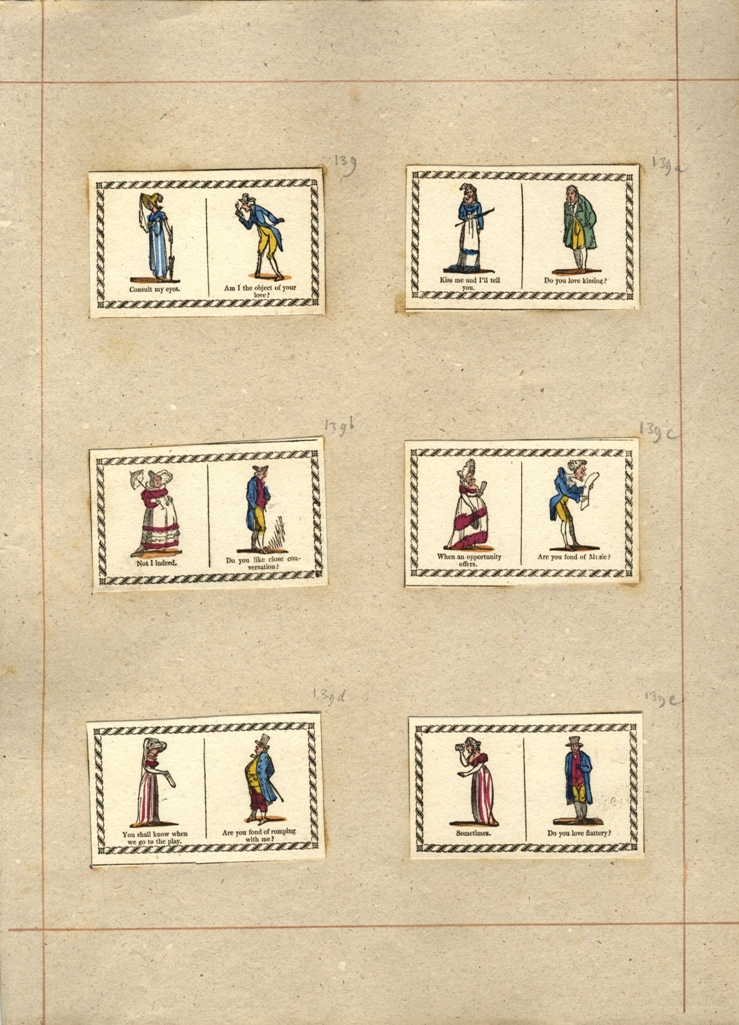
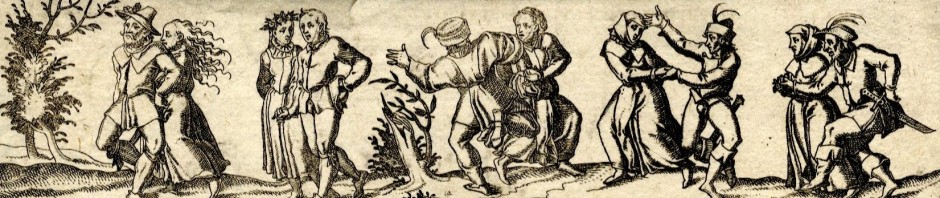
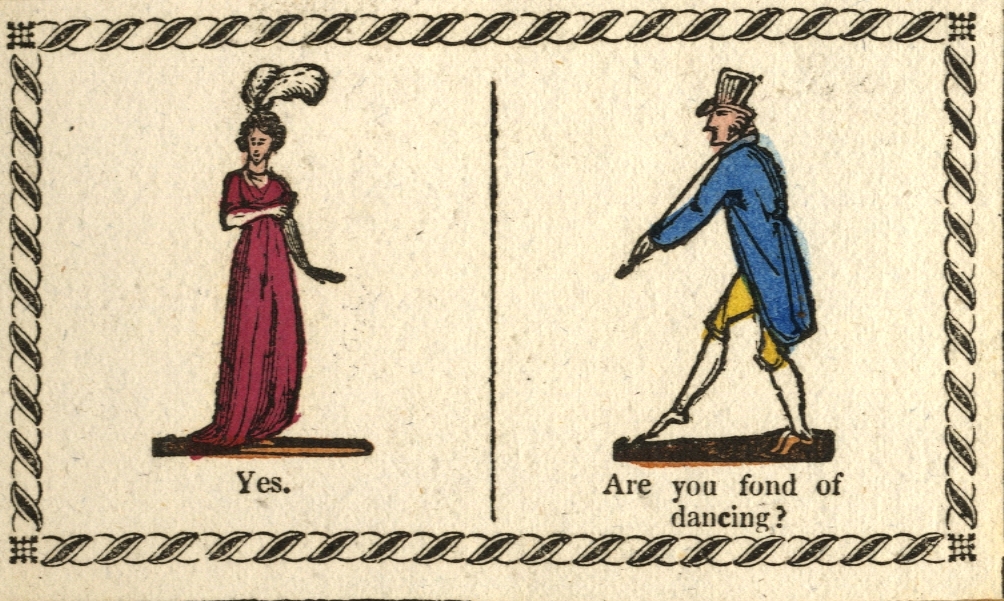
Bonnets are also very much in evidence in an early nineteenth-century set of cards that Douce kept with his wood engravings: each oblong print is divided in two squares in which two characters (usually one male and one female) appear in different attitudes, with captions below:

Anonymous, Parlour game, c. 1800-25, hand-coloured wood engraving (Ashmolean Museum, Oxford)

The parlour game to which they pertain probably consisted in splitting the cards, distributing the male and female characters among the company assembled, and then pairing them again to create random conversation lines:

We suppose that the players would be amused by the resulting scenes of courtship, whether successful, as in the example above, or not, as can be seen below:

Needless to say, no self-respecting Jane Austen heroine would be caught dead playing such a game.

*BBC News on Pride and Prejudice’s 200th anniversary


Posted in Colour, Costumes, Everyday life, Fashion, Games, Literature, Prints, Wood-engravings | Leave a comment

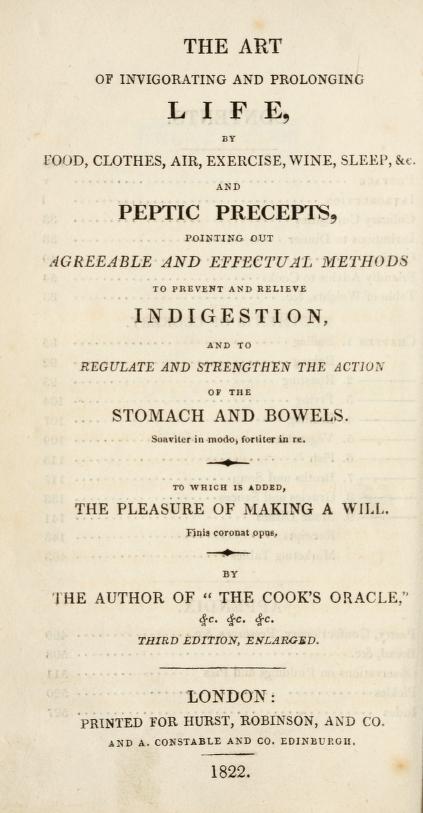
The cook’s oracle

In December 1826, Douce wrote to his friend George Cumberland:

 If you will write a book of cockery for your Bristoldians & other gormandizers, you will get as rich as Dr Kitchener, who told me that he has sold 20,000 of his “Cook’s Oracle” & out of each copy pockets 1/6d.

Douce was referring to the ‘epicure and writer’ William Kitchiner (1778-1827), whose cookery book went through many editions and, according to the DNB, ‘demonstrated Kitchiner’s familiarity with the entire process, from shopping, through preparing and serving the dishes, to cleaning up’:

Anonymous, The vegetable woman, c. 1815-30, wood engraving (Ashmolean Museum, Oxford)

Douce owned not only the Cook’s Oracle, but also the rest of Kitchiner’s oeuvre, including his Peptic precepts (1821) and The pleasure of making a will (1822):

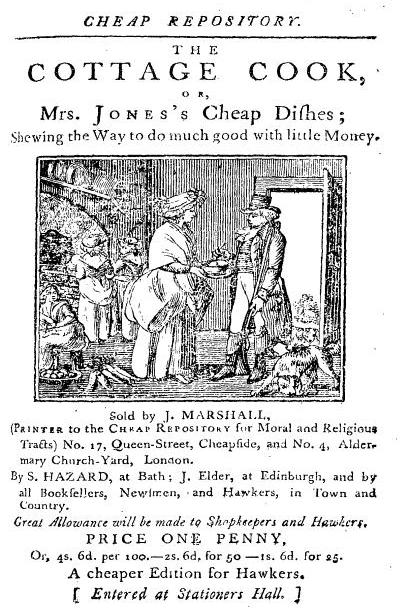
Hannah More’s The Cottage Cook, or Mrs Jones’s Cheap Dishes (c. 1815), Robert May’s The Accomplish’d Cook, or the art and mystery of cookery (1665), The Accomplish’d lady’s delight in preserving, physick, beautifying, and cookery (1675), and Thomas Dawson’s The good huswifes Iewell, deuises for conceites in cookery (1596) were other works on the same subject that could be found in Douce’s library:

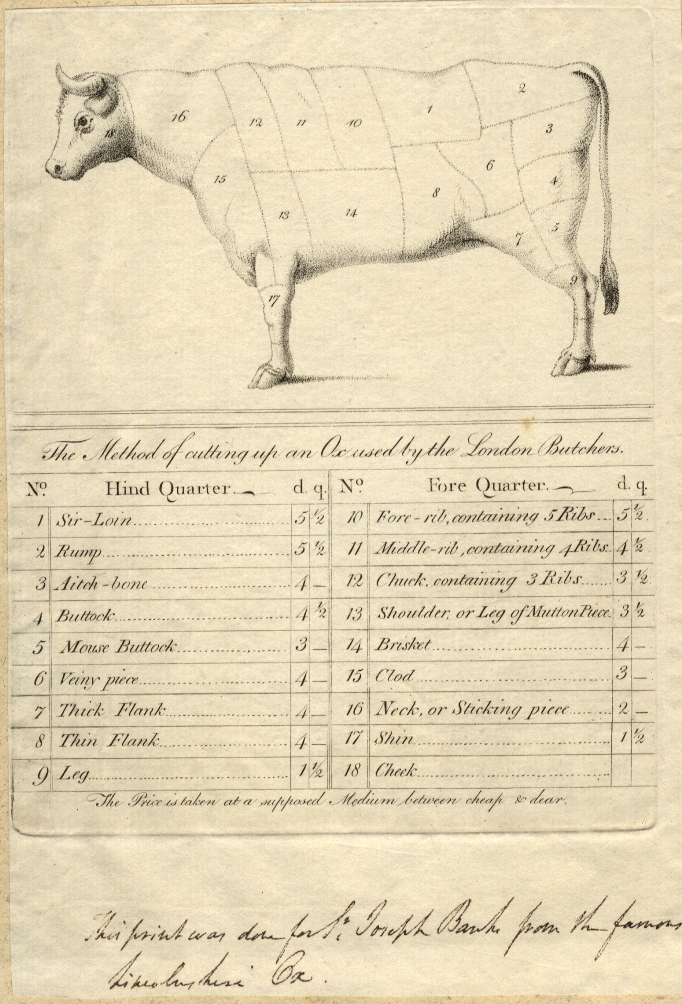
Douce’s portfolios also contained prints on ‘Cooking, brewing, baking, etc’. These include a diagram explaining The method of cutting up an Ox used by the London Butchers, which, according to Douce’s annotation, “was done for Sir Joseph Banks from the famous Lincolnshire Ox”:

Anonymous, The method of cutting up an Ox, c. 1792, etching and stipple (Ashmolean Museum, Oxford)

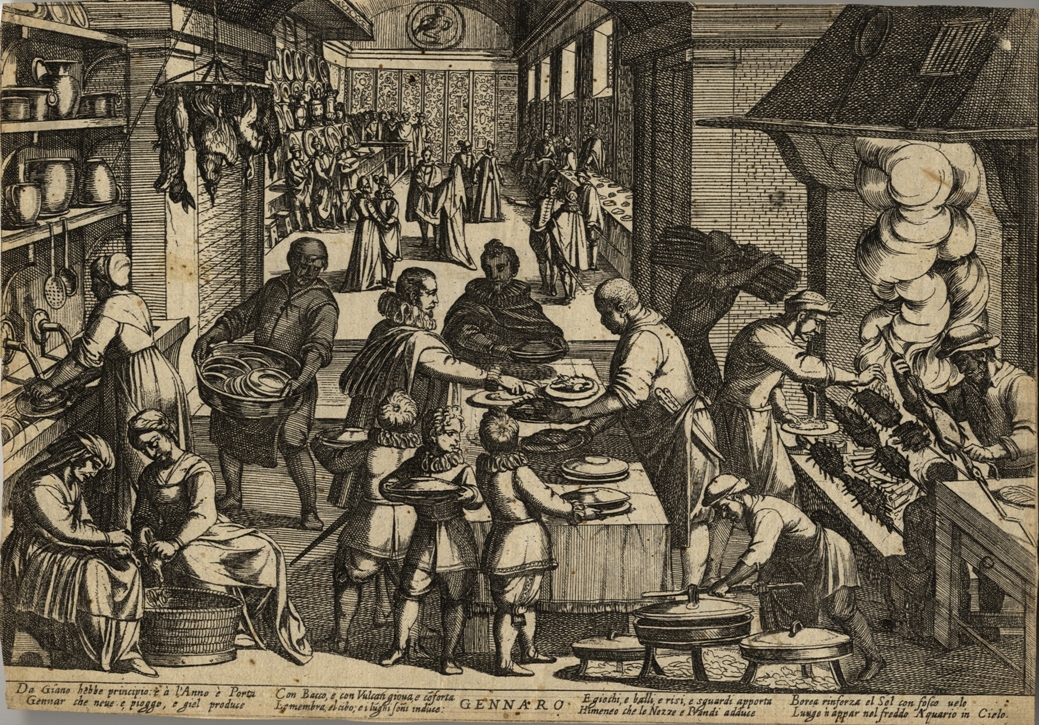
Coincidentally, the chef to Sir Joseph Banks was also responsible for the meals served at the weekly meetings of the ‘committee of taste’ hosted by Kitchiner at his home in Warren Street. In the same folder where Sir Joseph’s ox is kept, we find this sixteenth-century kitchen with which Antonio Tempesta represented January in his series The Months:

Antonio Tempesta, Gennaro, 1599, etching (Ashmolean Museum, Oxford)
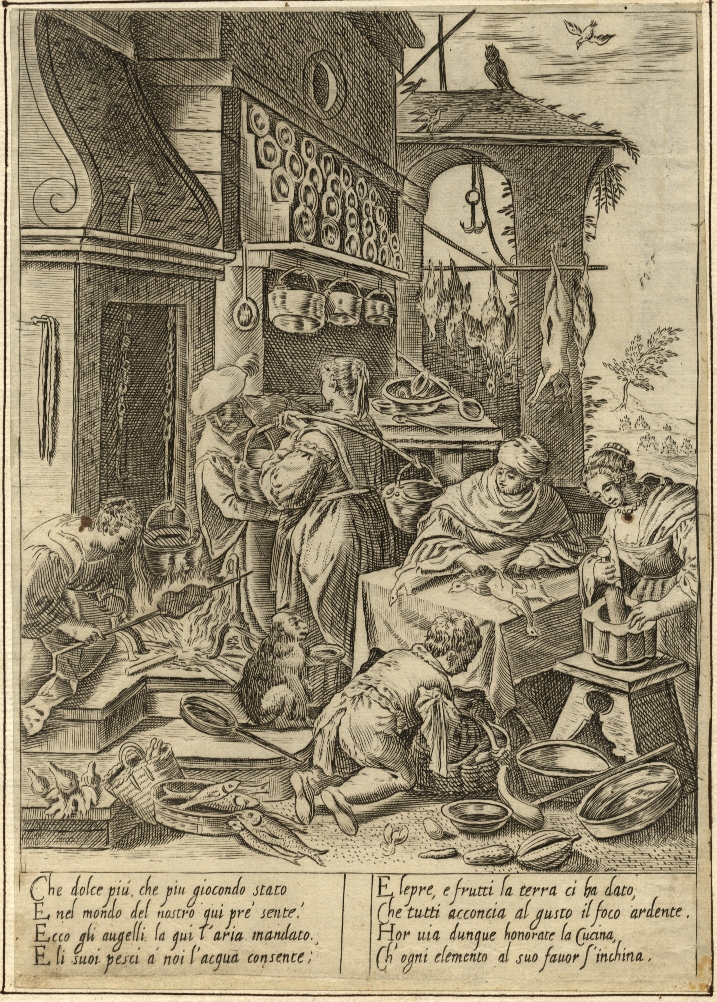
To the plucking and roasting in Tempesta’s kitchen, other cooking-related activities such as skinning and grinding are added in the print below, which reproduces the left-hand side of Jacopo Bassano’s The Rich Man and Lazarus:

After Jacopo Bassano, The Rich Man and Lazarus, 17th century, etching (Ashmolean Museum, Oxford)
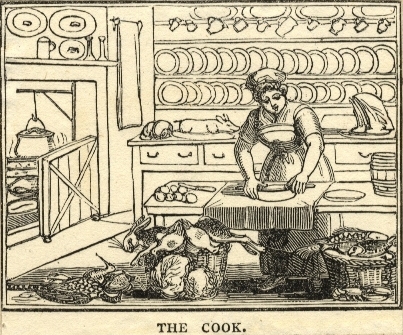
As you can see, some verses in praise of the kitchen “to which the four elements bow” are inscribed below the image. They explain how water provides the cook with the fresh fish lying in the foreground, while both the vegetables scattered on the floor and the poor hare skinned on a table on the right were once nurtured by the earth. Air and fire are alluded to by the poultry that is being roasted in the background. A very similar idea underlies this early nineteenth-century kitchen scene which, like The vegetable woman above, was probably produced as an illustration to a children’s book:

Anonymous, The cook, c. 1815-30, wood engraving (Ashmolean Museum, Oxford)

Posted in Books, Cookery, Everyday life, Feast, Literature, Networks, Physicians, Wood-engravings | Leave a comment

A medley print

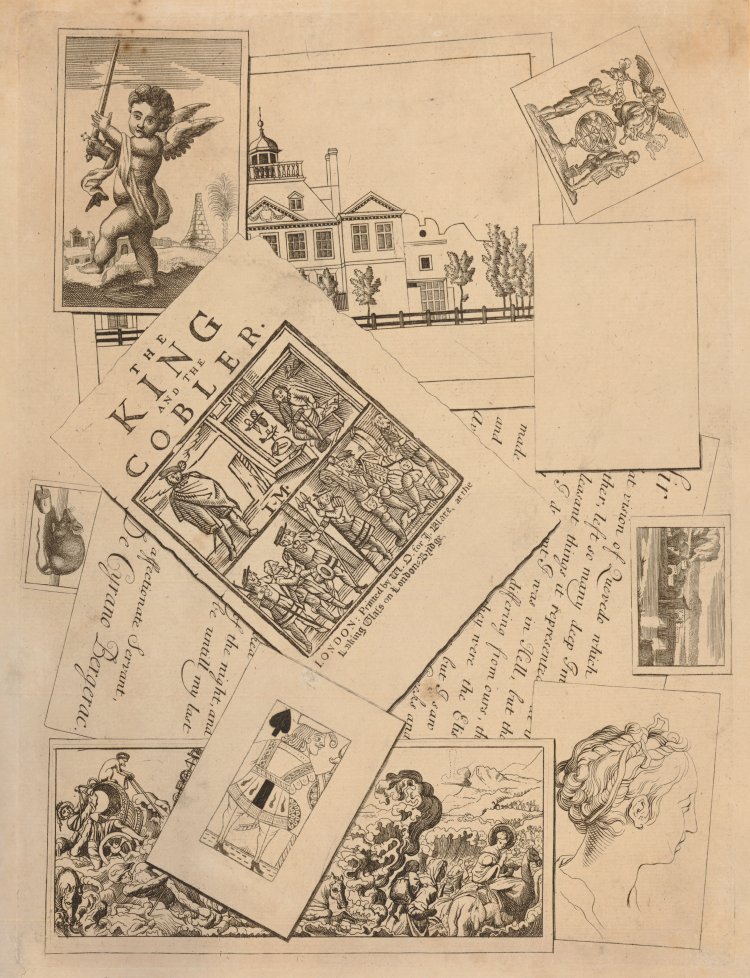
Medley prints like the one below really capture the sense of mixture, the hotchpotch quality, and the endless referencing that characterize Douce’s folders:

Sutton Nicholls, [Medley print] The king and the cobler, 1702-1710, hand-coloured etching and engraving (Ashmolean Museum, Oxford)

Unlike the impression in the BM, Douce’s print bears the inscription ‘Designed, and Engraven, and Sold, by S: Nicholls’, which almost certainly refers to the draughtsman and engraver Sutton Nicholls (1668-1729). Nicholls is known mainly for his views of streets and buildings in London, very similar to the image of a red brick house to which his name and address are attached here. The blank sheet on the right side of the BM print becomes a five of hearts in the hand-coloured Ashmolean print, and the date 1694 is added to the publication details on the title-page of The King and the Cobler:

Anonymous, Medley print, 1730-60, etching and engraving (London© The Trustees of the British Museum)

Nicholls minutely reproduced the woodcut that illustrated several editions of the story of the merry cobbler enriched at court after entertaining Henry VIII incognito. The chapbook, based on an older ballad, was often reprinted between the late seventeenth and the early nineteenth century. It is a good example of the black letter books that Douce collected and valued as ‘copious stores of information’ resulting from ‘the earlier labours of our countrymen’, as he explained in the preface of his Illustrations of Shakespeare.

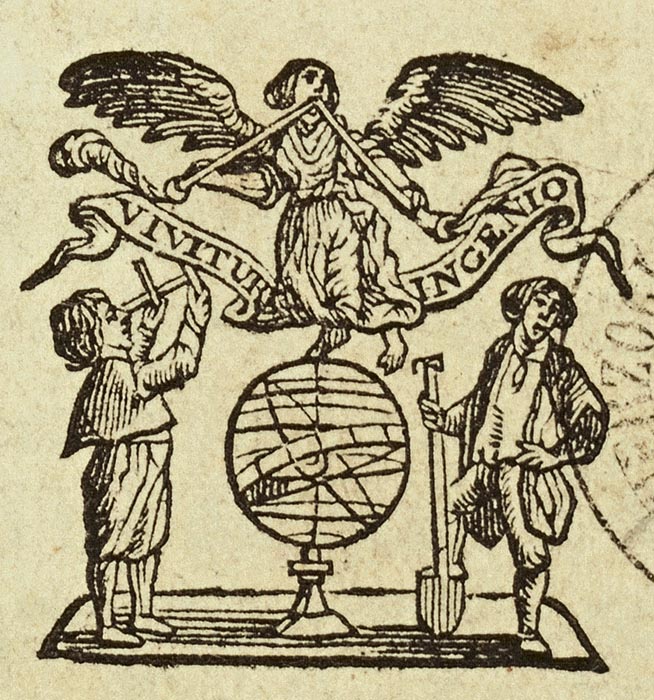
Nicholls proudly displayed his skill as a printmaker by imitating the expressive coarseness of the popular woodcut in another technique (etching). But his virtuosity is also in evidence when trying to replicate different styles, as can be seen in the juxtaposition of the title-page and the more delicate woodcut on the top right corner. The latter was probably copied after a publisher’s device -a very similar woodcut was used, for instance, by the Dutch cartographer Johannes Janssonius (1588-1664). It shows Fame (masked in Nicholls’s version) standing on an armillary sphere, with two men holding a spade and a mathematical instrument below and the motto “Vivitur ingenio”:

Among the remaining scattered prints we see depictions of a mouse, a landscape, Cupid as a boy carrying a sword, the Crossing of the Red Sea, the Jack of Spades, and a female head. A few lines from a letter that seems to reproduce the Lettres Satiriques by Cyrano de Bergerac (1619-1655) can be read below. They refer to the satire published under the title ‘Vision of Hell’ by the Spanish author Francisco de Quevedo in the third part of his Sueños. Needless to say, Douce owned Bergerac’s letters, as well as Quevedo’s works and some curious versions and translations of the latter, such as the Nuits Sévillanes (Brussels, 1700) from which this frontispiece is taken:

Posted in Ballads, Books, Colour, History of printmaking, Medley print, Prints, Woodcuts | 4 Comments

The Star of the Kings

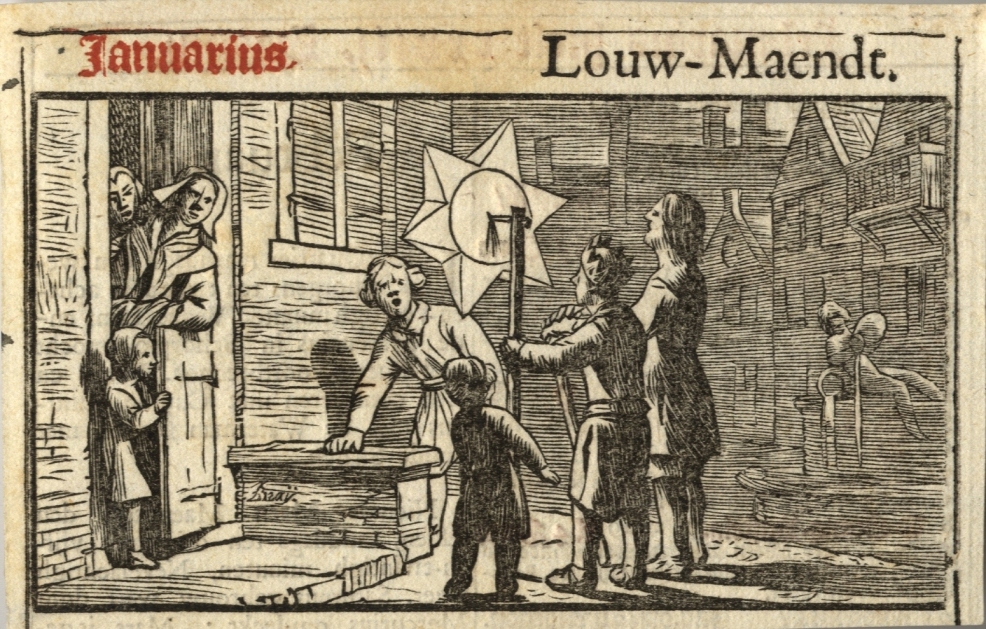
A few months ago, I came across the image below while cataloguing a series of prints of the months from a late seventeenth-century almanac in Douce’s collection:

Christoffel van Sichem IV and Jan de Bray, Januarius / Louw-Maendt, c. 1694, woodcut (Ashmolean Museum, Oxford)

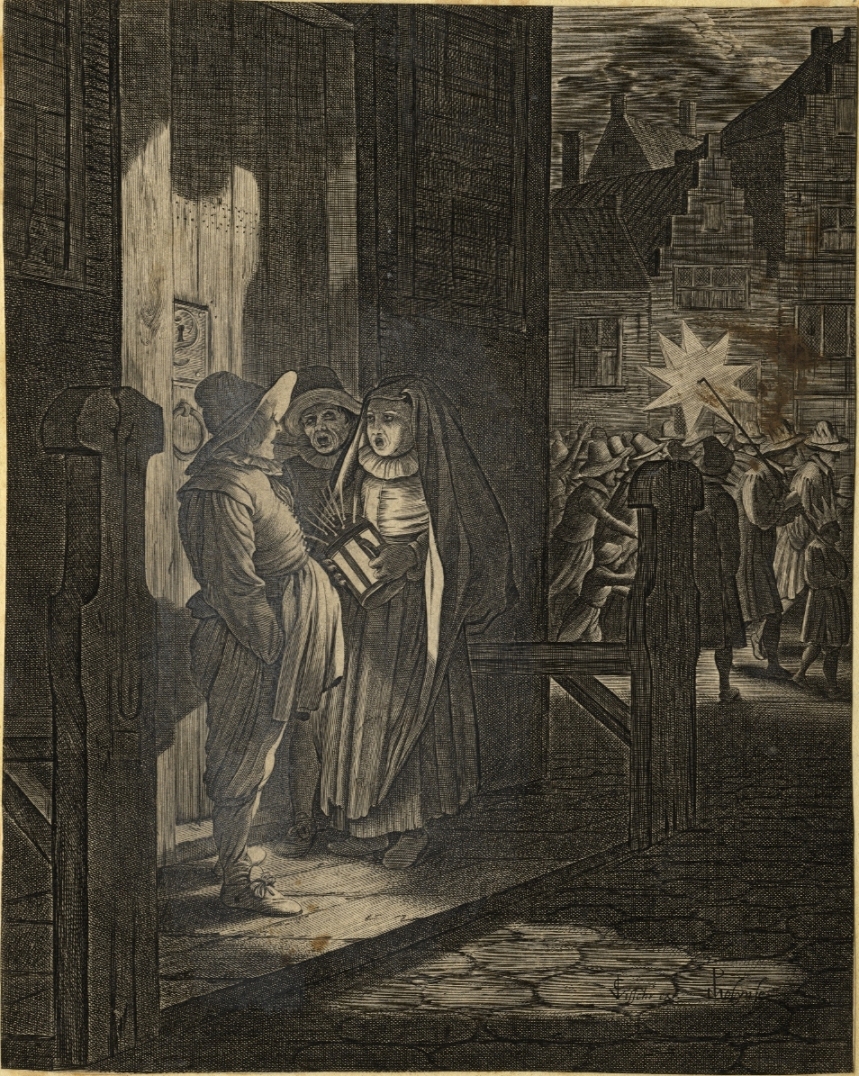
The man pouring water from a vase next to a fountain in the background of this nocturnal scene alludes to the Zodiac sign of Aquarius. The foreground, however, is occupied by a group of children that go from house to house carrying a lantern in the shape of a star. They celebrate the feast of Twelfth Night which, according to Anke A. van Wagenberg-ter Hoeven, was ‘the most important family gathering of the year in the seventeenth-century Netherlands’. Two impressions of Jan de Velde II’s The star of the kings, considered as ‘the earliest depiction of star-singers’, were kept by Douce with his prints of popular amusements:

Jan van de Velde II after Pieter de Molijn, The star of the kings, c. 1630, engraving (Ashmolean Museum, Oxford)

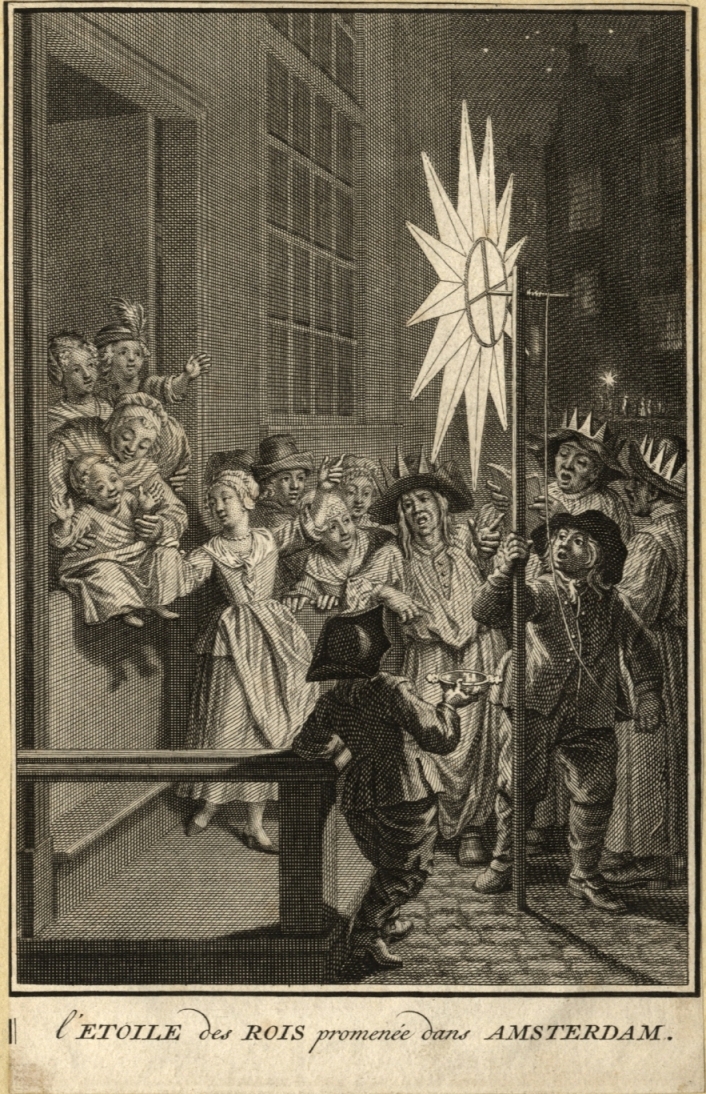
Bernard Picart also included the star-singers among his illustrations for the Cérémonies et coutumes religieuses de tous les peuples du monde (1723-1743):

Bernard Picart, L’Etoile des Rois promenée dans Amsterdam, 1726-33, engraving (Ashmolean Museum, Oxford)

Douce cut Picart’s illustration from the book and he filed it with the print by Van de Velde, on the back of which he pasted a piece of paper with the account of the Dutch Twelfth Night provided in the Cérémonies. A compulsive extractor (and annotator), Douce later added another scrap scribbled with a description of a parade involving the three kings and a star that took place in Florence in 1467, found in Machiavelli’s Istorie Fiorentine (1532).

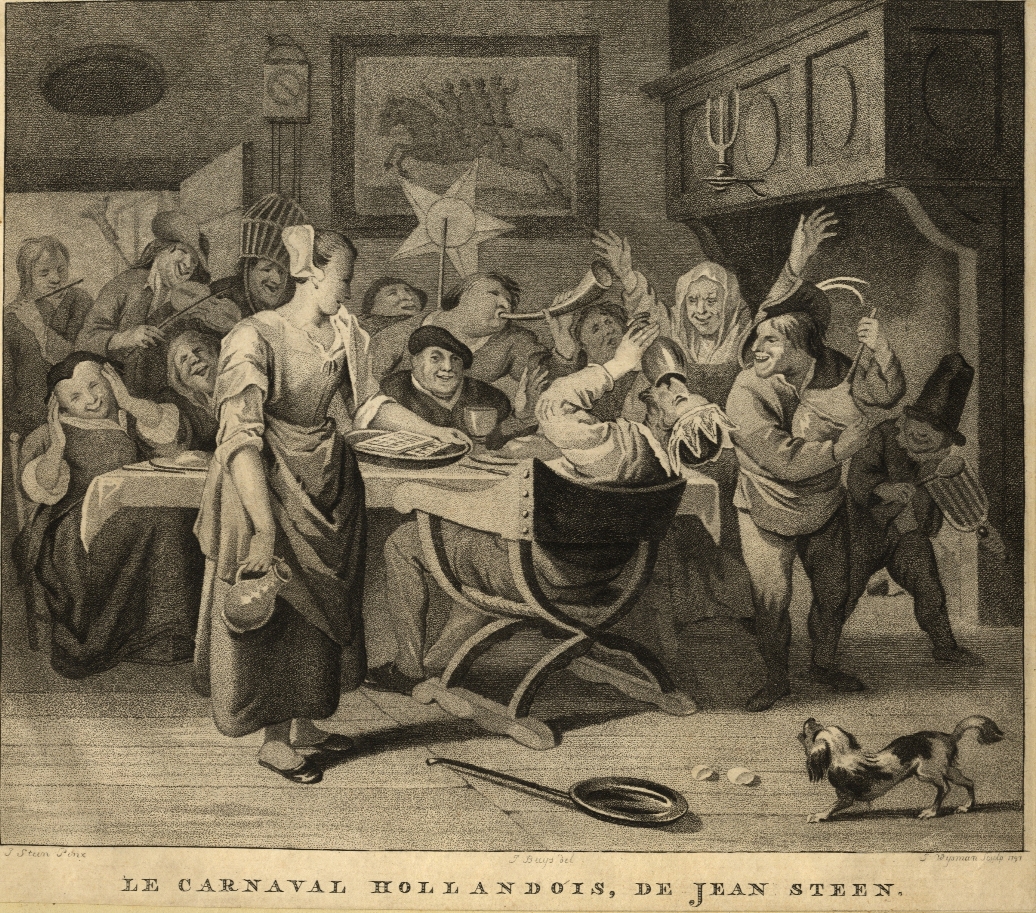
In her study of “The celebration of Twelfth Night in Netherlandish art”, Van Wagenberg-ter Hoeven establishes a distinction between ‘outdoor’ and ‘domestic’ celebrations. Both types are combined in this Carnaval Hollandois after Jan Steen, also from Douce’s collection, which shows the star-singers entering a room where the Twelfth-Night king drinks surrounded by revelers:

J. Wysman after Jan Steen, Le Carnaval Hollandois, 1797, stipple (Ashmolean Museum, Oxford)

Posted in Almanacs, Carols, Engravings, Everyday life, Feast, Festivals, Prints, Seasons, Stipple, Zodiac | Leave a comment

A tale for Christmas 1779

On 15 January 1821, Douce wrote in his Book of Coincidences that he “had had a strange dream about Lady Craven”. Elizabeth Berkeley (1750-1828), who would become margravine of Brandenburg-Ansbach-Bayreuth after her second marriage following the death of Lord Craven in 1791, was a travel writer and society hostess who counted Samuel Johnson and Horace Walpole among her numerous acquaintance:

Ozias Humphrey, Elizabeth, Countess of Craven, c. 1780-3, oil on canvas (Tate Collection)

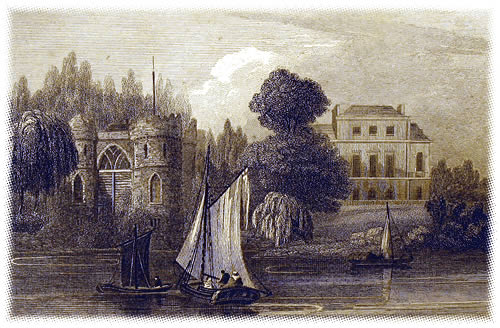
Unfortunately, Douce did not elaborate on his dream (the Book of Coincidences contains references to three further “strange dreams” involving a cross-bow eaten as a broiled fish, the Bishop of Norwich, and a disembodied head “on which a large quantity of rouge had been coarsely laid”). But he mentioned Lady Craven again in September of the same year. After a visit to Dr Fryer in Turnham Green, Douce “had purposely walked to Brandenburg house”, where the margravine lived before it was rented by Queen Caroline:

J. P. Neale after James Lewis, Brandenburgh House and Theatre, Middlesex, 1815, engraving

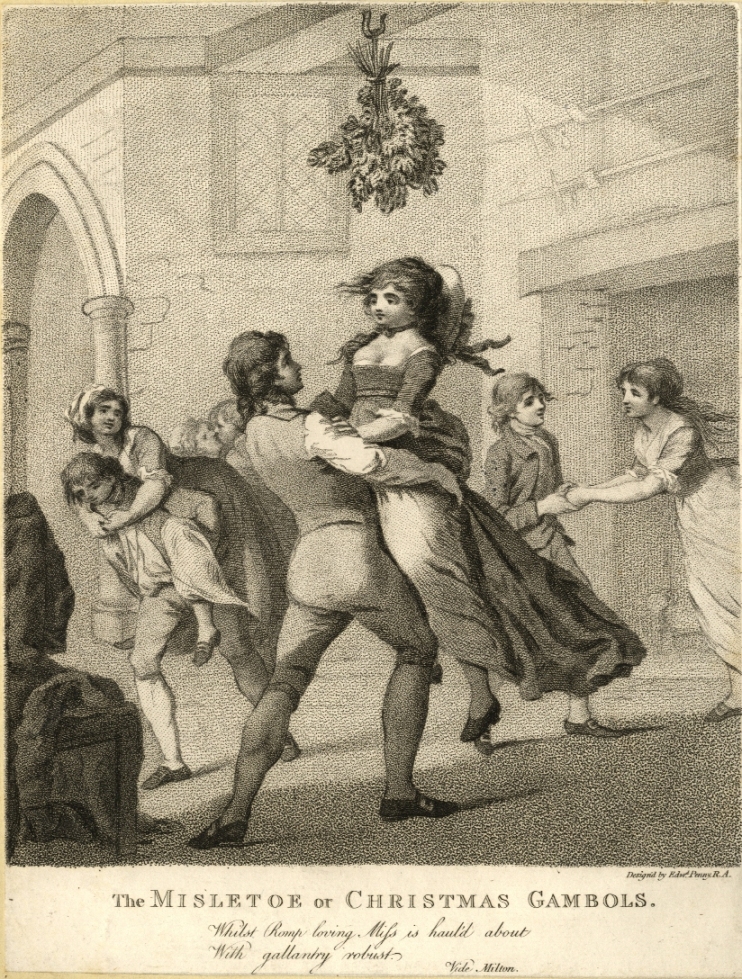
While sorting out some papers on his return home that evening, “Lady Craven’s novel of Kinkvervankotsdarsprakengotchderns turned up accidentally which I read”. The full title of the novel in question is  Modern anecdote of the ancient family of the Kinkvervankotsdarsprakengotchderns: a tale for Christmas 1779 and the third edition, bequeathed by Douce to the Bodleian, was published in 1781. There is nothing Christmassy about the story itself, but the author hoped that the dedicatee, Horace Walpole, would consider her “little book” as “an acceptable Christmas box”.

After Edward Penny, The Mistletoe or Christmas Gambols, 1796, stipple (Ashmolean Museum, Oxford)

Posted in Books, Manuscripts, Prints | Leave a comment

The ruff-setter

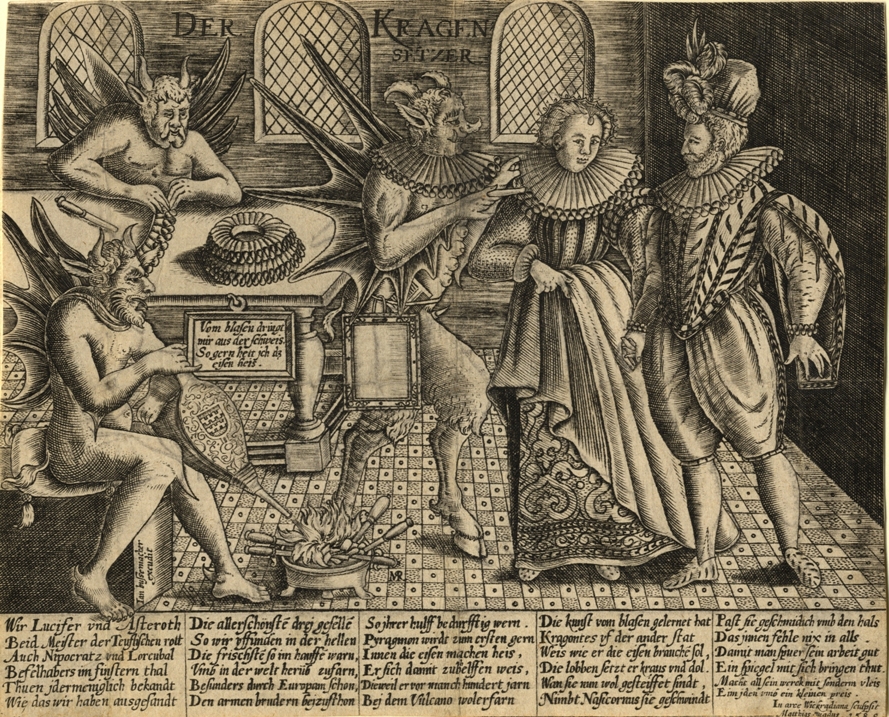
In 1817, the April issue of The Critical Review carried an article on Philip Stubbes’s The Anatomie of Abuses (1583), in which Douce and his print Der Kragen Setzer are mentioned with regard to extravagant fashions and to the moral perils associated with them:

Mathias Quad, Der Kragen Setzer, 1589, engraving (Ashmolean Museum, Oxford)

The Critical Review noticed that, in his Illustrations of Shakespeare (1807), Douce had described the print as an example of the theme of the Devil’s ruff-shop, of which another version, published by Joannes Galle after Maerten de Vos, can also be found in his collection:

After Maerten de Vos, Diaboli Partus Superbia, c. 1600-20, engraving (Ashmolean Museum, Oxford)

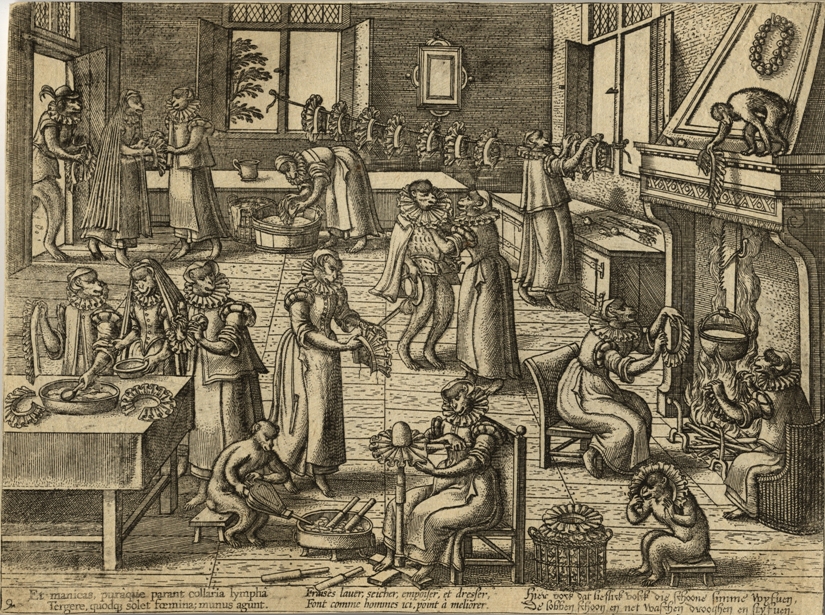
Douce’s attention focused on the “poking-sticks” to which the inscription below the image refers -both Douce and his friend George Steevens considered these satirical prints as visual evidence of the meaning of the phrase ‘poking-sticks of steel’, used by Shakespeare in Winter’s Tale. Douce was, again, drawing upon his own portfolios when he added that “other prints represent several monkeys habited in ruffs, and busily employed in poking and starching them”:

Pieter van der Borcht, Laundry, c. 1562, etching (Ashmolean Museum, Oxford)
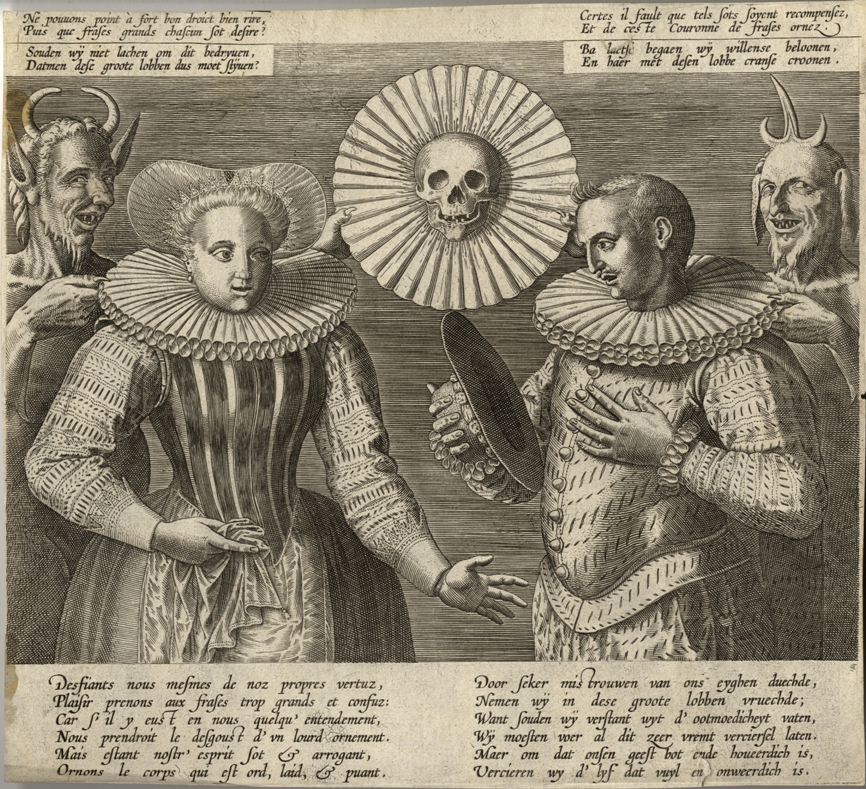
Amusing as these images might seem, the message conveyed by their ruff collars was rather serious. They were associated with Pride and Excess, which would ultimately lead their reckless wearers to eternal damnation. Douce also kept several satirical prints in which well-starched ruffs acquire more sinister connotations:

Anonymous, Ne pouvons point à fort bon droict bien rire…, c. 1600, engraving (Ashmolean Museum, Oxford)

Posted in Costumes, Engravings, Everyday life, Fashion, Prints, Satirical prints, Shakespeare | Leave a comment

Britannia Excisa

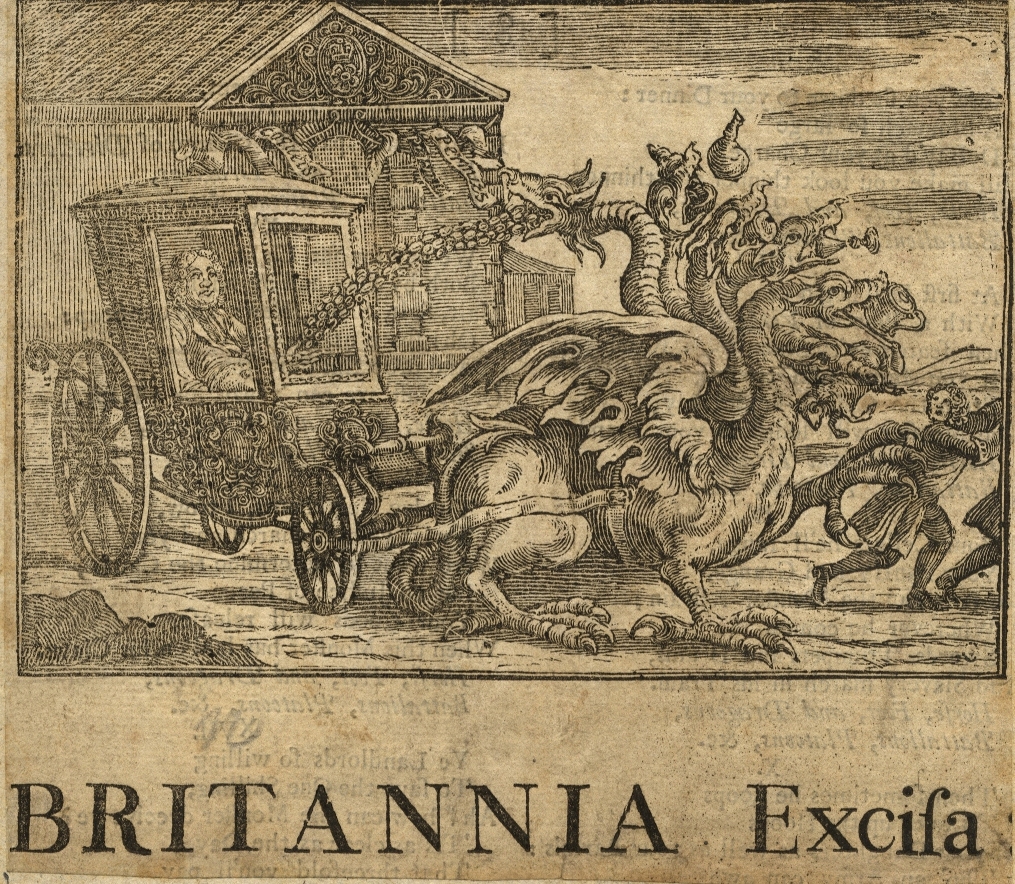
This satire on Robert Walpole’s 1733 Excise Bill was misplaced (maybe by Thomas Dodd, who did some rearranging after Douce’s death) and kept among Douce’s wood-engravings, which I have been cataloguing this week:

Anonymous, Britannia Excisa, 1733, woodcut (Ashmolean Museum, Oxford)

The print has been cut from a pamphlet, as can be seen in this impression in the British Museum:

Anonymous, Britannia Excisa: Britain Excis’d, 1733, woodcut and letterpress © The Trustees of the British Museum

The accompanying ballad refers to the Excise crisis, “when it seemed that the entire country was rebelling against Walpole government’s proposal to extend their taxation powers to necessities like wine and tobacco” (see S. Aspden’s ‘Ballads and Britons’, Journal of the Royal Musical Association, vol. 122, 1997, p. 41). According to the text, the six-headed dragon that represents the Excise scheme gobbles “Beef, Bread and Bacon”, while one of its heads throws gold back to the Minister, sitting comfortably in a chaise behind.

The print in the BM belonged to Edward Hawkins (1780-1867), Keeper of the Department of Antiquities of the Museum since 1826. He was almost certainly the Mr Hawkins who visited Douce to enquire about a medal given to the latter by John Flaxman on 24 December 1819. He was also the ‘E. Hawkins of the Museum’ whom Douce asked for an introduction to Thomas Burgon in 1833 (see Douce’s book of Coincidences). Moreover, his portrait was kept by Douce with his images of “English literati”:

Maxim Gauci after Eden Upton Eddis, Edward Hawkins, 1833, lithograph (Ashmolean Museum, Oxford)

When I catalogued Douce’s collection of satirical prints a few months ago, I noticed that, despite being much smaller, to some extent it replicates the collection of satires gathered by Hawkins and purchased by the BM after his death.

Posted in Ballads, Broadsides, Collections and Collectors, Networks, Prints, Satirical prints, Tax, Woodcuts | Leave a comment

“The Puck of Commentators”

One of Douce’s most assiduous correspondents in the 1790s was the Shakespeare scholar George Steevens (1736-1800), of whom the DNB says that “his wit and the associated learning [...] earned him the name of the Puck of Commentators”:

John Beckett after George Dance, Portrait of George Steevens, 1770-79, etching (The British Museum)

From his letters to Douce, it is clear that Steevens was a keen collector of prints and that their tastes and interests were rather similar. Douce and Steevens often exchanged not only information about works in their respective collections, but also prints, such as this ‘Exact copy of an ancient painting as large as the life, in Hungerfords Chapel at the East End of Salisbury Cathedral’:

Thomas Langley after J. Lyons, Copy of an ancient painting in Hungerfords Chapel, 1748, etching (Ashmolean Museum, Oxford)
Douce’s annotation on the margin explains that “The writing at bottom is Mr Steevens’s, to whom I am indebted for this print and the accompanying leaf of letter-press”, which has been pasted on the back of the mount:

Steevens sent the print as an example of “the manner of dressing and writing in England in the time of King Edward IV” -his own annotation shows that he was particularly interested in the cane “armed with spines” held by the young man in a leotard.

Douce, however, kept the print with his images of the Dance of Death. In 1833, he mentioned it as a depiction of “a portion of the Macaber Dance”, lost when the chapel was demolished in 1789-90. He added that “its destruction is extremely to be regretted, as, judging from that of the young gallant, the dresses of the time would be correctly exhibited” (The Dance of Death, London, 1833, pp. 52-53).

What else could be found in Steevens’s print collection? The catalogue of the sale, which took place in 1804 (Lugt 6819), shows a preference for portraits, 17thC and 18thC English prints, and Dutch and Flemish works. Lot 45 is described as “A Pair, from Breughel, Fat and Lean Kitchen”, framed and glazed. We know that Douce attended the sale because, in his Collecta, he wrote that he had “unaccountably missed” these two prints at the time. Nevertheless, he bought them “accidentally” a few months later when, acting on a tip from his friend Richard Twiss, he came across them again at a bookseller’s in Paddington Street:

Pieter van der Heyden after Pieter Bruegel the Elder, The Rich Kitchen, 1563, engraving (Ashmolean Museum, Oxford)
Douce had more than one impression of the print, but the annotation at the bottom confirms that this is the one formerly belonging to Steevens: “G.e S. Dono dedit / Henricus Blake Aren.r / talium formarum / Spectator amantissimus / 1766″.

The question remaining is: who was Henry Blake? In a footnote to his edition of Shakespeare’s plays, Steevens referred to “a gentleman to whom I have yet more considerable obligations in regard to Shakespeare. His extensive knowledge of history and manners, has frequently supplied me with apt and necessary illustrations [...] I indulge my own vanity in affixing to this note, the name of my friend Henry Blake, esq.” (p. 48).

Posted in Books, Collections and Collectors, Costumes, Dance of Death, Everyday life, Literature, Paintings, Prints, Shakespeare | Leave a comment

“To the friend of curious and interesting things”

Among Douce’s portraits of artists, there is a silhouette of the Swiss engraver, publisher, and art dealer Christian von Mechel (1737-1817):

Christian von Mechel, Amicis Sacr: Christ. a Mechel Civis Basileensis, 1791, etching and engraving (Ashmolean Museum, Oxford)

The print is annotated with Mechel’s dedication to Douce:

I beg dear Mr Douce, the friend of curious and interesting things, to allow the shadow of his new friend from Switzerland to follow him home in his absence. / London, 15 September 1792 / Chr. de Mechel

Between 1780 and 1795, Mechel published the four parts of his Oeuvre de Jean Holbein, ou, Recueil de gravures d’après ses plus beaux ouvrages, accompagnés d’explications historiques et critiques. The first volume, dedicated to George III, contains Mechel’s take on Holbein’s Dance of Death:

Christian von Mechel, Le Triomphe de la Mort, 1780, etching and engraving (©Pitts Theology Library, Emory University)

In 1833, Douce published his own study on the subject. He included Mechel’s work on his list of copies after Holbein’s prints (see no. XI, p. 132):

Douce’s Dance of Death

A copy of Mechel’s Oeuvre de Jean Holbein can be found among the books that Douce bequeathed to the Bodleian. But eight plates originally produced for Mechel and never published were kept by Douce with his prints of the Dance of Death:

Cancelled plates for Christian von Mechel’s ‘Le Triomphe de la Morte’, 1771 (Ashmolean Museum, Oxford)
They include a different title-page and the mount on which they are pasted has been annotated by Douce: ‘These and the 4 following were originally engraved for M. de Mechel’s work, but cancelled and never published’.

Posted in Books, Dance of Death, History of printmaking, Portraits, Prints | Leave a comment

Douce’s Persian manuscripts

Among Douce’s portraits of ‘Learned Foreigners’ there is a plate from the European Magazine depicting the traveller Mirza Abu Talib Khan Isfahani (1752-1806):

Ridley after Drummond, Aboo Taleb Khan, 1801, etching and stipple (Ashmolean Museum, Oxford)
Douce wrote under the portrait: “This gentleman paid me a visit in Gower Street”. Their meeting must have taken place sometime between 1800 and 1803 during Khan’s European tour. In 1810, The travels of Mirza Abu Taleb Khan, in Asia, Africa, and Europe, during the years 1799, 1800, 1801, 1802, and 1803 were translated by Charles Stewart and published in London (for Douce’s copy, see Bodleian Douce M 27-28).

What did Douce and his visitor talk about? In the catalogue of books and manuscripts bequeathed by Douce to the Bodleian there is an entry on a Persian album containing ‘three of the five celebrated poems of Nizami’ (no. 348, p. 60):

Prefixed to the volumes are an account of the story of Leila and Mejnoun, by Mr. Douce: “some particulars relating to this Ms. communicated by Abootalib Khan, a gentleman from Lucknow” [...] and the note following: “This Ms. originally belonged (as Aboo Talib told me) to Shaw Allum, whose library fell into the hands of Youlan Kaudir Khan, and being afterwards distributed among his adherents, it passed to Sujah Dowlah, the father of Azof Dowlah, who has been deposed by Saudit Allee.

The manuscript is beautifully illustrated, as can be seen in this painting from Layla u Majnun:

Mughal, early 17th century, Majnun among the animals, Bodleian Library, Oxford, MS Douce 348, fol 42r.

According to Thomas F. Dibdin, Douce and his friends Sir Gore Ouseley (1770-1844) and Sir Charles Wilkins (1749-1836) ‘could expatiate with the happiest effect’ upon the ‘singularly interesting subject’ of Persian art. At the time, Wilkins was working on a dictionary of Sanskrit that he never completed; Ouseley’s Persian manuscripts, also in the Bodleian, include a seventeenth-century Mughal album containing calligraphy and paintings:

Muhammad Ikhlas i Abid, Shah Jehan and his court, watercolour and gilt on paper (Bodleian Library, Oxford)
 

Posted in Books, Collections and Collectors, Manuscripts, Networks, Paintings, Travel | Leave a comment