Departments

Cast Gallery

About the department

The Cast Gallery: upper floor

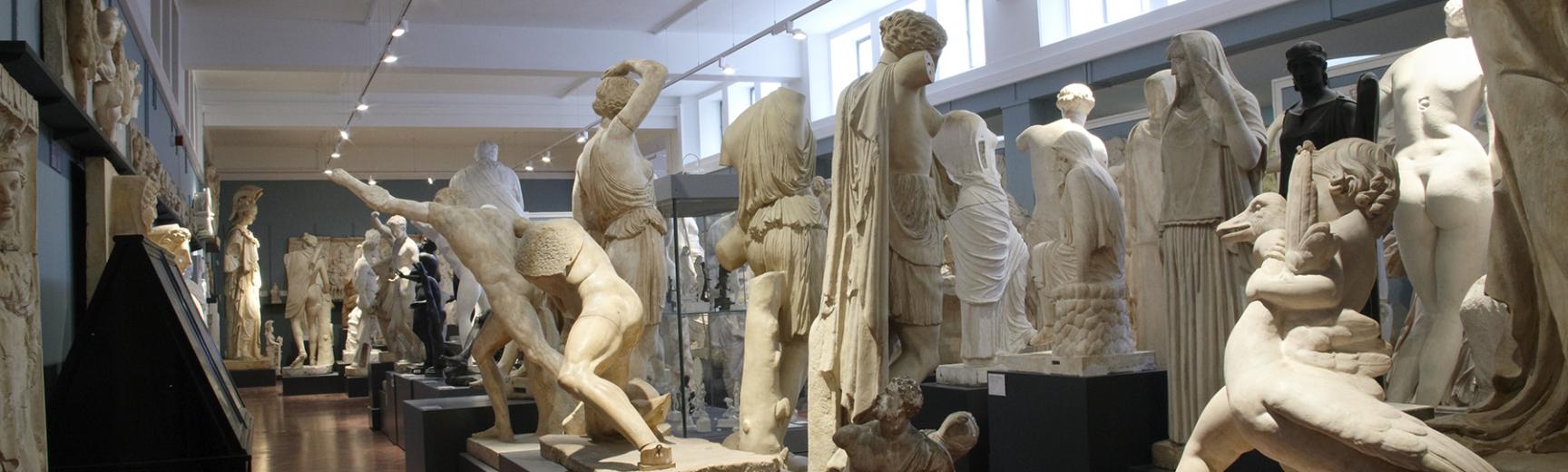
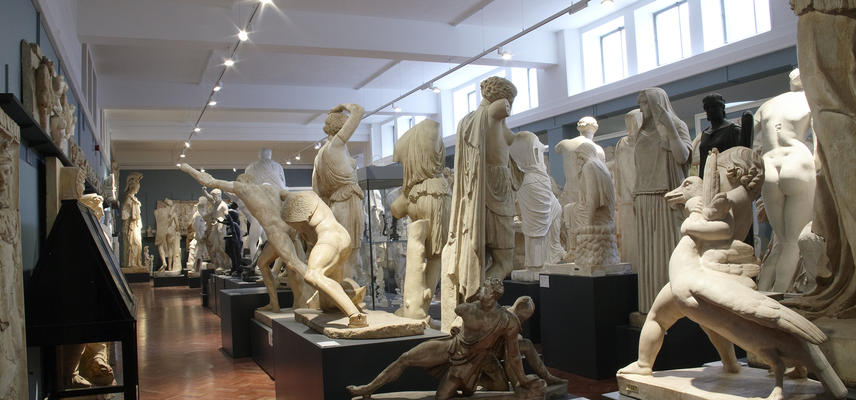
The Cast Gallery houses one of the oldest and largest collections of casts of Greek and Roman sculpture in the United Kingdom.

The creation of a systematic cast collection, for academic research and teaching purposes, began in the 1880s with the emergence of the new discipline of Classical Archaeology. Most of the casts acquired before 1914 were of Roman marble copies of Classical Greek statues, while almost all those acquired subsequently were of original marble and bronze sculptures of a broad range of archaeological types. The casts were originally displayed alongside marble sculpture in the Ashmolean Museum, and were moved to the present purpose-built gallery in 1959.

The Cast Gallery today contains some 900 plaster casts of statues, architectural sculptures and reliefs of the Greek and Roman periods. The collection is particularly strong in casts of Classical sculpture (fifth and fourth centuries BC), but also has important Hellenistic and Roman imperial material. The display includes casts from such major monuments as the Parthenon frieze, the sculptures from the temple of Zeus at Olympia, the Nike of Samothrace, the Laocoon, and the Prima Porta Augustus.

The upper floor displays casts of sculptures of the Archaic and Early Classical periods (c.600-450 BC), and a central focus is an excellent bronze overcast of the famous striding Zeus from Cape Artemision, presented to the Gallery by Sir Arthur Evans. There is also a fine series of casts of Late Archaic korai (votive statues of young girls) from Athens, together with a large scale-model of the Athenian Acropolis.

The Cast Gallery: lower floor

The lower floor displays casts of Classical, Hellenistic, and Roman material. A separate section is dedicated to Greek and Roman portraits, tracing the evolution and range of ancient public self-representation.

The gallery today is much loved by visitors, keenly used by school and university students and has been a regular resource for film documentaries.

The Research Archive for Greek and Roman Sculpture is based in the Cast Gallery from 1998. Its aim is to catalogue systematically the plaster casts and to present the catalogued objects in a computerized database that provides written and visual information about them in an accessible manner.

The gallery currently hosts the Beazley Archive, an invaluable research resource for students and senior scholars of classical archaeology. The archive offers electronic archives of Athenian figure-decorated pottery and gem impressions, together with the collection of an estimated 300,000 photographs, negatives and prints.

The Ashmolean Plan - how it affects the Cast Gallery

The Cast gallery will remain closed for most of the time during the building works. As part of the Ashmolean plan, a covered passage providing access between the new Classics Centre and Pusey Place will serve as a link between the north facade of the new Ashmolean and the Cast Gallery. From the new Rome and the Byzantine World Gallery of the main Museum, visitors will be able to walk directly into the ground floor of the Cast Gallery. The Beazley Archive will move to the Classics Centre.