|
|
Inter-Faith Exhibitions
The Service
The Service reaches out far beyond the University into the
wider community. With collections representing all the great
world religions, and strong curatorial expertise, the Ashmolean
Museum already provides a rich backdrop to the understanding
of different cultures and forms of belief. But the expertise
which currently serves Oxford University needs to contribute
to the community at large. We are planning inter-religious
exhibitions, devised to work at different levels, from the
national to the local. The displays will be accessible to
members of all the relevant religious groups.
The Exhibitions
The exhibitions compare the attitudes and achievements of
Near Eastern and Asian religions, including Judaism, Christianity,
Islam and the religions that evolved in South Asia, through
their art. The strategy is to integrate the material in such
a way that members of one community inevitably find themselves
learning about, and appreciating, the achievements of other
faiths. The first exhibition will be held in Oxford in early
2006. Related displays and exhibitions are planned elsewhere
in the U.K., including for example Glasgow, Bradford, Leicester,
Birmingham, Cardiff and London.
Proposed Exhibitions
Pilgrimage - The Sacred Journey
- explores the stages of pilgrimage: departure from everyday
life, the journey itself, sacred space, the central shrine,
and finally the return. The first exhibition is scheduled
to open in Oxford in early 2006 with local sponsorship.
Prophets, Saints and celestial Beings
- looks at intermediaries who help humans to gain access
to Divine inspiration and protection.
Celebrating the Sacred
- takes the visitor directly into the religious communities,
by focussing on all aspects of communal celebration: festivals,
processions, services, and rituals.
The Art of Scripture
- introduces the venerated texts of the different religions,
their languages, scripts, as well as attitudes towards illumination,
illustration and translation.
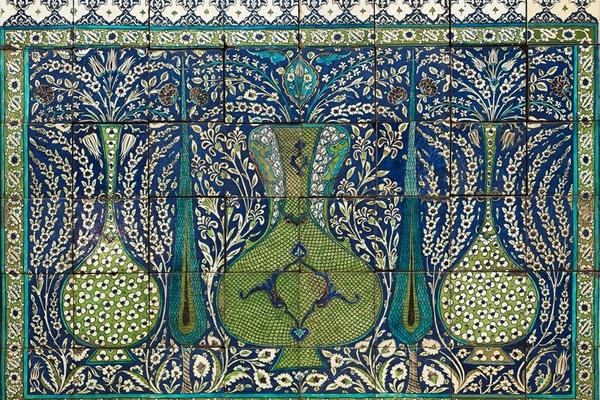
Ornament and its symbolism
- explores natural and mathematical forms and their role
in religous settings.
Top of page
|
|