Archaeological Periods: Anglo-Saxon (410-1066)

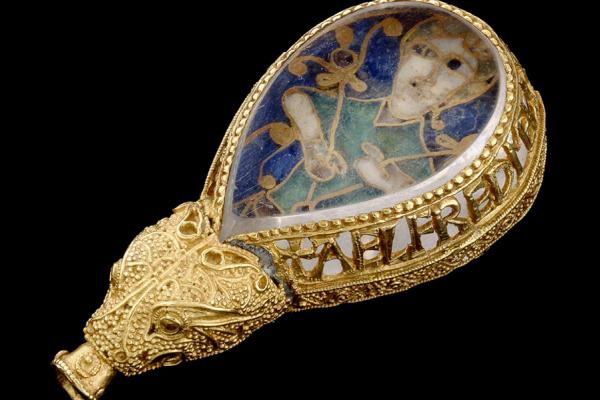
The Ashmolean has one of the best collections of Anglo-Saxon material in the country outside of the British Museum and one of its treasures is the Alfred Jewel, dating from the late 9th century. It was found in 1693 at Newton Park, Somerset and was bequeathed to the museum by Nathaniel Palmer in 1718. Its purpose is believed to be a pointer, an implement used to follow text.

the Alfred Jewel
the Alfred Jewel (AN1836p.135.371)

In the 4th century. Pictish, Scottish, Frankish and Scandinavian raiders from outside the Roman empire, became a threat to the authorities of Britan and Gaul during the late 4th century. Britain was invaded regularly by Picts from what is now Scotland and Scots from Ireland, as well as Germanic people from across the channel. A British Monk called Gildas wrote The Ruin of Britain around 540, in which he describes the evils happening to Britain in the most violent language. A second monk, The Venerable Bede, from the Northumbrian monastery of Jarrow, completed his Ecclesiastical History of the English People in 731. These two works describe the terrors the invasion by these Angles, Saxons and Jutes caused, and were very probably biased in their opinions, and can only be glimpsed through the eyes of the hostile native British.

Click to see a larger picture of the objects below

gold pendant from Faversham
Gold pendant from Faversham, Kent (AN1909.194)
saucer brooches from GloucestershireSaucer brooches from Gloucestershire (AN1961.98/99)
gilded saucer brooch from Fairford
Gilded saucer brooch from Fairford, Gloucestershire (AN1961.96)

The fifth and sixth centuries have sometimes been referred to as the 'Dark Ages'. It was always believed that the Anglo-Saxon invaded the eastern shores of Britain, slaying the native people. We now know that these people were probably invited to settle on the estates set up by the Romans. West Stow in Suffolk is probably such a site; this settlement was constructed on an already established Roman estate.

objects from West Stow?

The dating evidence for the Anglo-Saxon period is mostly archaeological and comes mainly from excavated pagan cemeteries, when the bodies were dressed in their best clothes and buried wearing their jewellery, such as Faversham in Kent.


gilt and garnet buckle from Faversham
Gilt and garnet buckle from Faversham (AN1909.139)

Cremations also took place, the cremated bones and sometimes melted objects such as tweezers and beads were then placed in urns, sometimes plain, but often beautifully decorated and burnished, such as at Sancton in Yorkshire.

Anglo-Saxon cremation urn from Sancton
Decorated cremation urn from Sancton (AN1886.1301)

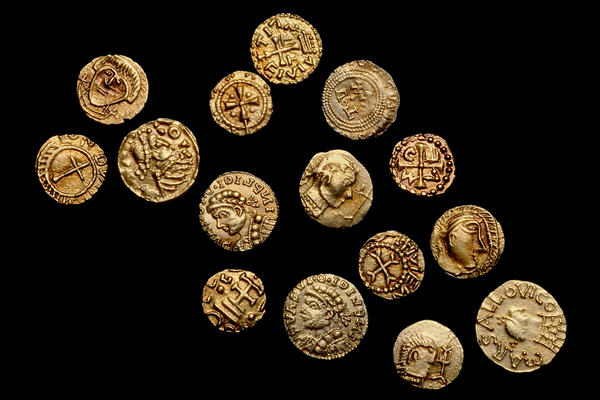
England achieved a great deal in the last years of the Anglo-Saxon period. English coinage was the major trading currency of Northern Europe, stone churches replaced wooden structures, cathedrals were starting to be constructed, the economy thrived. The beginnings of the settlements and parish system began and is still with us today.

Examples of Anglo-Saxon sites and objects in the collections include:

Anglo-Saxon cremation urn
The fifth century Anglo-Saxon cremation cemetery at Sancton, Yorkshire
gold and garnet brooch from Faversham
The sixth to seventh century cemetery at Faversham
the blue glass Cuddesdon Bowl
The blue glass bowl from Cuddesdon and an Object of the Month
the Alfred Jewel
One of the Museum's treasures, the Alfred Jewel and an Object of the Month

Top of Page

© Copyright University of Oxford, Ashmolean Museum, 2006. Last updated: March-2007