| Visiting | Features | The Collections |
Services | Online Resources |
More Resources |
SiteMap |
| Ashmolean
Museum of Art and Archaeology Previous Exhibitions more details |
| Reconstructing
a Masterpiece of Ancient Sculpture The Aphrodisias Fisherman in Oxford |
23rd
February to 8th June 2000 Cast Gallery |
|
Aphrodisias and the Old Fisherman
In the Hellenistic Period (323-31 BC) artists and poets sought out oblique, sometimes contemptible subject matter. A cultivated public enjoyed the aesthetic paradox of how ugly subjects could be made beautiful by being beautifully made. Poetry and art attest this refined interest in low-life figures.
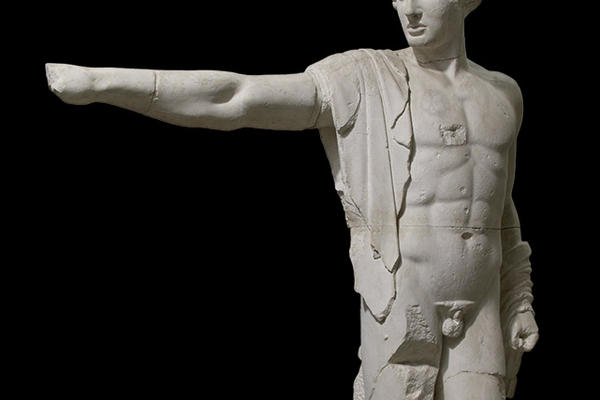
In the Roman Period, many remarkable floor mosaics represent fishermen at work and a detailed variety of fish to be caught and eaten. To eat a researched variety of fish was one of the essentials of refined living in antiquity, and domestic fish mosaics were markers of wealth and sophistication. A Hellenistic Masterpiece and Its Roman Reception The Aphrodisias Fisherman reflects a once-famous Hellenistic Statue of the third or second century BC. This original is now lost, but some twenty marble versions of it from the Roman period have survived. These versions show that the original statue emphasised the most unpleasant and pejorative aspects of its subject: an old body, ruined by a life of back-breaking toil, covered only with the crude loin cloth of the working slave. The Aphrodisias statue is a striking re-interpretation of the figure, remodeling many of the purposely ugly aspects of the type to present a refined, more attractive fisherman to serve as tasteful decoration for the city's public baths. |
|
| Current Exhibitions | |
| © Copyright University of Oxford, Ashmolean Museum, 2002 The Ashmolean Museum retains the copyright of all materials used here and in its Museum Web pages. Last updated: jcm/6-feb-2002 |
|
HomePage | Visiting
| Features
| The Collections Services | Online Resources | More Resources | SiteMap | Top of Page |