| |
Focus on the Object
This
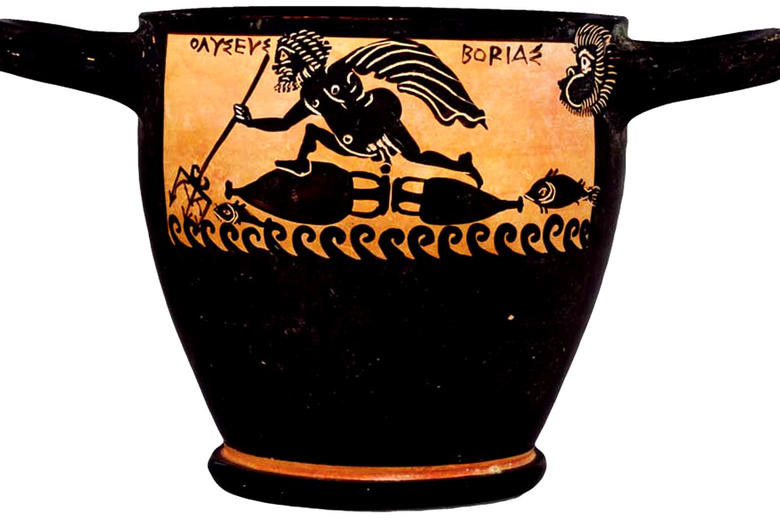
amphora of Panathenaic shape dates from the 6th-5th century BC. Pots
of this type were made to hold oil, for which athletes competed at
the Olympic Games in Athens. Up to 140 amphorae of oil were awarded
to the winner of the chariot race!
The ‘Black-Figure’ Technique:
The decoration you can see is known as the ‘black-figure’ technique.
This term refers to the colour of the men’s skin which turned black
during the firing process. If you look closely, you can see where
incisions were made to create details on the men’s bodies. By 520-450BC
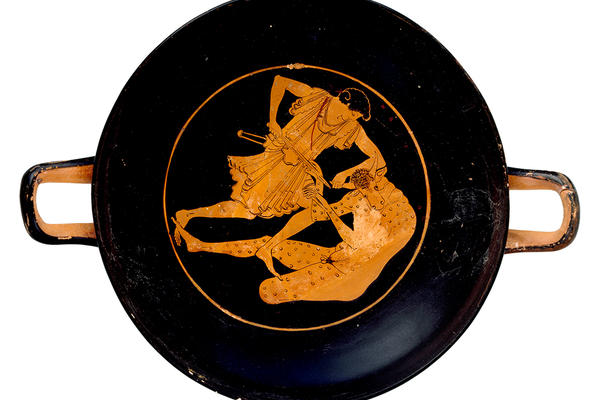
the ‘red figure’ technique became popular and the process was reversed
whereby the skin was left red and the background was fired black.
Both techniques evoked those of figured metalwork.
The Runners:
The runners depicted are taking part in the stadion (foot race). They
would begin at a starting line of carved stones placed across the
track, or a simple line in the sand. Trumpeters gave the signal to
start and also announced the winners at the finish. The finish was
judged by eye and only first place was awarded. As depicted on the
amphora, the athletes ran naked, though in early times a loin-cloth
was worn. The stadion was one of the events at the Olympic Games.
|
 |
|
|
|