The Thame Hoard is made up of five medieval
gold rings and ten silver groats (c.1351 c.1457). It was found
on the edge of the River Thame in 1940.
The
Thame Hoard: The Rings
The five rings contained within the Thame Hoard are all made of gold.
Three of them include stones believed to have magical properties.
Ring b is set with a peridot, ring c with a toadstone and ring d with
turquoise. Peridots were believed to offer protection to their wearers;
toadstone (in fact fossilised fish teeth and nothing to do with toads)
was supposed to bring a man victory over his enemies; while turquoise
was believed to change colour if placed near poison.
The remaining two rings include a personal ring (ring a), engraved
with ornamental flowers and a dedication in French tout pour
vous, and a reliquary ring (ring e). The latter is set with
an amethyst in the shape of a double armed cross and may have once
contained a holy relic. It is engraved on the back with the crucifixion
and is inscribed (in Latin) Remember me, O Lord.
Ring a
Ring b
Ring c
Ring d
Ring e
The
Thame Hoard: The Coins
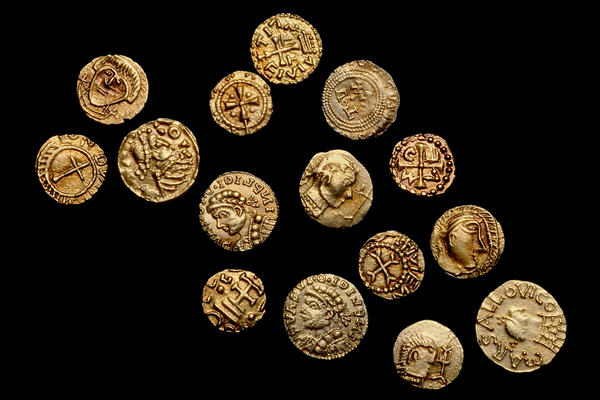
Ten silver groats dating from c. 1357 1457) were recovered
alongside the rings. The earliest coins in the hoard were minted in
London and display the portraits of the monarchs Edward III, Richard
II and Henry V. The remaining seven coins display the portrait of
Henry VI and were minted in Calais.
The lack of wear on many of these coins shows they had not long been
in circulation when they were lost. The coins are particularly important
as they help us to date the hoard to after 1457 (on the basis of the
date of the latest coin).