Portrait Coin of Demetrius Poliorcetes
Gallery 37, The Heberden Coin Room
Greek Art in Miniature case, Coin No.10


This silver tetradrachm is a portrait coin of Demetrius Poliorcetes, King of Macedon (Mainland Greece) from 306-283 B.C. A tetradrachm was worth four drachmas.

Greek Coins and the Hellenistic Period

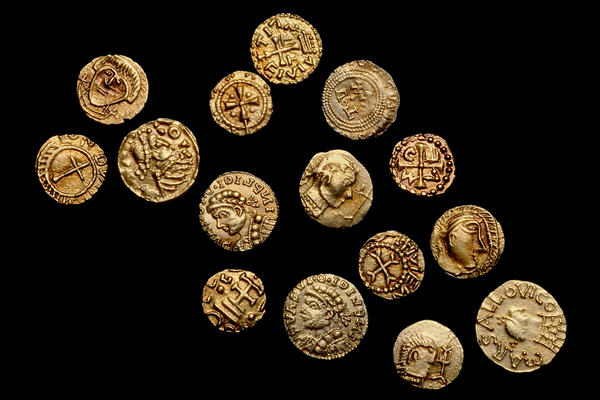
Greek coins display some of the finest Greek art and provide useful evidence as to changes in style. From them we can chart the change from stylised depictions of the late Archaic period (c.600 - 480BC) to the refined style of the Classical period (c.480-323BC) to the idealised image of the Hellenistic Period (323-113BC), as seen here.

The term Hellenistic Period refers to the enlarged Greek world ruled by kings rather than city-states which came about after Alexander the Great’s conquests. This world extended from southern France to northern Afghanistan. During this period coins started to reflect the self-image rulers wanted to convey: in this case the one of a youthful ruler.

Demetrius Poliorcetes
As one of the successors to Alexander the Great, Demetrius Poliorcetes spent much of his career fighting for supremacy over parts of Alexander’s former kingdom. After years of battles and skirmishes, in 306 B.C., he, his father Antigonus Monopthalmous (‘the one-eyed’), and the other Diadochoi (‘the successors’) assumed the title ‘king’, thus cementing the breakup of the kingdom.

Significance
For coinage, this political break-up of the kingdom brought with it a new development as many new and future kings chose to place their portraits on coins. Prior to this, very few Greek coins bore images of living humans. Even Alexander the Great did not place his image on his coins during his lifetime - only after his death did he appear on coins issued by Ptolemy I (see the coin above in the top of the case).


ÿ