| |
This maiolica basin
was designed and made in Urbino by the Fontana family, and depicts the
campaigns and triumphs of Julius Caesar, from the drawings of the artist
Taddeo Zuccaro.
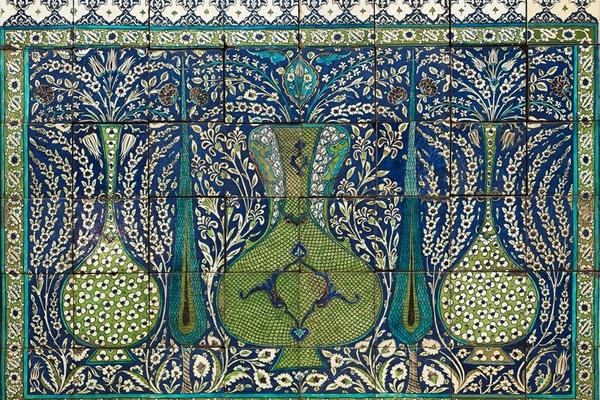
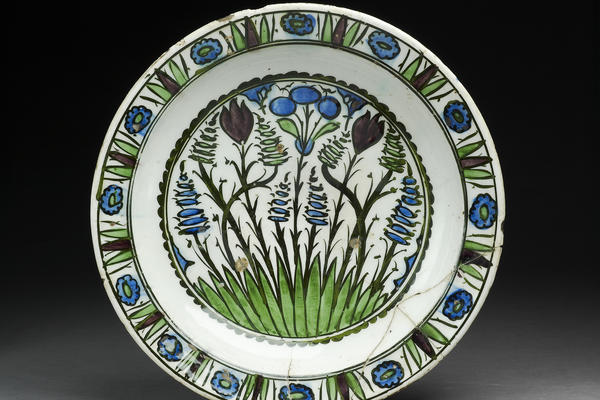
Maiolica
Maiolica is earthenware (low-fired clay) covered with an opaque white
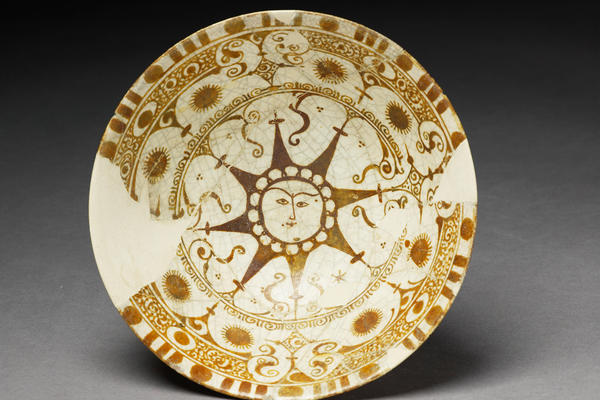
or tinted tin glaze. The technique came from the Islamic world, especially
Spain. In the middle of the sixteenth century, Italian maiolica reached
a high point of artistic and technical sophistication. This distinctive
style of glazed ceramic had developed throughout the Renaissance period
and its most elaborate manifestations were created under the patronage
of the Della Rovere Dukes of Urbino (1508-1631). The images were painted
into the glaze and fired by specialist maiolica painters.
How it is made?
The manufacturing process of Renaissance maiolica was described in a treatise
in 1557. The clay was dug, mainly from river beds, and purified. The dish
or vessel was thrown on the wheel or pressed into plaster moulds, then
fired at about 1000° in a wood-fired kiln. The ware was then dipped
in a glaze. When the glaze was dry, the powdery surface was painted. The
paint was mainly blue (from cobalt), green (copper), yellow (antimony
a metallic element), orange (antimony and iron), and white (tin).
The painted vessel was sometimes given a top coating of transparent glaze
and was then fired for a second time at a lower temperature. Dishes were
usually supported in the kiln on small pointed spurs, and most have three
or more scars on the front where these spurs touched the surface.
|