Maiolica Basin Showing the Triumphs of Julius Caesar
Urbino, c.1565-75
Gallery 53, Decorative Arts of the Renaissance, Fortnum Gallery, Gallery 53,
First Floor

  Related Objects in the Ashmolean
 
1. Plate, the Retreat of Xerxes, Francesco Xanto Avelli; Urbino, Dated 1537 (No. 90)

Xanto Avelli was one of the most interesting and eccentric characters in the history of Renaissance maiolica. The story depicted is the flight of the Persian King Xerxes after his attempted invasion of Greece in 480 BC. Xanto built up the composition in a ‘scissors-and-paste’ manner, taking various figures from different engravings and drawings.


2. Sandbox from inkstand with grotesque decoration, Urbino, c. 1560-1590 (No. 120)


This artefact of Renaissance daily life, used for sprinkling sand onto letters with wet ink, is decorated with grotesques on a white background, similar to those on the Caesar basin. These fantastic images became fashionable in Renaissance Italy after the discovery, around 1480, of the painted decorations of the Domus Aurea, the great palace in Rome built for Emperor Nero (died 68 AD).


3. Drawings by Raphael, Tapestry Gallery


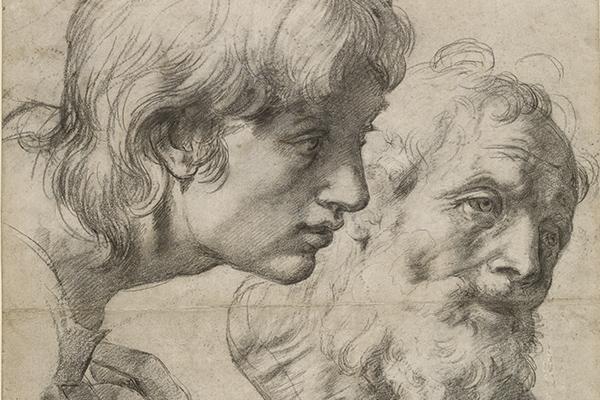
The Ashmolean Museum’s world famous collection of drawings by Raphael and Michelangelo is housed in the Western Art Print Room (tel 01865 278049), but there are always some on open display in the Tapestry Gallery. Raphael, one of the most influential and best-loved artists of the High Renaissance, was born in Urbino, but moved to Florence in 1504 and then to Rome in 1508. Many of the grotesques and figures depicted on late 16th-century maiolica were derived from prints after his drawings: so much so that in later times maiolica became known as ‘Raphael ware’.
 
.
 

ÿ