| |
Islamic
Design
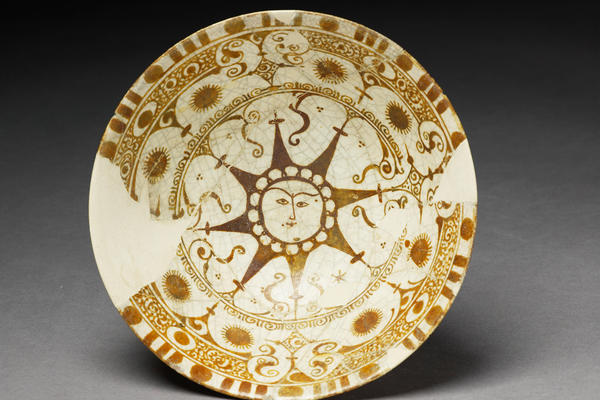
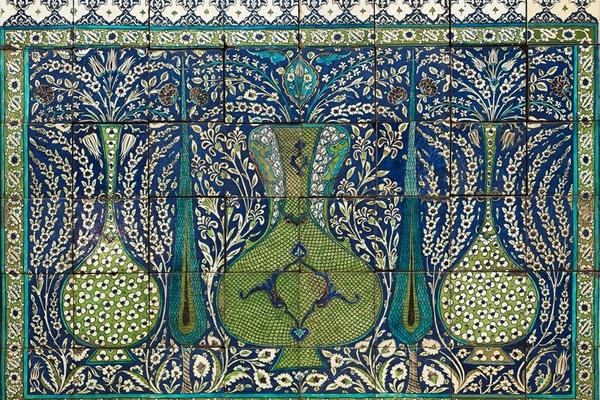
The type of decoration used in Islamic art falls into four
main categories: calligraphy, geometric patterns, arabesques and figural
designs. Throughout the religions history, calligraphy has been
the main method of disseminating the message of Islam and it is for this
reason that it is among the most venerated of art forms. The arabesque
scroll pattern is derived from a classical scroll design and has come
to be seen as one of Islams most distinctive motifs. Although the
worship of idols is prohibited in Islam, the representation of humans
and animals is permitted in certain contexts, although not in the decoration
of religious buildings or of the Quran.
Glassmaking
The art of glassmaking originated in Syria and it was here that much of
the best Roman glass was created. The masterful production of blown, moulded
and cut glass objects continued in the region during Islamic times. In
addition, the making of enamelled glassware, a technique in its infancy
in Roman times, attained new brilliance under Islamic patronage. This
technique was employed to decorate distinctively shaped lamps such as
this one as well as tall, narrow beakers and long-necked bottles. On close
inspection of this lamp, however, flaws can be seen: air-bubbles and grit
are visible within the glass and it also has a round patch in one side.
Syrian glass-houses where this type of glass was produced were destroyed
in about 1400 by Timur (Mongol leader, c.1370-1405). This coincided with
the rise of Venice as the most important glass-making centre in Europe
and, by the mid 16th century, Venice was exporting mosque lamps to Syria.
|