
CELEBRATING SPRING
A selection of spring-inspired objects from our collection and on show
6-minute read
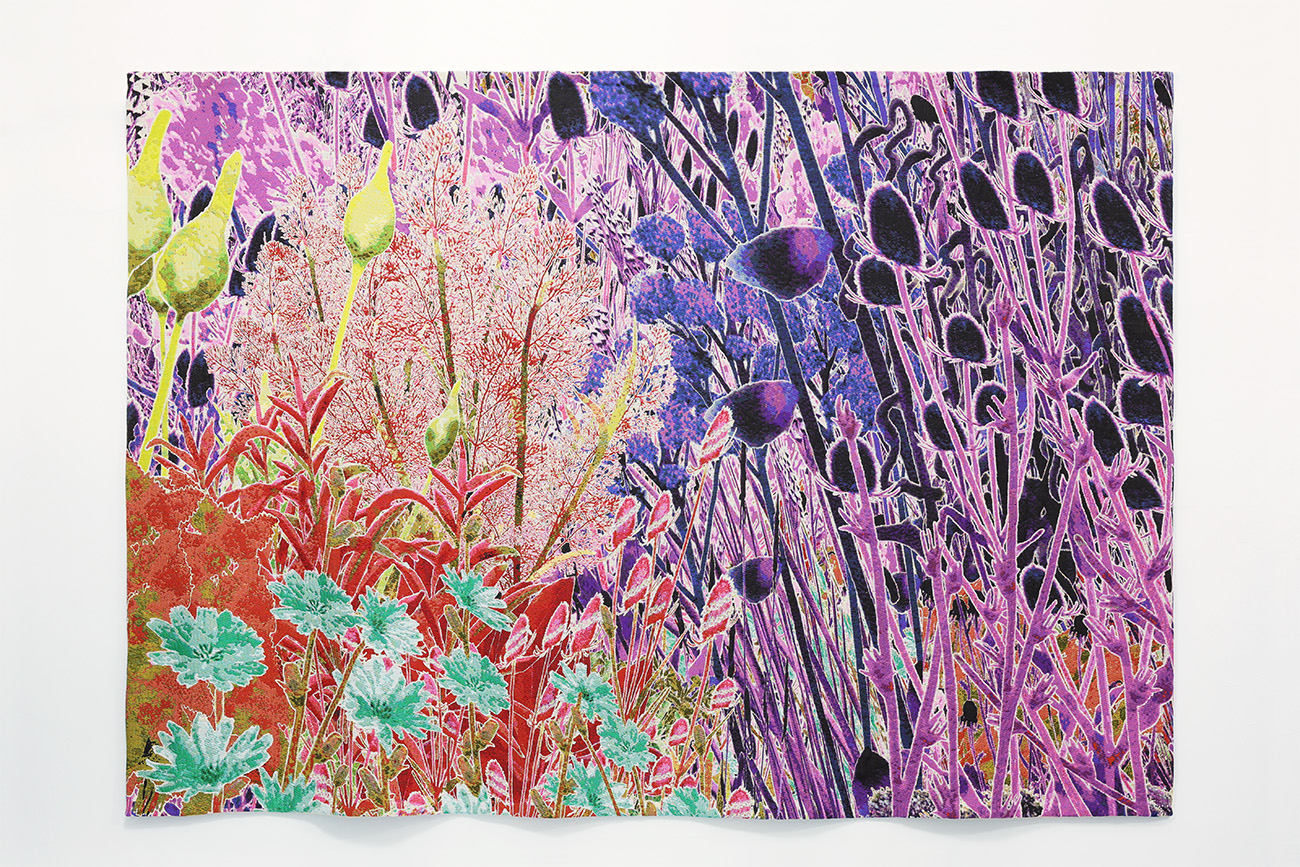
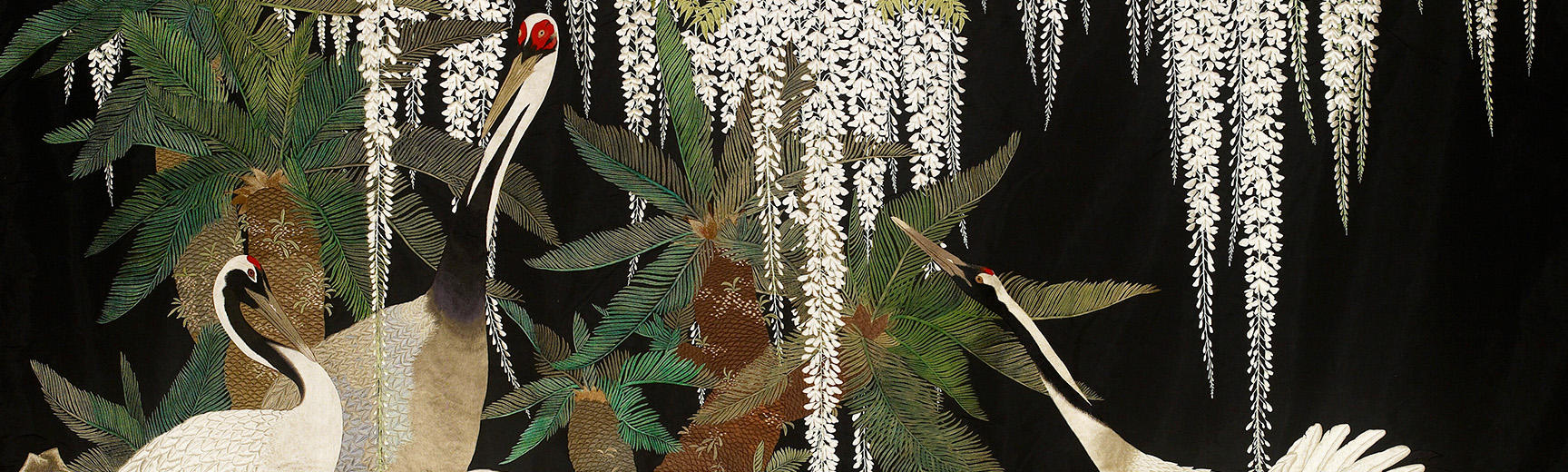
Header image: detail from Alexandra Daisy Ginsberg's Pollinator Vision Early Spring tapestry © Alexandra Daisy Ginsberg Ltd. Courtesy the artist
We’re sharing some of our favourite blossoms, blooms and spring scenes from the collection and on display in the Museum as we celebrate the joys of spring.
This bountiful season has inspired artists from all corners of the world for many, many centuries. Delve into the stories behind these bright and beautiful works.
CHINESE & JAPANESE SPRING BLOSSOM SLIDESHOW
Spring landscape by Qian Songyan
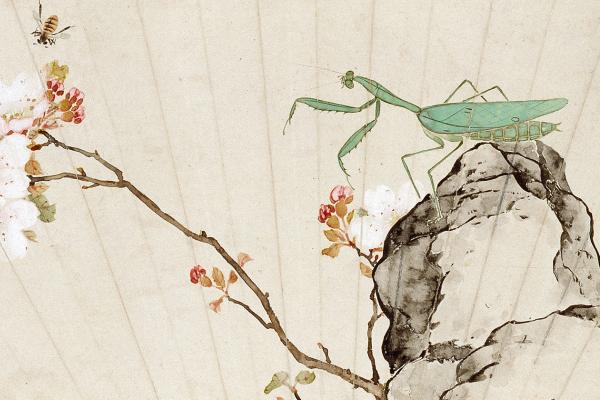
Fan with praying mantis, bee, and prunus blossom
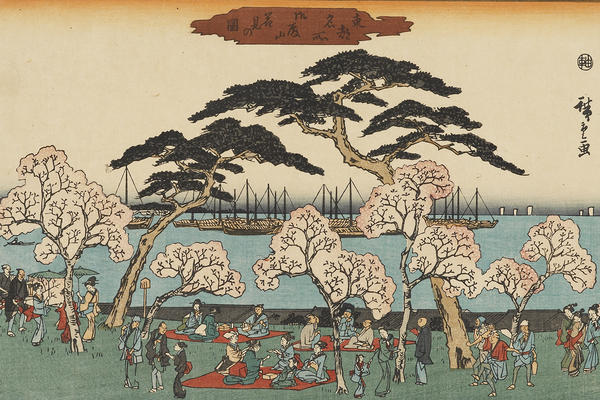
Festival of Cherry Blossoms by Utagawa Kuniyoshi
Tsuba with heraldic cherry blossoms
Pair of swallows and cherry blossom
Kyo-Satsuma vase with ducks and cherry blossom
Peach Blossom Stream in Spring
A Jungle Crow on a flowering cherry branch (detail)
Suzuribako, or writing box, with cherry trees on a river bank
Cherry blossoms by Okada Gyokuzan
EASTER TREAT
Look for a rabbit or hare in the galleries on the Ashmolean Bunny Hunt if you're visiting with children at Easter.
SPRING STORIES
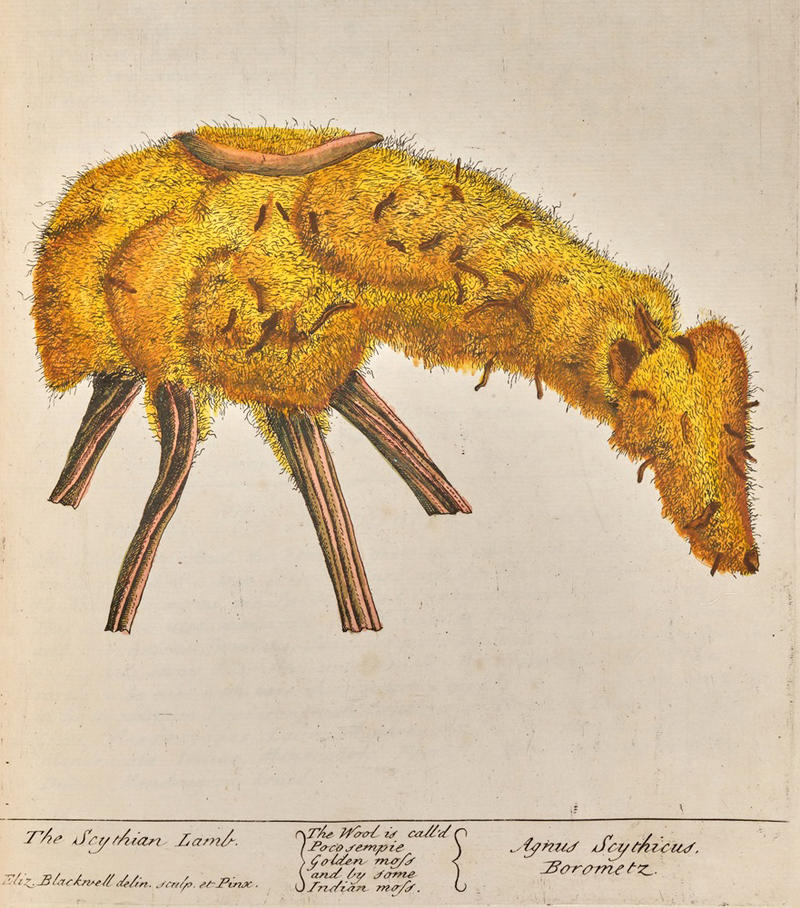
The Scythian Lamb
By Elizabeth Blackwell, 1739
The Scythian Lamb, Elizabeth Blackwell, from A Curious Herbal, 1739, hand coloured engraving, © Principal, Fellows, and Scholars of Hertford College
The curious legend of the 'vegetable lamb', also known as 'Scythian lamb' or 'Borometz', first appeared in European medieval texts and travelogues. An animal-plant hybrid, it was believed to be attached to the earth through a short stalk from which it bent and grazed the grass around it.
Its myth was likely inspired by a type of Asian fern with distinctive woolly stems, which was widely used as a medicinal herb.
Elizabeth Blackwell (1699–1758) featured the lamb in her second volume of ‘A Curious Herbal’. In the early 18th century, plants were an essential resource for healthcare, and Elizabeth was one of the first British women to make such a major achievement in the fields of medical botany and botanical illustration.
Her herbal showcased both indigenous medical plants and exotic plants from East Asia and South America. It was published in weekly instalments between 1737–1739, as a passion project and to help her pay off her husband’s debt and secure his release from debtor's prison.
Elizabeth lived near the Apothecaries’ Garden, now known as the Chelsea Physic Garden, and worked closely with Isaac Rand, the curator of the garden. In addition to drawing each of the plants from live specimens each week, Elizabeth also hand-coloured the engraved plates for those subscribers willing to pay an extra shilling.
Blackwell’s print of the ‘Scythian lamb’ is on display as one of the botanical books in our current In Bloom exhibition.
Image by permission of the Principal, Fellows and Scholars of Hartford College, Oxford, URC.4.5/2
On display in the In Bloom: How Plants Changed Our World exhibition
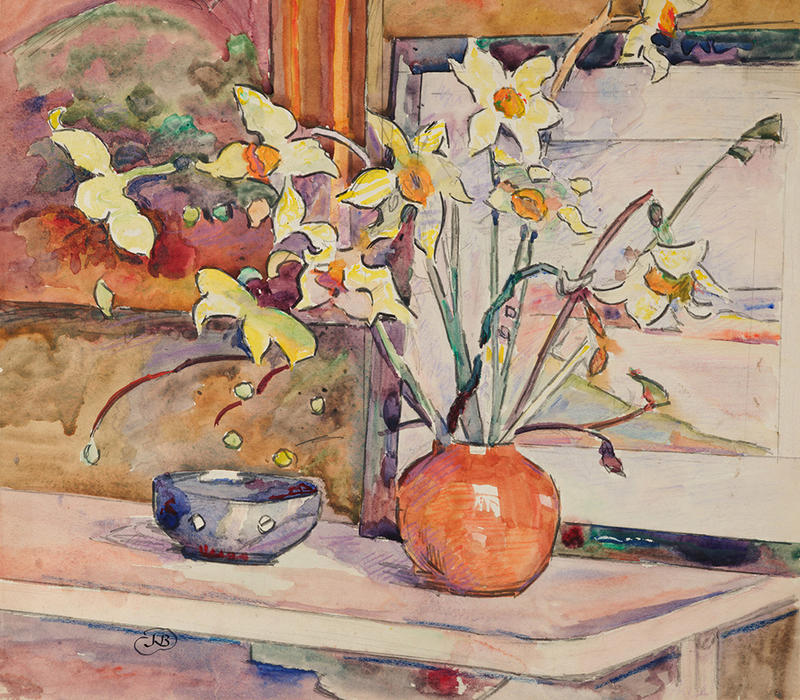
Daffodils
By James Brown, 1912–1943
These beautiful watercolour daffodils are by English artist, James Brown. The artist has also used crayon and graphite in the painting.
Born in London in 1863, Brown was a musician who began painting seriously later in life. In 1912 he was introduced to Lucien Pissarro and the two developed a close friendship, often going painting together. This friendship contributed to his enthusiasm for painting and keenness to understand the principles of Impressionism.
Other than a couple of early attempts, James Brown never showed his work in public. Many of his paintings are signed with the pseudonym P. Conway, which he used for many years before returning to his own name.
WA1984.140
View by appointment in the Western Art Print Room
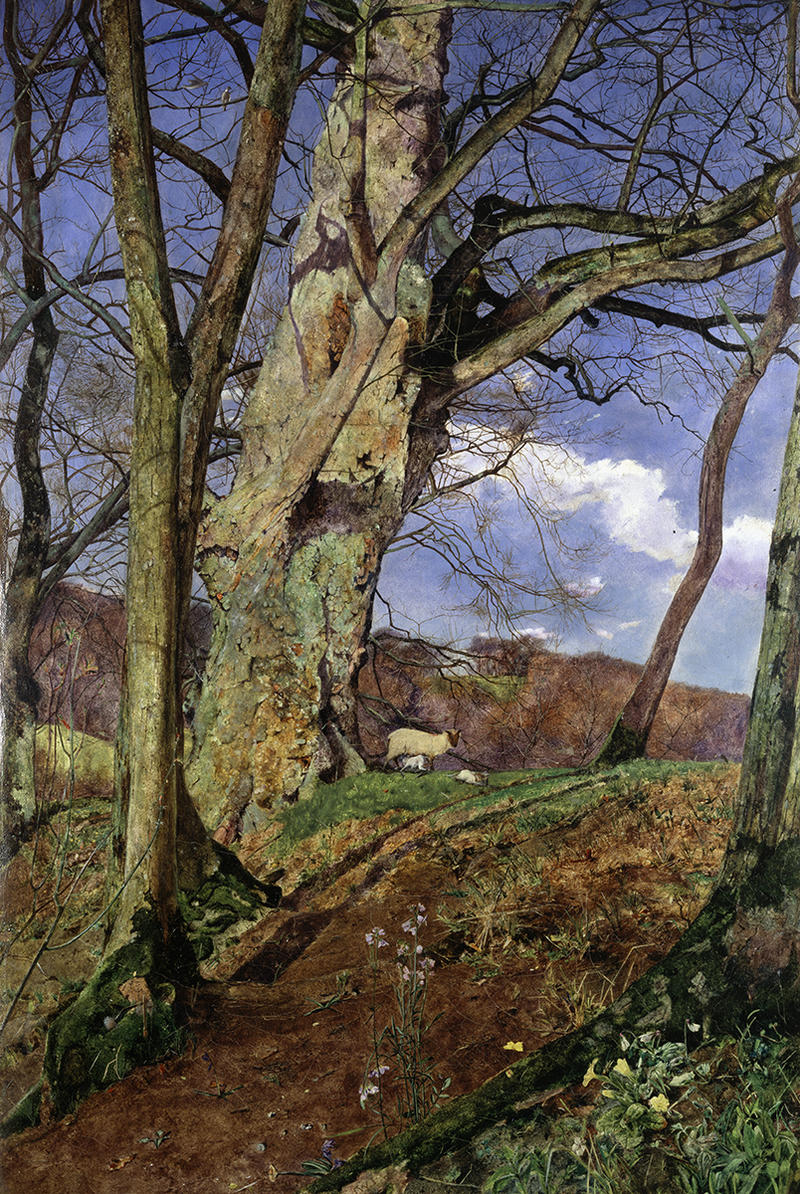
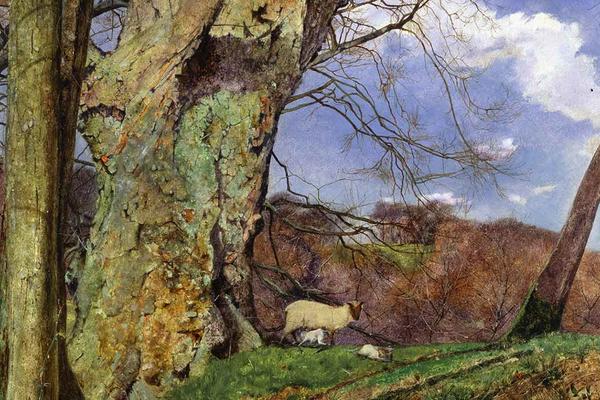
A Study, in March
By John William Inchbold, 1855
This spring scene was painted by Pre-Raphaelite artist John William Inchbold (1830–1888). It is thought to have been exhibited at the Royal Academy in 1855, and inspired by William Wordsworth's poem, ‘The Excursion’.
John William Inchbold was born in Leeds, Yorkshire, the son of a Yorkshire newspaper owner, Thomas Inchbold. Having shown a talent for drawing as a young man, he moved to London and became a student of the Royal Academy in 1847. This spring painting by him shows the Ruskin-inspired attention to detail and nature celebrated by artists of the Pre-Raphaelite Brotherhood. The primrose and harebells in the foreground and the ewe and two lambs on the ridge, herald the arrival of spring, though the trees are still bare, their branches picked out in sharp detail against the blue sky.
WA1962.4.2
On display in the Pre-Raphaelites Gallery 66, third floor
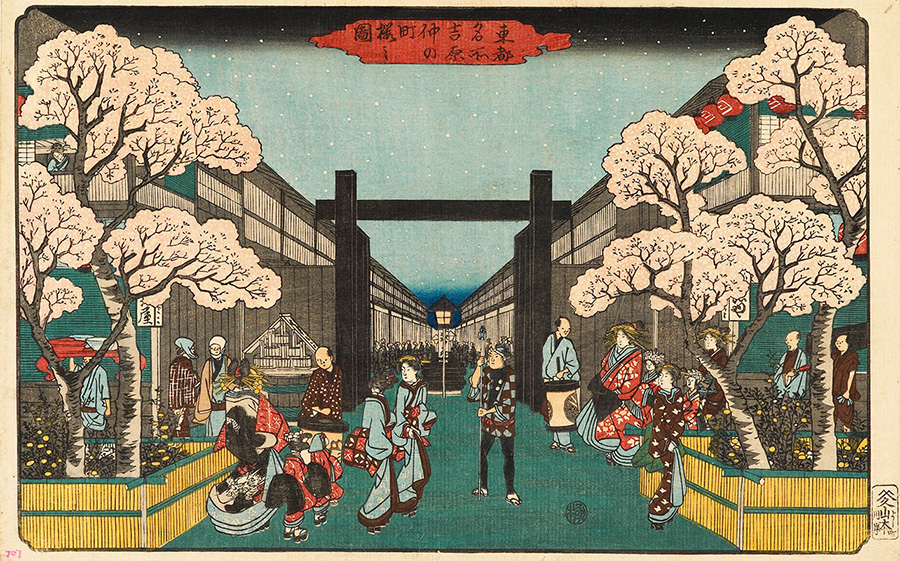
View of Cherry Blossoms on Nakano-chō in the Yoshiwara
by Utagawa Hiroshige, 1839-1842
The Japanese tradition of viewing the cherry blossoms in spring is so popular that it has its own name – hanami, or flower viewing.
From the end of March, cherry trees blossom all across Japan and many people plan to visit their favourite hanami sites at 'just' the right moment. In fact, there is even a cherry blossom forecast announced by the Japanese Weather Bureau each year.
The practice is centuries old, and was once limited to the elite of Japanese society. Today people gather in great numbers, hosting picnics and parties under the cherry trees to celebrate the start of spring.
In this colourful Hiroshige woodblock print, stylishly dressed courtesans admire the cherry blossoms in the Yoshiwara pleasure quarters, where each spring cherry trees were brought in big tubs. From Hiroshige's illustrations for 'Famous Places in the Eastern Capital' series.
Not on display
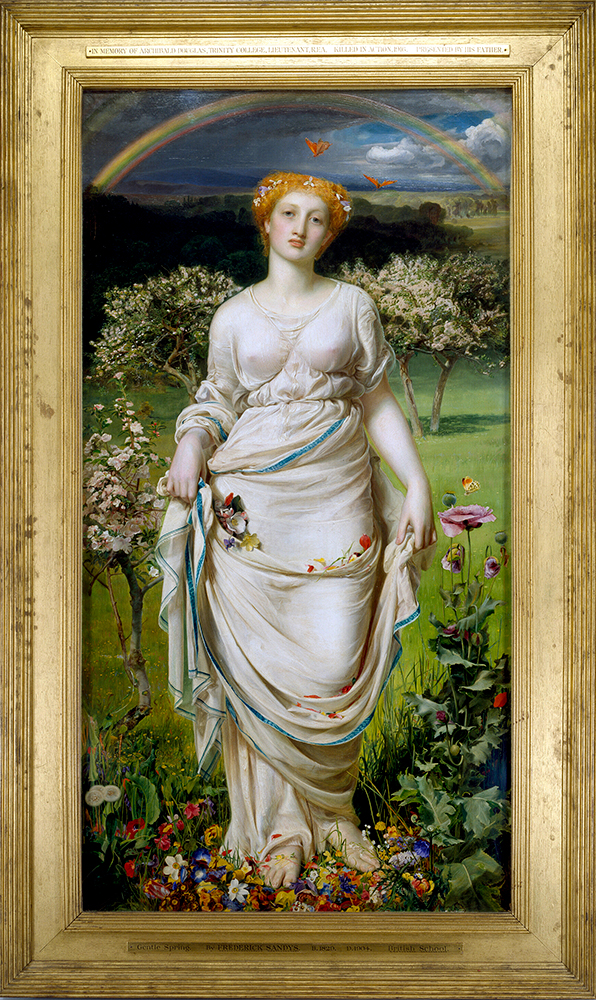
Gentle Spring
By Frederick Sandys, 1865
A splendid example of Pre-Raphaelite oil painting, this large artwork by Frederick Sandys (1829-1904) was exhibited at the Royal Academy in 1865. The figure was painted in the garden of the poet and novelist, George Meredith. She represents Proserpina returning from the land of the dead. Sandys joined Rossetti's circle in 1857 and lived with him in Cheyne Walk for most of 1866.
See the Gentle Spring painting and Proserpina's story come to life in our animation >
WA1923.2
On display in the Pre-Raphaelites Gallery 66, third floor
Pollinator Pathmaker: a4WNehdyCgdiKwVhXKGDBM
By Alexandra Daisy Ginsberg, 2025
This large and vibrant tapestry showing an early spring floralscape is by the contemporary artist Alexandra Daisy Ginsberg. The woven work is one of two by the artist currently on show in the Ashmolean's In Bloom exhibition.
Ginsberg is a British multidisciplinary artist who uses the lens of technology to examine how we see and value nature. In 2021, she created Pollinator Pathmaker, a one-of-a-kind interspecies artwork which transforms how we see gardens and who we make them for. Her specially-designed algorithmic tool – pollinator.art – creates unique planting designs optimised for pollinator diversity.
Both these tapestries depict an unrealised Pollinator Pathmaker edition that would need to be planted to exist. They give viewers the chance to experience gardens in different seasons from the perspectives of pollinators, as if flying through their dense patches of grasses and flowers.
Using her unique ‘pollinator vision’ filter, Ginsberg further simulates the experience of another species by skewing our ‘human’ perspective with a psychedelic colour palette. The floral imagery is scarred with computational distortions that remind us of the otherworldliness of these unreal spaces. While the very fabric of tapestry’s pixelated weaving offers a sustainable medium to explore digital art.
Since 2022, Ginsberg has planted three large-scale outdoor living artwork editions at Eden Project Cornwall, Serpentine, London, and the Natural History Museum in Berlin.
Image: Pollinator Pathmaker: a4WNehdyCgdiKwVhXKGDBM (Pollinator Vision, Early Spring), Alexandra Daisy Ginsberg, 2025, tapestry; woven, mixed fibre © Alexandra Daisy Ginsberg Ltd. Courtesy the artist
On display in the In Bloom: How Plants Changed Our World exhibition