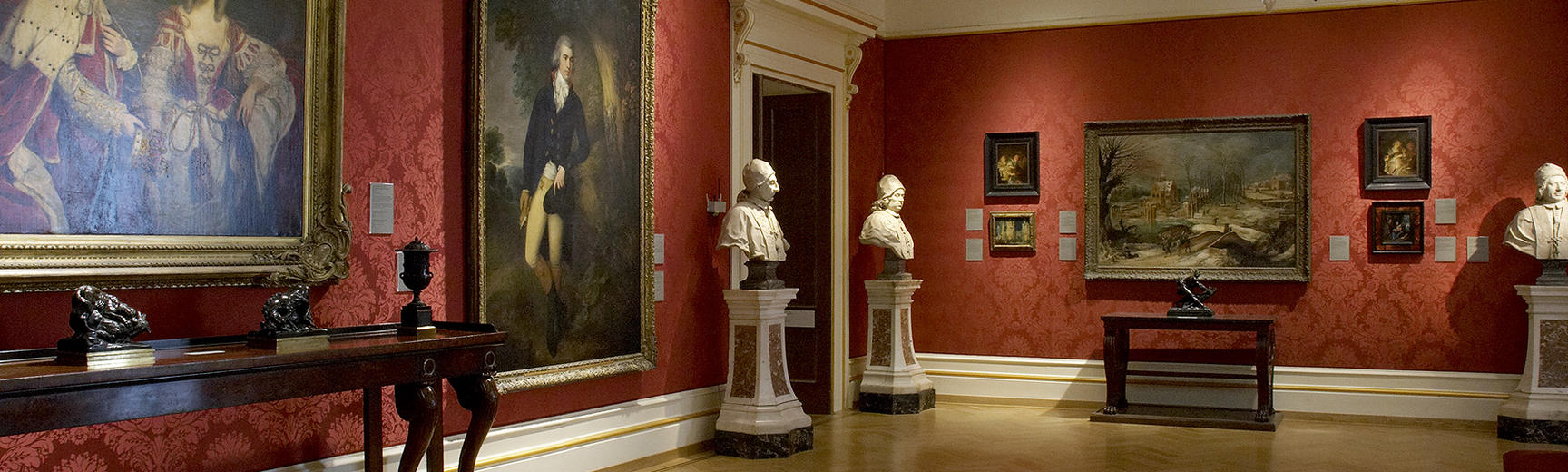
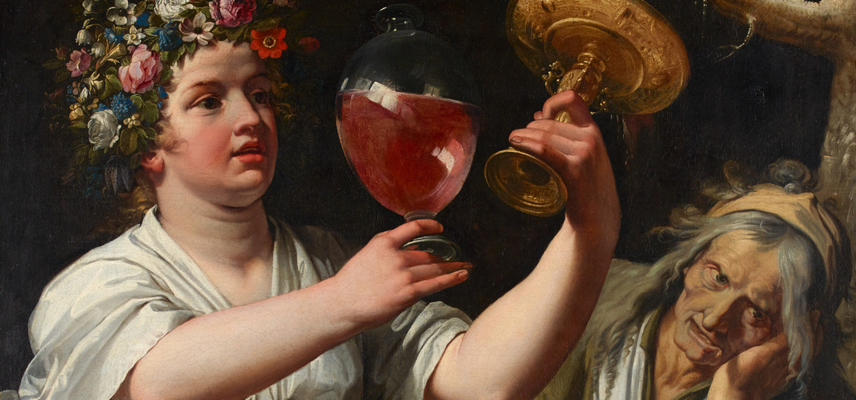
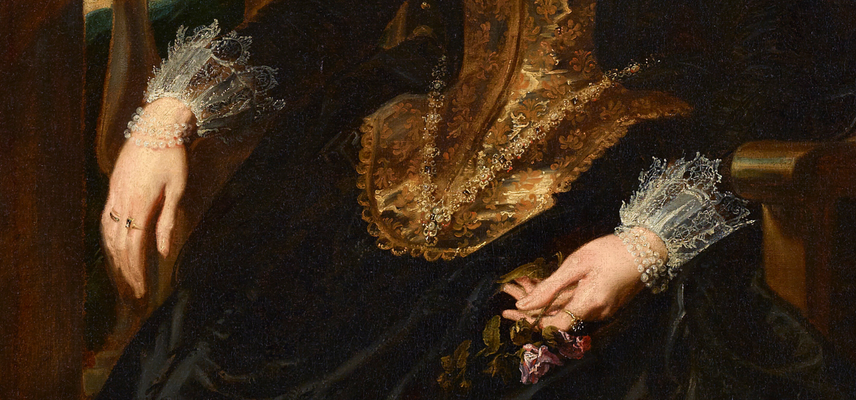
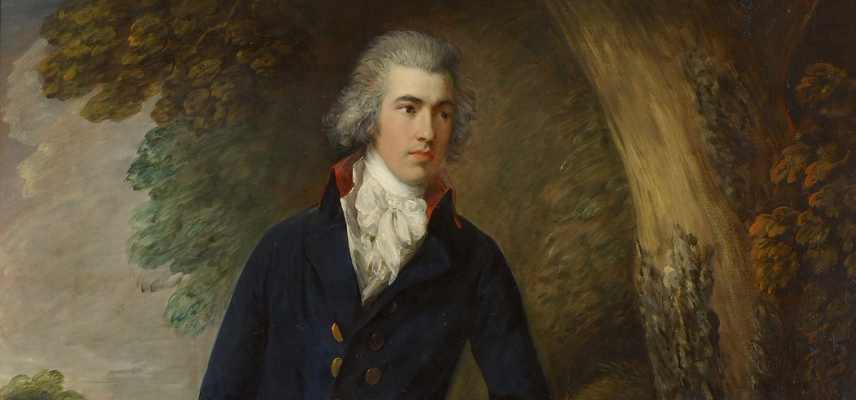
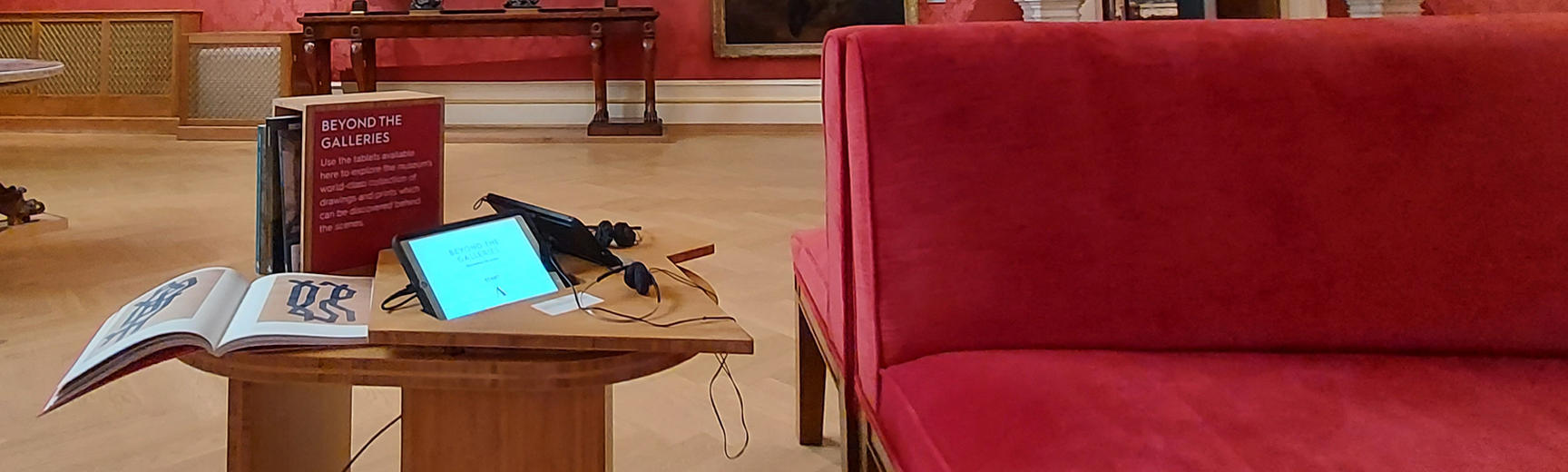
This spacious gallery evokes the richness of an historic art collection in an Italian palace or an English country house where marble and bronze sculpture, fine furniture, Old Master paintings and imposing portraits were displayed in opulent reception rooms. These expensive and beautiful possessions spoke of the prestige and sophistication of noble or wealthy families.
Huge numbers of works of art were imported to Britain in the 1700s and 1800s when British travellers to Europe (especially to Italy) were impressed by the grandeur of aristocratic art collections and began to collect and display in the same splendid manner. In the Britain and Italy gallery, you can see this theme explored further, particularly in the context of the Grand Tour, an educational trip undertaken by many young aristocrats in the 18th and 19th centuries.
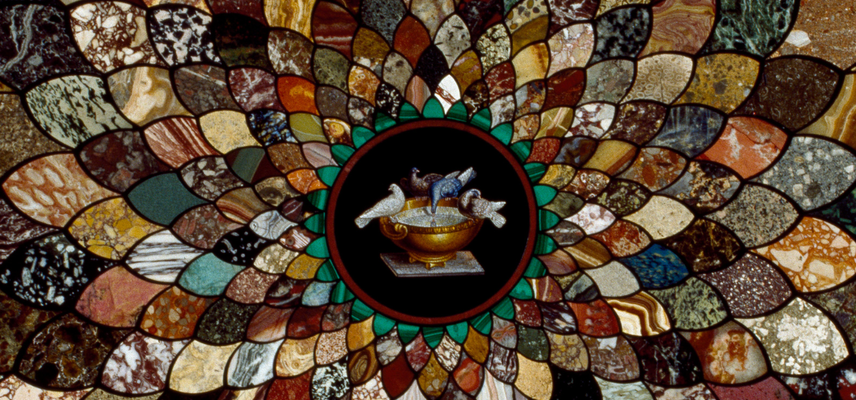
A popular highlight of this gallery is Jacob Kirckman's splendid harpsichord and the circular table is a superb example of pietra dura work from the mid 19th century where a large slab of white Carrara marble has been inlaid with black Belgian marble and a variety of stones in a geometric pattern. Notice the design at the centre which depicts ‘Pliny’s Doves’, a version of the still-life found at Hadrian’s Villa just outside Rome. The detailing of this section of micro-mosaic shows the work of a master craftsman, possibly Michelangelo Barberi (1787–1867), with tiny stone pieces that make up the feathers of the doves. To see another fine example of this technique look for the Fitzwilliam Coin Cabinet in Gallery 49, Britain and Italy.
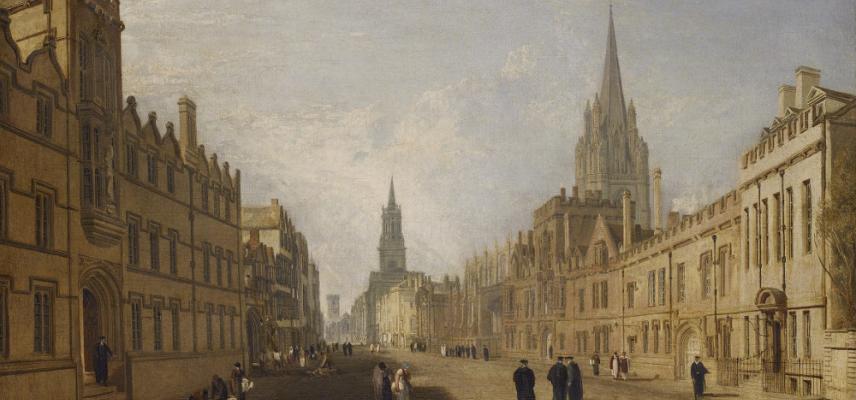
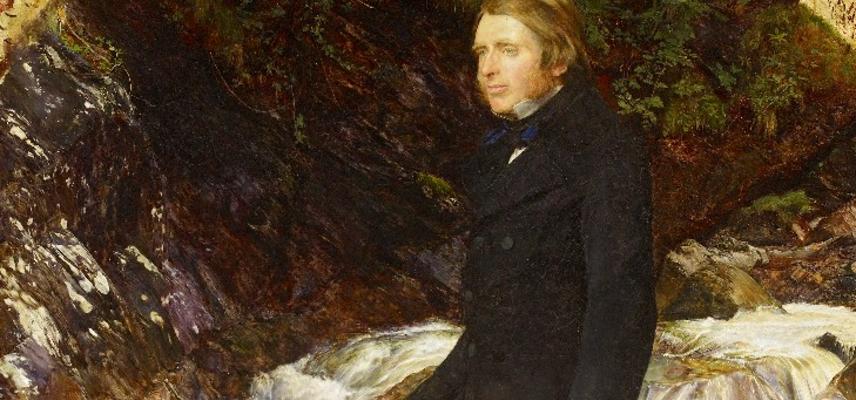
For the summer, Turner's High Street painting and Millais's John Ruskin portrait are also on show in this gallery (while the 3M galleries are closed for essential work).
Outstanding collections of European fine and decorative arts from the Renaissance to the present day. They include Old Master and later paintings, drawings, watercolours, and prints; English and continental ceramics, sculpture, silver, watches, rings and musical instruments.