
OXFORD, THE TRADESCANTS AND OUR BOTANICAL HERITAGE
6-minute read
Taken from chapter extracts in the In Bloom exhibition catalogue by David A. Berry, Mike Webb and Stephen Harris
In this article, inspired by the Ashmolean’s 2026 summer exhibition In Bloom: How Plants Changed our World, we explore some of the rich stories of Oxford’s founding collections and its creators.
As our director Xa Sturgis writes in his introduction to the exhibition catalogue:
‘Oxford is home to both Britain’s earliest Botanic Garden and Herbarium and, in the Ashmolean, its first modern museum. The creators of the Ashmolean’s founding collections, John Tradescant the Elder and John Tradescant the Younger, were also gardeners who collected plants and rare botanical specimens from all over Europe and North America, at the same time as amassing manmade and natural ‘curiosities’.
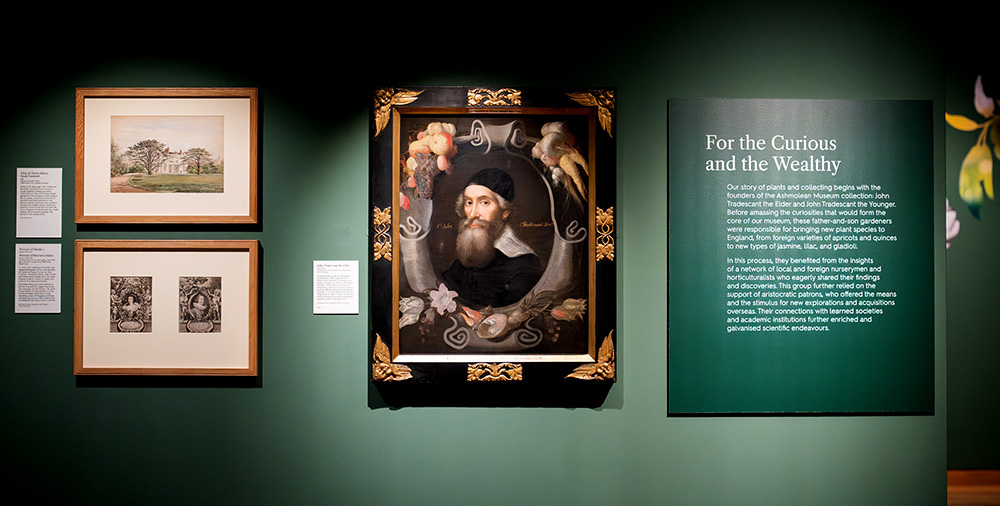
Tradescant the Elder display in the In Bloom exhibtion
‘Later Oxford scholars like Johann Dillenius and John Sibthorp, first and third Sherardian Professors of Botany respectively, produced two of the most celebrated botanical publications of the 18th century, the ‘Hortus Elthamensis’ and the ‘Flora Graeca’, bringing botanical art to a whole new level.'
John Tradescant the Elder (c.1570–1638) and his son, John Tradescant the Younger (1608–1662), were two of the most notable gardeners and plant collectors of their day. They oversaw the gardens of some of the most prominent figures in 17th-century England; gardens whose proprietors spent huge sums on new varieties of plants brought in from overseas.
Not much is known about the early career of John Tradescant the Elder, but his reputation as a gardener was sufficiently established by 1610 for him to enter the service of Robert Cecil, 1st Earl of Salisbury at Hatfield House in Hertfordshire.
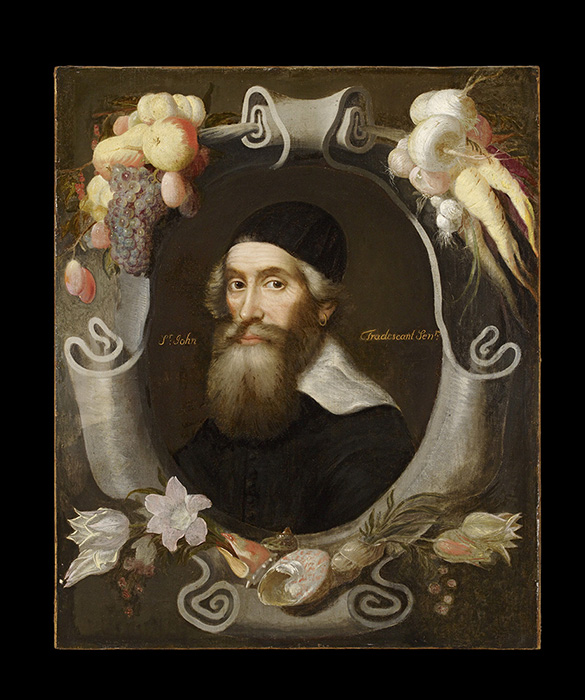
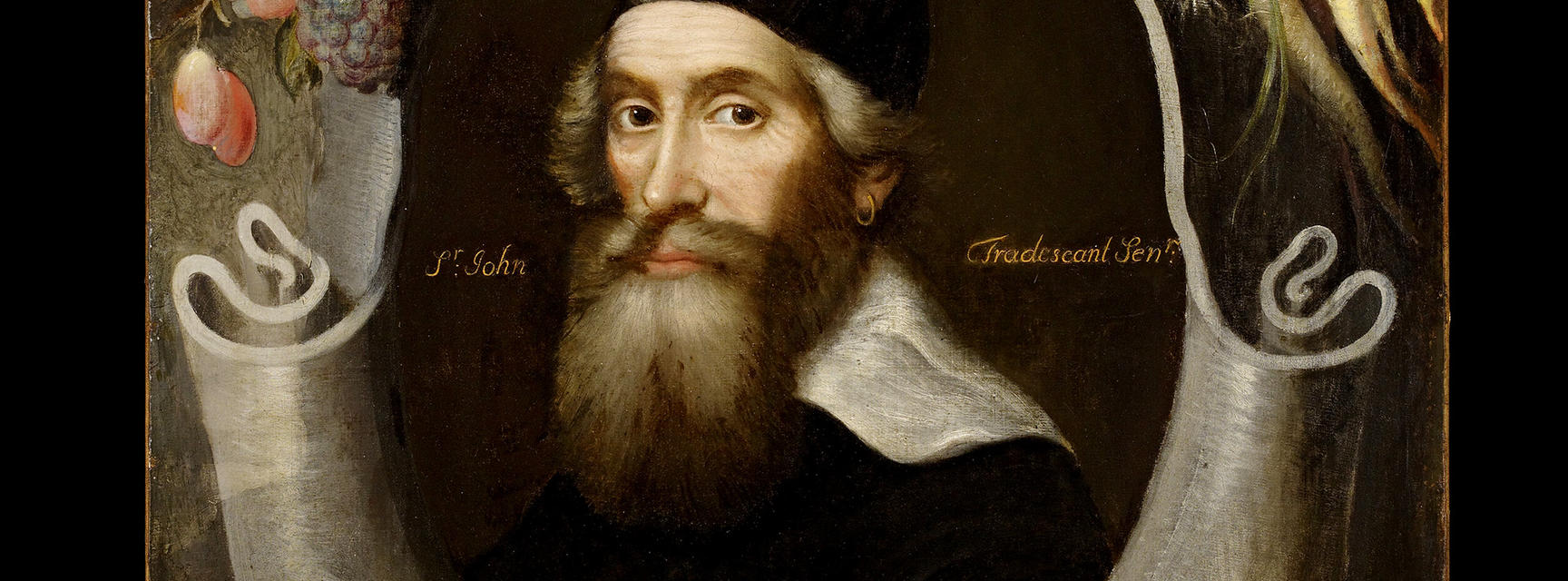
John Tradescant the Elder, attributed to Emanuel de Critz, 1638–1665, oil on canvas © Ashmolean Museum
In 1611, to stock the gardens at Hatfield House with fruits and flowers, Tradescant the Elder was sent by Salisbury to the Low Countries, Flanders and France. Surviving accounts record purchases of fruit trees and flowering shrubs, as well as vines and bulbs. Of particular note were several varieties of apple, pear, quince, lime, and cherry.
Tradescant also journeyed to Russia around the North Cape of Norway to Archangel, the first Russian port open to trade with England. His diary from this time (his ‘Viag of Ambusad’) survives today in the Bodleian Library and includes the earliest record of botanical fieldwork undertaken on Russian soil.
Some of the plants Tradescant the Elder collected are illustrated in a beautiful manuscript, dating to 1620–29, known as the ‘Tradescants' Orchard’, considered one of the ‘Treasures’ of the Bodleian Library.
It contains illustrations of 66 fruiting plants, which are charming if naïve in style, and include all kinds of insects, snails, birds, and other small creatures amongst the foliage, some quite bizarre and evidently not true to nature.
Among the fruits featured in the manuscript are British staples like wild cherries and damsons, but also varieties, such as French strawberries and Portuguese quinces, obtained during the Tradescants' trips abroad.
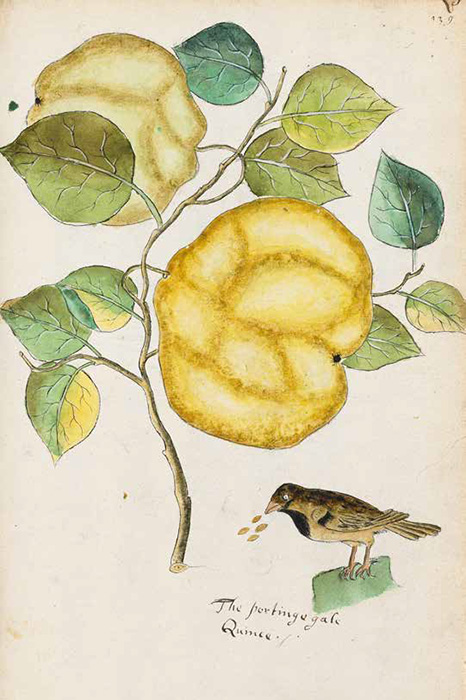
The Portingale Quince, illustration from Tradescants' Orchard, 1620–29, watercolour & ink on paper © Bodleian Libraries, University of Oxford
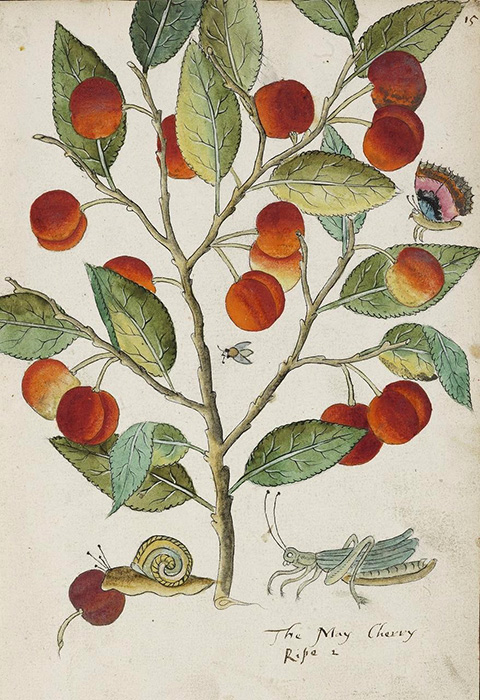
The Flanders May Cherry, illustration from Tradescant’s Orchard, 1620–29, watercolour & ink on paper © Bodleian Libraries, University of Oxford
The ‘Orchard’ was part of the vast collections of antiquary, herald, astrologer, and founder of the Ashmolean Museum, Elias Ashmole. He had the manuscript bound in around 1680, and completed the contents page.
It is not known who painted the illustrations, or the purpose they served. Tradescant’s name was attached to the manuscript because of his fame as a 17th-century botanist and gardener, and his association with Elias Ashmole, who ultimately acquired the Tradescants’ collections.
In 2000, a detailed analysis of the volume was undertaken. It was also digitalised and a digital, interactive version of the manuscript is on display in the ‘In Bloom’ exhibition.
By 1630, Tradescant the Elder was known as the most accomplished gardener in England. His talents were sought by Charles I, who appointed him the ‘Keeper of His Majesty’s Gardens, Vines, and Silkworms’ at Oatlands Palace in Surrey, with an annual salary of £100.
In 1637, as a token of his reputation, he was appointed to oversee the Oxford Physic Garden by its founder, Henry Danvers, 1st Earl of Danby. But there is little evidence of his activities in Oxford and it is not certain if he indeed took up the post. In 1638, The keepership of the gardens at Oatlands in Surrey passed to his son, John, ‘in the place of John Tradescant, his father, deceased’.
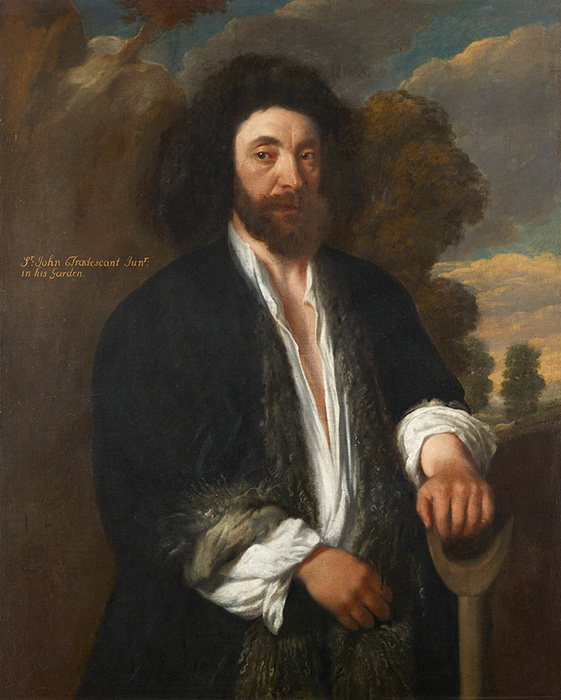
John Tradescant the Younger as a Gardener, attributed to Thomas de Critz, 1648–1653, oil on canvas © Ashmolean Museum
John Tradescant the Younger by then was a respected gardener in his own right. Already In 1634, he was admitted a Freeman of the Worshipful Company of Gardeners. Three years later, he travelled to Virginia to gather 'all rarityies of flowers, plants and shells', possibly on the king’s behalf. Many of the plants collected by Tradescant the Younger in this journey, like varieties of jasmine, asters, and columbines, were the first of their kind to be brought to England.
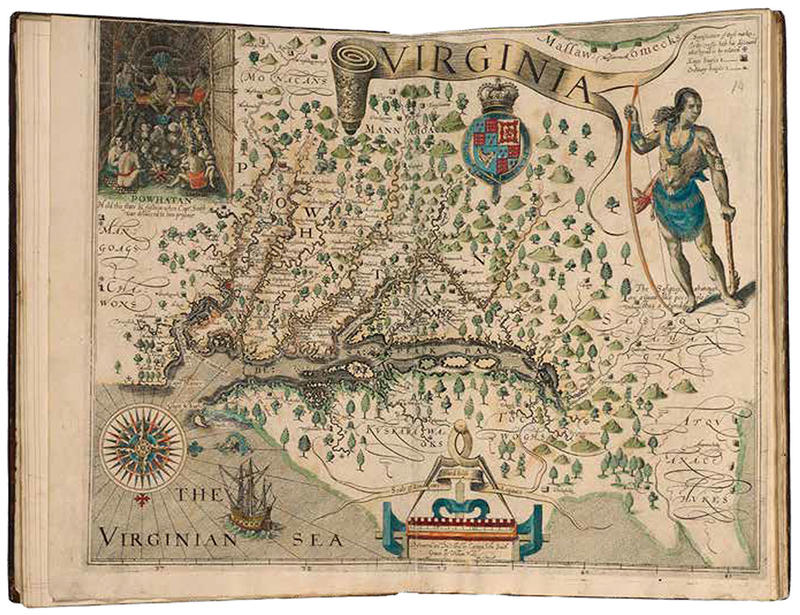
Map of Virginia, John Smith, 1612, gouache & ink on paper © Bodleian Libraries, University of Oxford
In 1642, on the eve of the English Civil War, John Tradescant the Younger chose to leave England and sail again for Virginia to collect plants. Upon his return, he resumed his duties at Oatlands, where he may have remained until 1650, when the palace was sold for demolition.
Tradescant the Younger died in 1662, and was buried alongside his father and son in the churchyard of St Mary-at-Lambeth.
In 1628, the elder Tradescant leased a house for his family at South Lambeth in Surrey, on the outskirts of London. The house lay on the line of the present South Lambeth Road. The access to it was via a bridge over a moat through an arch made of two whale ribs, the first indication to visitors that something extraordinary lay beyond!
Behind the South Lambeth house, on former farmland, Tradescant laid out a large garden and an even larger orchard.
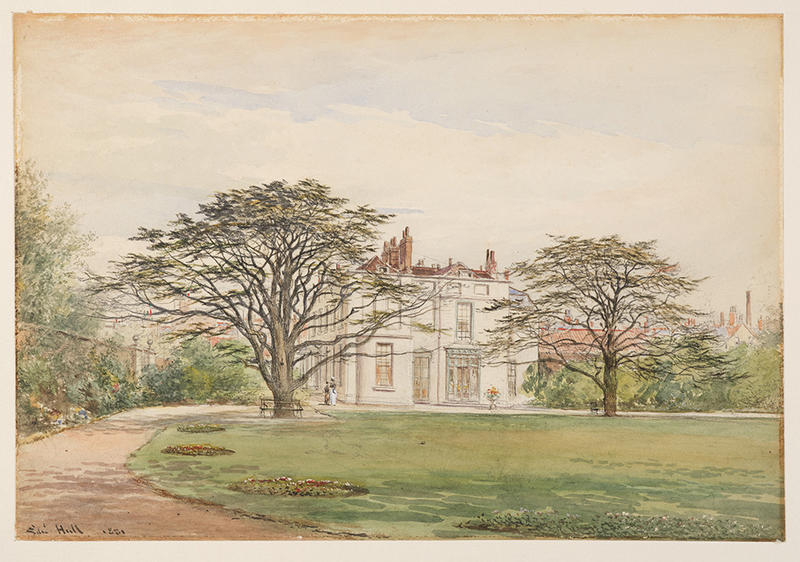
View of Turret House, South Lambeth, Edward Hull, 1881, watercolour over graphite on paper © Ashmolean Museum
In time, the Tradescants’ garden came to house a wide range of native plants, as well as rare and exotic species brought to England from abroad. Seeds and cuttings of plants grown there were likely given to or exchanged with other gardeners, helping to disseminate them across Europe.
Plant collecting in the 17th century was fraught with difficulty. On his travels in Europe and North Africa, the elder Tradescant faced challenges ranging from armed conflict to potential capture, imprisonment, and even enslavement. Travel in North America exposed the younger Tradescant to other hazards, such as extreme weather, rough terrain, and wild animals. These were in addition to the constant threats of disease and starvation.
Occupying one or more rooms of the Tradescant’s house, the Ark consisted of a remarkable collection of ‘natural’ and ‘artificial’ (or manmade) rarities from across the globe. Most of the collection was formed by the elder Tradescant. Some of its contents were likely acquired on his travels, as in the case of a Russian counting frame and a pair of Barbary spurs. Others were received from friends and benefactors. Many are now the earliest or only surviving examples of their kind.
The Ark was the first private cabinet to be opened to the public as a paid attraction. For a fee of sixpence, visitors of any age, gender, or social status could marvel at amazing objects – such as the hand of a mermaid or the feathers of a phoenix – previously accessible only to the elite.
After several visits to the Ark by the lawyer and antiquary, Elias Ashmole and encouraged by Ashmole, Tradescant the Elder drafted a catalogue of the collection in 1650 with the help of physician and anatomist Thomas Wharton.
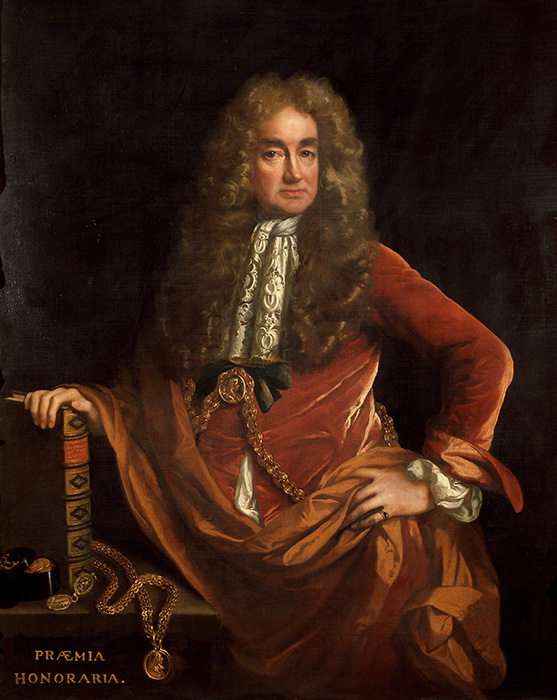
Elias Ashmole, John Riley, c.1681–82, oil on canvas, on display in our Ashmolean Story Gallery 2 © Ashmolean Museum
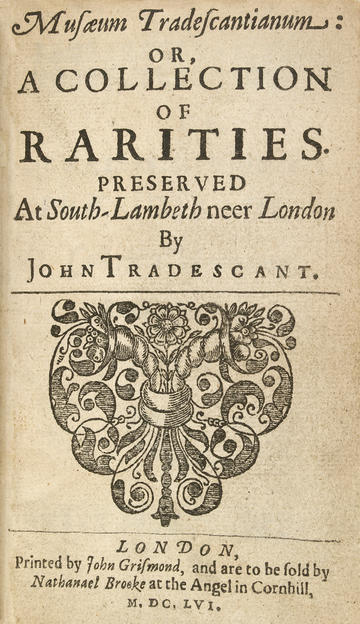
Musaeum Tradescantianum title page, John Tradescant the Younger, 1656 © Royal Collection Trust
This catalogue, entitled ‘Musæum Tradescantianum: Or, A Collection of Rarities Preserved at South-Lambeth near London’ by John Tradescant, was published at Ashmole’s expense in 1656. It was the first such catalogue printed in England.
After some legal wrangling following the younger Tradescant’s death in 1662, Elias Ashmole – who had been granted ownership of the collection, most likely to recognise his cataloguing support – made a formal offer of the Tradescant collection to the University of Oxford in 1677. The offer was accepted, but on the condition a new building was constructed to house it.
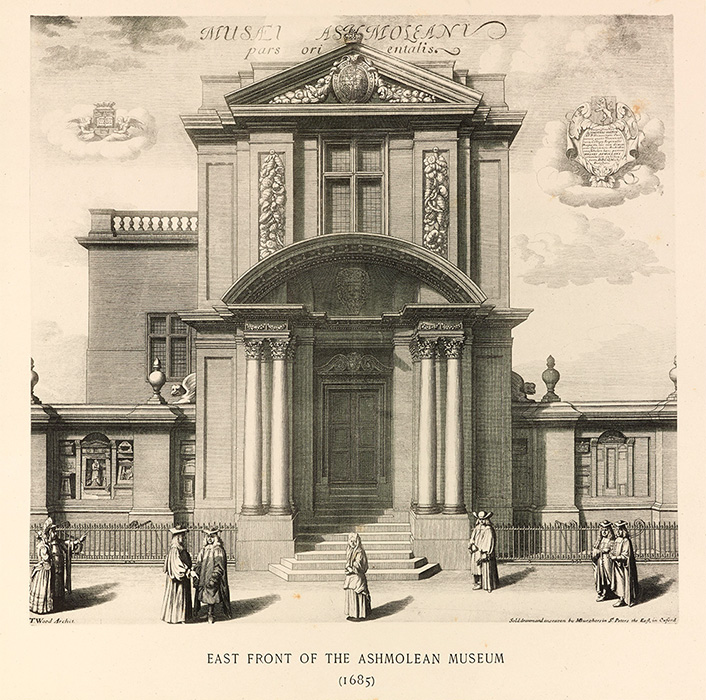
East Front of the Ashmolean Museum (1685), The Oxford Almanack for 1895, collotype from an original engraving © Ashmolean Museum
The foundation stone of this building was laid in 1679 at a site on Oxford’s Broad Street, between Exeter College and the Sheldonian Theatre. Once the collection was installed, the Ashmolean Museum was officially opened on 21 May 1683 in the presence of the then Duke and Duchess of York and their daughter, Princess Anne. The building is now the home of the University of Oxford’s History of Science Museum.
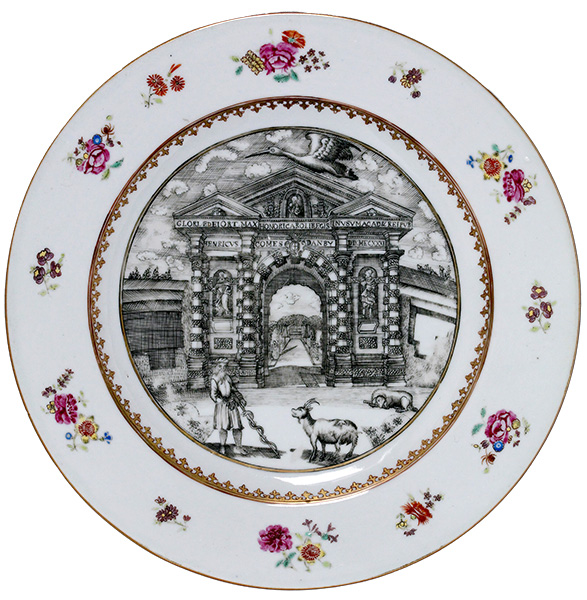
Engraved Oxford plate, after Michael Burghers, 1653-1727, porcelain with grisaille decoration © Ashmolean Museum
The Tradescants’ house at South Lambeth was demolished in 1881, by which time little, if any, part of their garden remained.
The monument marking the Tradescants’ burial site is now part of the Garden Museum in London. Founded to preserve the monument in 1977, the museum celebrates the history of British gardens and their place in modern life.
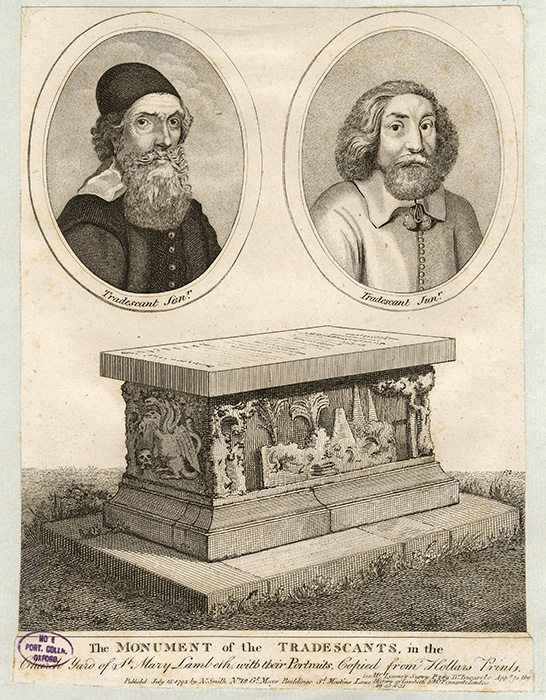
Portraits of John Tradescant the Elder and John Tradescant the Younger, above the family funerary monument, anonymous, 1793, etching on wove paper © Ashmolean Museum
The oil on canvas portraits of the Tradescants from the Ashmolean’s collection are currently displayed in the ‘In Bloom’ exhibition. The portrait of John Tradescant the Elder is surrounded by depictions of plump fruit and seasonal blooms, paying tribute to his gardening career. Tradescant the Younger poses with a gardening tool and possibly wears a gardening robe.
Other surviving objects from the Tradescants' Ark that also became part of the Ashmolean Museum's founding collection include Powhatan's Mantle, the 'Tradescant' Chinaware storage jar, a beautiful selection of exotic shells and a pair of child's white suede shoes. Some of these can be seen in the Museum's Story Gallery.
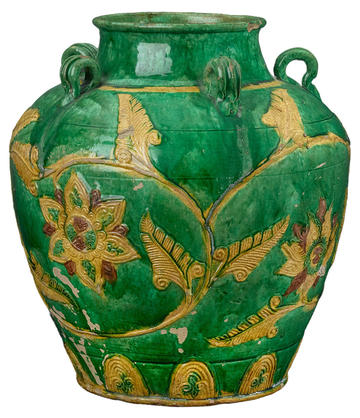
'Tradescant' storage jar, late Ming dynasty, 1656, purple & green chinaware, on display in our Ashmolean Story Gallery 2 © Ashmolean Museum
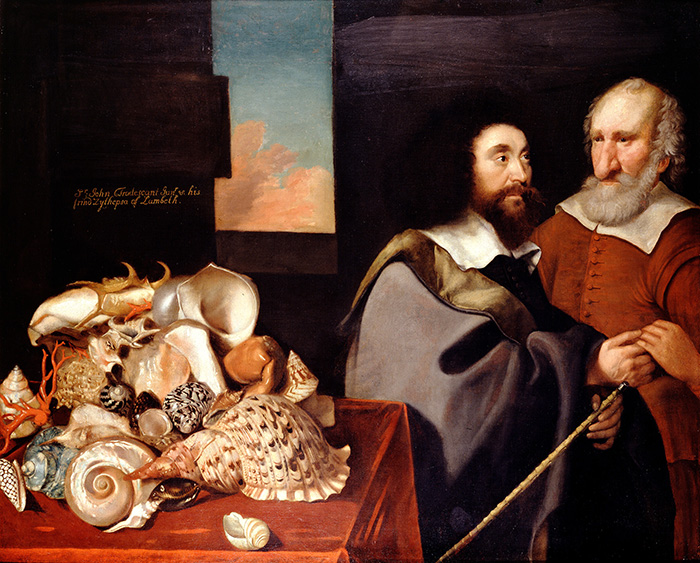
John Tradescant the Younger with Roger Friend and a Collection of Exotic Shells, attributed to Thomas de Critz, 1645, oil on canvas, on display in our Ashmolean Story Gallery 2 © Ashmolean Museum
Sadly, no plant specimens grown by the Tradescants can now be traced. Plant types introduced by them, however, continue to be enjoyed by gardeners across Britain.
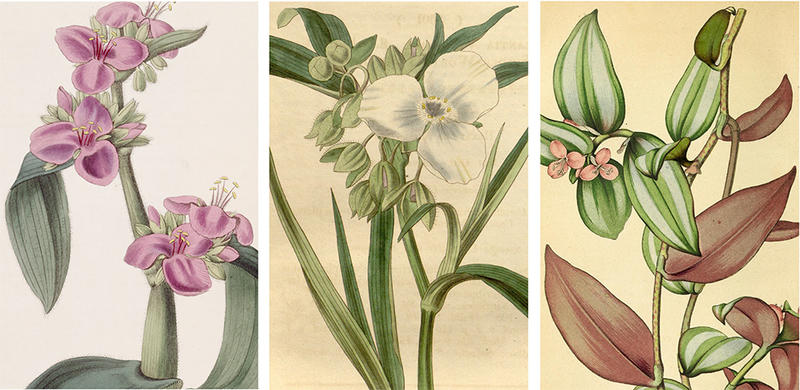
Memory of the Tradescants lives on, botanically speaking, with the genus Tradescantia, more commonly known as spiderwort, named in their honour by the 18th-century naturalist, Carl Linnaeus.
The 16th- and 17th-century interest in ‘academic gardens’ – as physic, and later botanic gardens – was reflected at the University of Oxford with the founding of the Physic Garden in 1621.
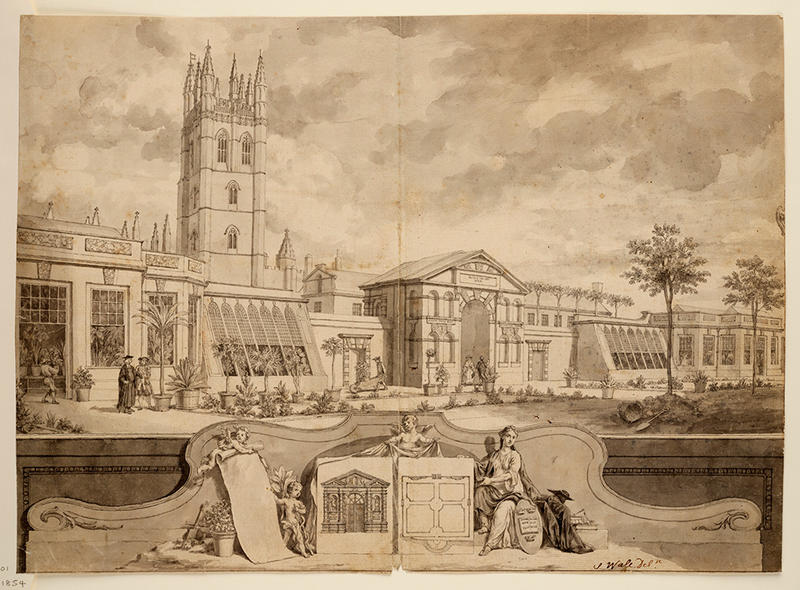
The Botanic Gardens, Oxford, Samuel Wale, 1766, pen, black ink & grey washes © Ashmolean Museum
It has the distinction of being Britain’s oldest academic garden still located on its original site. The funding to establish the Physic Garden was provided by the English soldier and administrator Henry Danvers, 1st Earl of Danby.
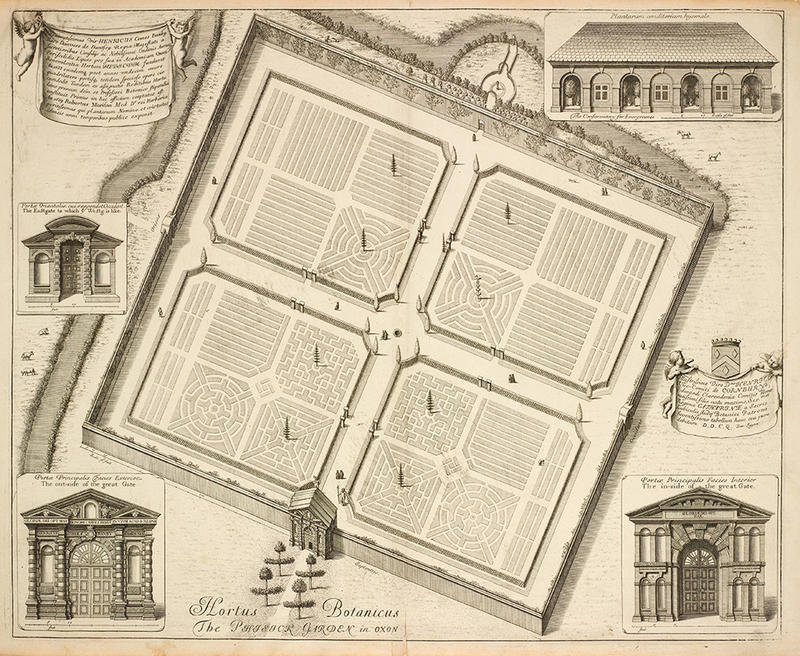
Hortus Botanicus or the Phisick Garden (Botanic Garden), from Oxonia illustrata, David Logganm, 1675, engraving on paper © Ashmolean Museum
In 1642, Jacob Bobart the Elder, an ex-soldier and publican, was appointed as the Physic Garden’s first superintendent. Bobart the Elder was succeeded by his son, also called Jacob.
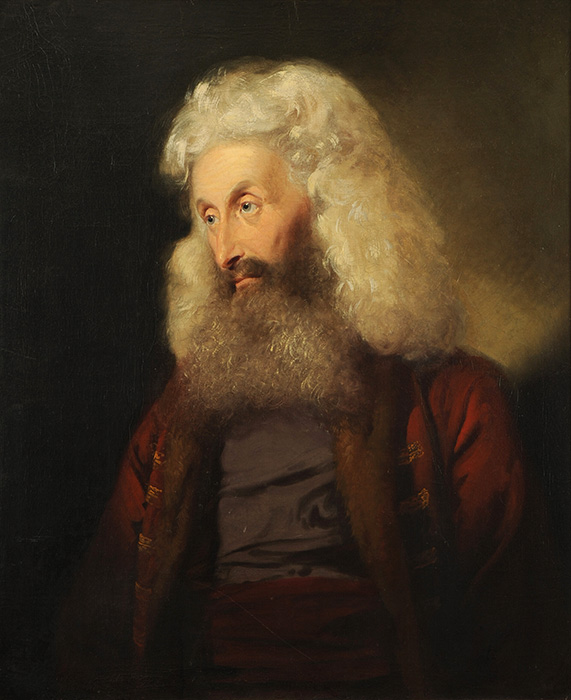
Portrait thought to be of Jacob Bobart the Elder, unknown artist, late 17th century, oil on canvas © Department of Biology, University of Oxford
The Bobarts became highly respected by scholars and gardeners in Britain and continental Europe, where they maintained a wide circle of correspondents. They were part of a community of mid-17th-century city and college gardeners who exchanged techniques, observations, seeds, and cuttings, taking advantage of a heady mix of mystical, practical, and experimental interest in plants locally, nationally, and internationally.
As the Bobarts’ reputation grew, their network of collaborators expanded to include leading apothecaries, professors and missionaries across Britain, Europe and North America.
In the 1650s/60s, in addition to expanding the living collections, the Bobarts began to create a novel collection of dried preserved plants, today known as Bobart the Elder’s ‘Hortus Siccus’, or herbarium. Herbaria were extremely rare in 17th-century Britain. The gnarled and enormous, leather-bound volume can be seen on display in the ‘In Bloom’ exhibition.
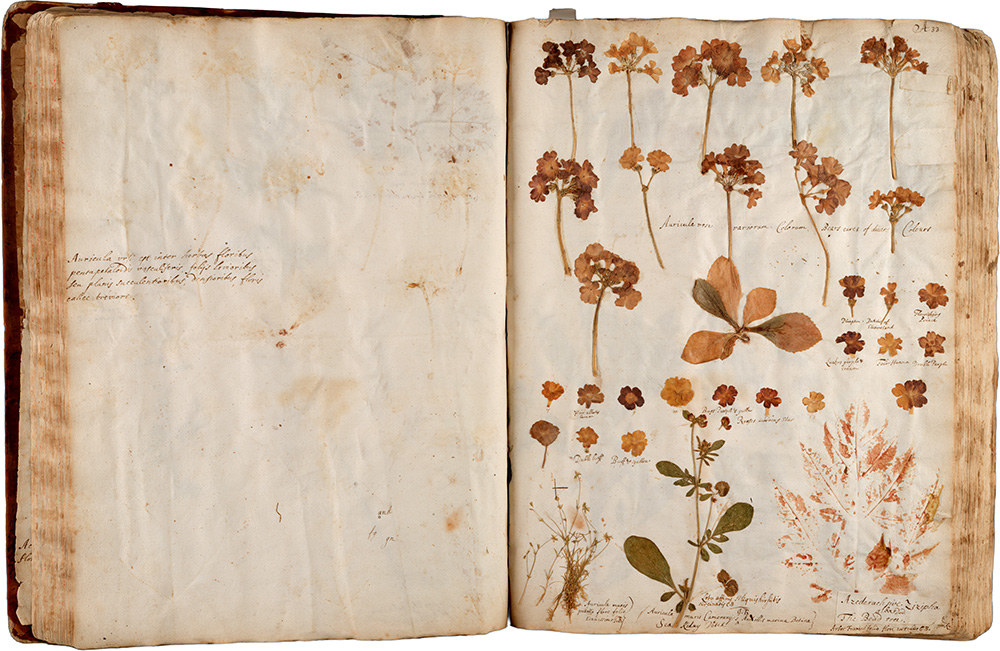
Bobart the Elder's Hortus siccus herbarium, 1658, dried & pressed plant specimens mounted on paper © Oxford University Herbaria, Department of Biology
The private collections of the Bobarts were eventually acquired by the University on the death of Bobart the Younger in 1719. Nine years later, with the bequest of the botanist-diplomat William Sherard’s collection, the University’s fledgling herbarium was transformed.
William Sherard learnt the fundamentals of botany from Bobart the Younger during his time as a student of law in Oxford. In 1728, Sherard bequeathed an endowment to the University to establish a Professorship in Botany.
In 1734, Johann Jacob Dillenius, a man with a prodigious botanical reputation, became the first Sherardian Professor of Botany and had stewardship of the Garden for 13 years. Dillenius’s interests were supported by an international network of correspondents who sent him samples from across Europe (including Germany, Holland, Poland, Russia, and Sweden), North America (Greenland and Thirteen Colonies), the Caribbean (Jamaica and the Bahamas), and as far south as Patagonia.
Dillenius’s foresight in associating descriptions with preserved specimens contributed greatly to the celebrated botanical account of James Sherard’s garden at Eltham in Kent, titled ‘Hortus Elthamensis’, that he published in 1732. He was greatly admired by the Swedish founder of modern scientific nomenclature, Carl Linnaeus, who visited Oxford in 1736.
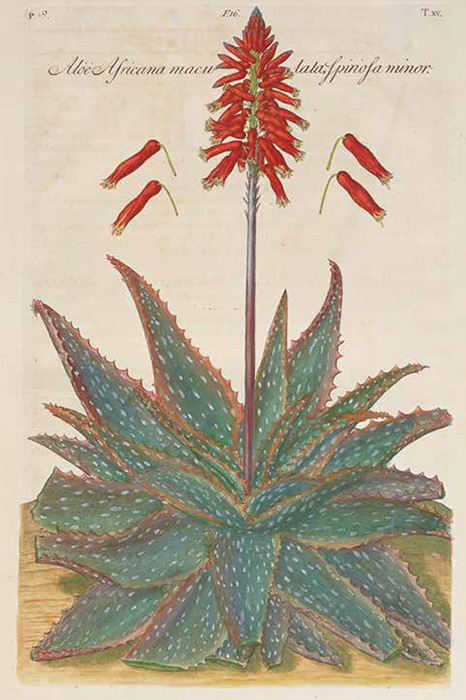
‘Aloe Africana maculata’ (Aloe perfoliata), Johann Jacob Dillenius, from Hortus Elthamensis, vol. 1, 1732, bound volume with hand-coloured engravings © Sherardian Library, Bodleian Libraries, University of Oxford
By the mid-18th century, trees and shrubs, often raised from English naturalist Mark Catesby’s North American collections, were scattered throughout the Garden. Catesby had been sponsored to travel to America to collect plants by a group of British gentlemen, organised by William Sherard. Catesby was the first naturalist to systematically document the flora and fauna of North America.
Most of his herbarium specimens are now in Oxford. He published his ‘Natural History of Carolina, Florida and the Bahama Islands’, between 1729 and 1747, illustrated with plants shown in engaging (but often curated) combinations with insects, birds and mammals, in over 200 plates. These illustrations were a paradigm shift in botanical art, showing plant and animal species together in their ecological context.
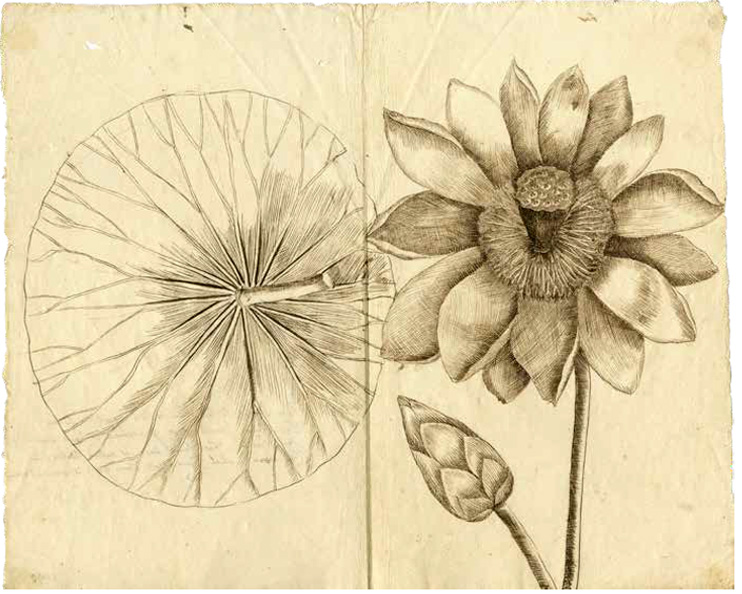
Field sketch of American lotus (Nelumbo lutea), Mark Catesby, 1722, ink on paper © Oxford University Herbaria, Department of Biology
The Oxford professors of Botany often collaborated with the most talented botanical artists of the day in their study and documentation of plants.
John Sibthorp, the third Sherardian Professor of Botany, organised perhaps the most famous botanical expedition directly associated with the University of Oxford. He returned from the eastern Mediterranean with herbarium specimens and notes, a greatly expanded network of European contacts, and seeds. Many of the seed collections were grown in the Botanic Garden, becoming the first introductions of these species to Britain.
Sibthorp’s magnificent publication ‘Flora Graeca’ is one of the most spectacular of all botanical books and features the work of exceptionally accomplished botanical artist Ferdinand Bauer. Considered treasures of the University’s collections, a selection of Bauer’s works from the ‘Flora Graeca’ can be seen in the ‘In Bloom’ exhibition.
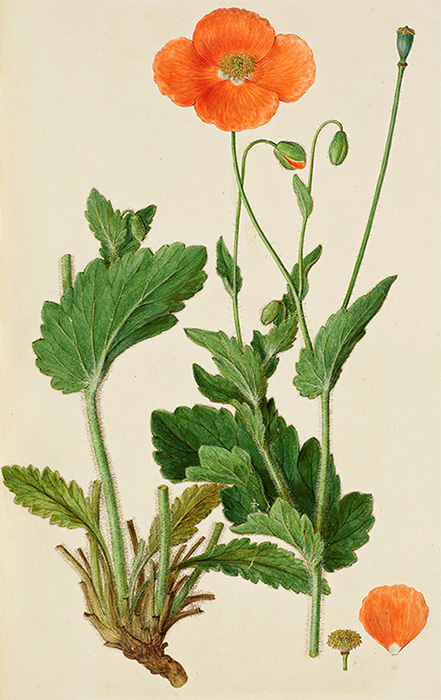
Hairy poppy (Papaverum pilosum), Ferdinand Bauer, from a set of preparatory drawings for John Sibthorp’s Flora Graeca, bound volume with watercolours on paper © Sherardian Library, Bodleian Libraries, University of Oxford
Over four centuries, the fortunes of the Garden demonstrate that the practice of botany is delimited by people, place and period.
Longevity, a small, close-knit group of botanists and gardeners, and the intergenerational collections and intellectual networks nurtured during the late 17th and early 18th centuries established the Oxford Botanic Garden’s reputation as a centre for academic and horticultural excellence. It now houses over 5,000 plant species within its historic 17th-century walls. It has also inspired numerous literary figures, such as J.R.R. Tolkien, Oscar Wilde, and Agatha Christie.
Today, the University of Oxford’s various departments – the Botanic Gardens, Plant Sciences, Geography and Biology, to name a few - continue to be hubs for pathbreaking multi-disciplinary research, contributing to the wider body of knowledge that underpins how plants continue to change our world.
The In Bloom exhibition's last gallery ends with a special tribute to a small selection of academics engaged in trailblazing research in the disciplines of Botany, Genetics, Environmental Sciences and Anthropology, underscoring our continuing relationship with the plant world.
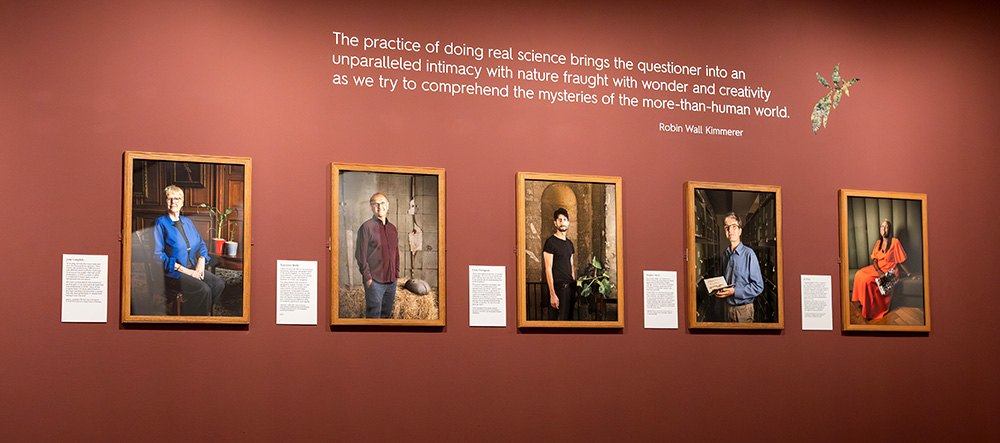
Contemporary Oxford 'Change Makers' working on botanical and scientific research and portrayed in the In Bloom exhibition
They are photographed as special commissions by Fran Monks – a photographer and a keen environmentalist – with an object of their choice, that anchors their story. Having started our exhibition journey with the Tradescants, Oxford returns as an engaging, contemplative and stimulating point at its end, to bracket the exhibition’s narrative.
Many of the artworks described above are on display in the In Bloom exhibition which is open until 16 Aug 2026. Most of them are included in the beautifully-illustrated exhibition catalogue.
The exhibition features family stop-points and scented interactions for visitors while enjoying the show. There is an audio guide you can buy (with your tickets), narrated by BBC Gardeners' World presenter Arit Anderson and including a narrative from historical novelist Philippa Gregory. See below for links.
In Bloom is the first Ashmolean exhibition to consider sustainability from conception to delivery, not least because of the predominance of exhibits that were sourced locally in Oxford. Find out more