

IN BLOOM - press release
22 December 2025
Download Press Images: https://go.glam.ox.ac.uk/InBloom
How much do we really know about the plants and flowers in our gardens and vases? Beyond their beauty, many have surprising stories of exploration, exchange, and discovery. In Bloom takes visitors from Oxford across the world and back, tracing the journeys that some of Britain’s most familiar blooms travelled to get here. Featuring more than 100 artworks, including beautiful botanical paintings and drawings, historical curiosities and new work by contemporary artists, the exhibition follows the passion and ingenuity of early plant explorers and the networks that influenced science, global trade and consumption. Visitors will learn how plants changed our world and left a legacy that still shapes our environments and back gardens today.
The Ashmolean itself owes its existence to two obsessive gardeners who set out to 'collect the world'. In the seventeenth century John Tradescant the Elder and the Younger, gardeners to royalty and aristocracy, travelled to the Low Countries, France, Russia and North America, gathering plants, seeds, specimens and intriguing objects that later formed the Ashmolean's founding collection. In Bloom returns to this origin point, examining how plants were acquired, classified and circulated in the seventeenth century, and how the wish to grow and understand them shaped knowledge and culture.
Many of our most beloved species of plants and flowers, including tulips, roses, orchids and camellias, reached Britain through the networks of empire linking Europe, Asia, Africa and the Americas. Seeds, dried specimens and living plants travelled along the same maritime and commercial routes that transported people and goods, a movement that often depended on the expertise of local people that went unrecorded in Western accounts. Some arrivals triggered intense public interest. Tulips fuelled the Dutch speculative bubble known as 'tulipomania' which, at its height in the 1630s, saw rare tulip bulbs being sold at the cost of a canal-side house. Ferns, orchids and rhododendrons too inspired later Victorian collecting frenzies. Other plants became woven into everyday life. Tea, now integral to British identity, grew into a powerful commodity whose cultivation and trade had far-reaching economic and political effects.
Oxford played a central role in advancing botanical knowledge. The University’s Physic Garden, founded in 1621 – now the oldest botanical garden in Britain - provided a controlled environment for testing how unfamiliar species adapted to new conditions. Early herbaria (dried, pressed plants), seed collections and teaching aids were developed here. The exhibition includes an extraordinary group of nineteenth-century papier-mâché models of enlarged plants and flowers that were made so that students could see intricate botanical structures for scientific study.
Another innovation featured in the exhibition is the 'Wardian Case' (c. 1870), a revolutionary sealed glass container, developed by Nathaniel Ward in the 1840s. This ingeniously simple solution facilitated long-distance plant transport and made it possible for living specimens to survive long voyages, encouraging the mass movement of plants across the world.
This transportation of plants came with significant costs to colonised and indigenous peoples. As European demand for profitable and desirable species grew, collecting and cultivation began to reshape local ecologies and economies. In many regions, land was reorganised for export crops and large single-species plantations, creating 'monocultures' that replaced local biodiversity and made communities more vulnerable to environmental and economic shocks. Britain’s role in the opium trade, which contributed directly to the Opium Wars (1839-60), was a notoriously exploitative chapter in the nation’s history. The global spread of tea and other cash crops shows how botanical collecting, commerce and imperial ambition often carried consequences beyond the plants themselves.
In Bloom also explores the visual traditions that shaped how plants were recorded and understood. Paintings, drawings and prints by some of the greatest botanical artists of all time - Rachel Ruysch, Maria Sibylla Merian, Georg Dionysius Ehret and Ferdinand Bauer - show how artists and illustrators became essential to identifying species, comparing varieties and sharing information across borders. This was also the period in which Carl Linnaeus (1707–78) set out the system of naming and classifying plants that is still used today. This legacy remains visible in the work of some of the most celebrated modern botanical artists - Rory McEwen, Pandora Sellars and Fiona Strickland - whose exceptional works are also on view.
The exhibition closes with new contemporary works by Anahita Norouzi, Kate Friend, Işık Güner, Alexandra Daisy Ginsberg and Justine Smith. Their works range from human-sized botanical drawings to spectacular tapestries designed from the perspective of pollinating insects. These are followed by Fran Monks’s photographic commission spotlighting five leading Oxford academics working at the forefront of plant science and conservation today, whose research is expanding our understanding of the environment, ecology and our changing climate. Seen together, these works demonstrate how the impulse to study, protect and reinterpret the plant world continues to shape both scientific thinking and public imagination.
Dr Francesca Leoni and Dr Shailendra Bhandare, co-curators of the exhibition, say: ‘In Bloom offers the rare chance to understand, appreciate and contemplate the histories of some of our best loved blooms. Unravelling stories of great scientific achievements, daredevil explorations and networks of exceptional individuals, it presents a vivid curatorial account of how our world was changed by our interactions with plants, through outstanding objects, with a conscious attempt at delivering an environmentally responsible exhibition.’
ENDS
CONTACT DETAILS
Claire Parris, Strategic Communications Manager, University of Oxford Museums and Gardens
claire.parris@glam.ox.ac.uk / +44 (0)7833 384 512
Sarah Holland, Press Assistant, University of Oxford Museums and Gardens
sarah.holland@glam.ox.ac.uk / +44 (0)1865 278 285
PRESS IMAGES
Images for editorial use are available to download at: https://go.glam.ox.ac.uk/InBloom
Images above:
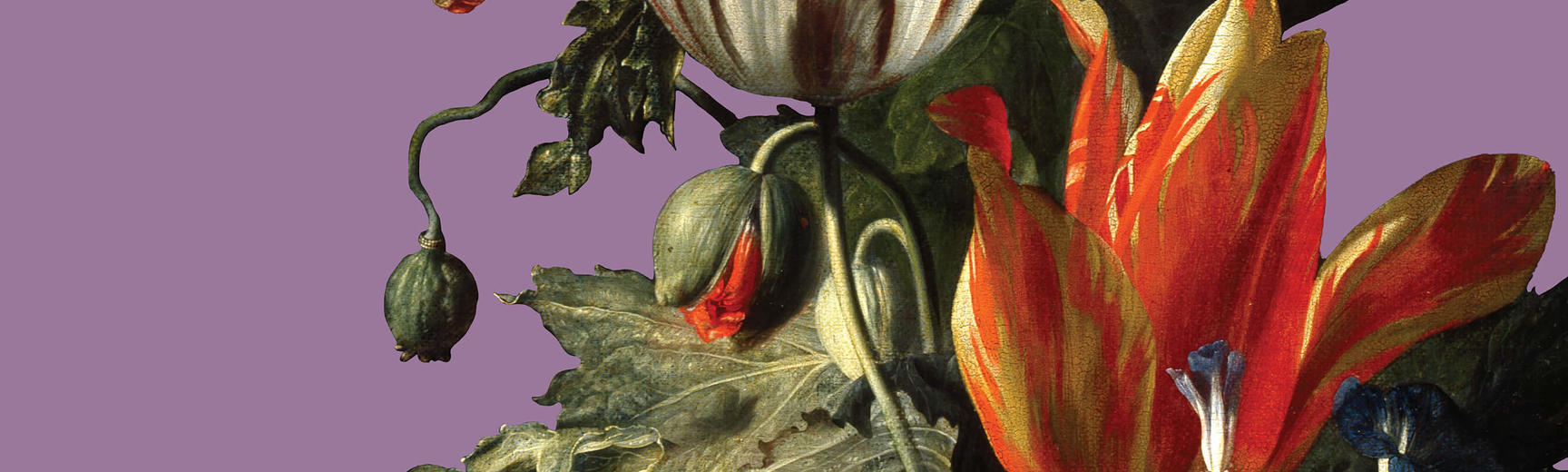
detail of Simon Verelst (1644–1721), A Vase of Flowers, c. 1669–75. Oil on canvas, 44 x 32 cm. Ashmolean Museum, University of Oxford
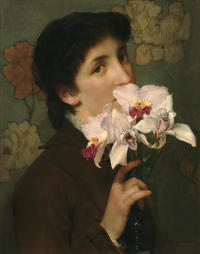
Sir Lawrence Alma Tadema (1836–1912), Orchids, 1879. Oil on panel, 40 x 49.5 cm. Private collection, USA, courtesy of the Richard Green Gallery, London
Image featured on carousel at www.ashmolean.org/press:
Fiona Strickland (b. 1956), Tulipa ‘Blumex Parrot’, 2019. Watercolour on Kelmscott vellum, 28 x 41.1 cm. © Fiona Strickland, courtesy of the Shirley Sherwood Collection
NOTES TO EDITORS
Exhibition: In Bloom: How Plants Changed Our World
Dates: 19 March-16 August 2026
Venue: The John Sainsbury Exhibition Galleries, Floor 3, Ashmolean Museum, Beaumont Street, Oxford OX1 2PH
Tickets: £8.10-£18, available at the Museum or online
Catalogue: £25 available at the Museum or online
Press View: Tuesday 17 March 2026, 11:00-14:00
Events: www.ashmolean.org/shaped-by-nature-season
The exhibition is curated by:
Dr Shailendra Bhandare, Curator of South Asian and Far-Eastern Coins and Paper Money, Ashmolean Museum and Dr Francesca Leoni, Curator of Islamic Art, Ashmolean Museum.
The exhibition is supported by:
Mr Barrie and Mrs Deedee Wigmore
The James & Shirley Sherwood Foundation
the Patrons of the Ashmolean Museum
Richard Mayou
The Finnis Scott Foundation
Kilroot Foundation
Dr. Lee MacCormick Edwards Charitable Foundation
Claire and David Swan
About the Ashmolean Museum
The Ashmolean is the University of Oxford’s museum of art and archaeology, founded in 1683. Our world-famous collections range from Egyptian mummies to contemporary art, telling human stories across cultures and across time.
Admission: free
Open: daily, 10:00-17:00
Seeding sustainable approaches
The Ashmolean is committed to reducing the environmental impact of exhibitions. While we have been recently improving our approaches, In Bloom is the first exhibition to consider sustainability from conception to delivery. 92% of the works come from the South-East of England, with 60% from the Ashmolean or other University collections, lowering the carbon footprint from object transportation.
In collaboration with DaeWha Kang Design, we reused 85% of showcases and adapted build from the previous exhibition, This is What You Get: Stanley Donwood, Radiohead, Thom Yorke (closed 18 January 2026). Fabric and lighting effects are used instead of heavy build, with non-toxic materials sourced within the UK wherever possible, including recycled vinyl, paper-based text panels, and eco-friendly paint. The designers have also created a 3D digital catalogue of all our display cases and plinths, so future reuse can be prioritised.
This approach is continued in our shop, café and restaurant where we prioritise sustainable suppliers, reduce waste and explore low impact products.
We’ve still much to improve and are constantly reviewing and assessing our impact, researching and experimenting with new solutions and materials. Visit www.ashmolean.org/sustainability for further information.

